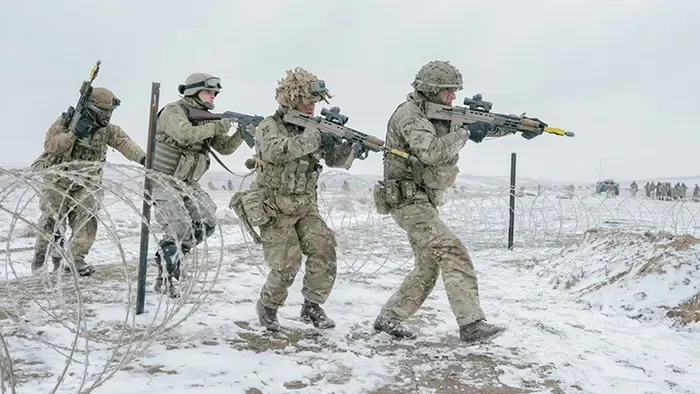
Amid rising tensions between Britain and Russia, fresh debate has erupted over fears that mandatory military service could be reintroduced in the country. The government has not announced any decision to reinstate conscription, but a coalition of 13 peace and religious organizations in the country has called on the government to clearly rule out the possibility.
According to a report by The Express, the coalition — made up of groups including ForcesWatch, the Peace Pledge Union and the Quakers in Britain — has launched a petition on the issue.
Their demand is that there should be no compulsory conscription into the armed forces or any form of mandatory national service that includes military enlistment.
Speaking for ForcesWatch, Emma Sangster said the threat of mandatory military service is now being pushed onto young people in Britain. While national service is often promoted as beneficial for young people, she said, it also carries physical and psychological risks along with the moral burden of war.
She said her organization does not believe that militarized security ensures genuine human security, and that they oppose compelling young people into state military service. Meanwhile, political debate has intensified over Europe’s security situation and Britain’s preparedness for possible conflict. Alongside that, a campaign by peace activists against the prospect of reintroducing conscription has also gained momentum.
Debate over mandatory national service is not new in Britain. Ahead of the 2024 general election, the then-Conservative government proposed a plan for military or civilian national service for 18-year-olds. The Labour government, meanwhile, has expanded opportunities such as a “gap year”-style program for young people in the armed forces.
Voluntary participation in military training and legally compelling citizens to join the armed forces, however, are two entirely different matters. Britain currently has no mandatory military service. The government’s previous position has been that Britain relies on a professional, volunteer-based military.
Young people’s attitudes toward mandatory service are also a key part of the debate. A YouGov survey of 3,044 people cited in the report found that 38% of those under 40 said they would refuse to join the military if a new world war broke out.
Even if Britain faced a direct and imminent attack, 30% said they would refuse to serve.
Meanwhile, 72% of respondents said that if mandatory military service were introduced, it should apply equally to men and women — underscoring divisions within British society over the question of military service.
On one hand, calls for boosting defense capability are growing louder amid a deteriorating security situation; on the other, there are concerns about young people’s personal freedom and right to choose.
Peace movement organizations argue that mandatory military service would interfere with young people’s education, careers and personal life plans. Joining the armed forces, they say, is a political and moral decision, and no one should be compelled into making it.
Britain has a long history of mandatory military service. Conscription was first introduced during World War I under the Military Service Act of 1916. It was reintroduced on a large scale before World War II, in 1939. That second period of conscription was ultimately abolished in 1960.