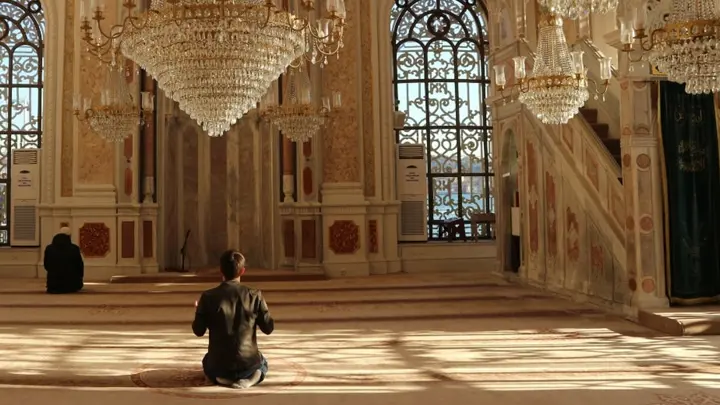
While every person’s life on Earth flows with the passage of time, a believer’s true beauty is revealed through prayer (salah). Wealth, honor or power are not the true measure of a person’s success; rather, the most honored in the sight of Allah is the one who performs the five daily prayers on time, with sincerity. Prayer is an act of worship that brings a person closer to Allah, keeps them from sin, and secures wellbeing in this world and the hereafter. That is why, after faith, Islam places the greatest emphasis on salah, or prayer.
The Quran contains the command to establish prayer, directly or indirectly, in more than 80 places. Allah says, “Indeed, prayer has been decreed upon the believers a decree of specified times” (Surah An-Nisa: 103). He also says, “And establish prayer and give zakat and bow with those who bow [in worship and obedience]” (Surah Al-Baqarah: 43). Allah further says, “Establish prayer for My remembrance” (Surah Ta-Ha: 14). The importance of prayer is also described in many other verses, including Surah Al-Baqarah (2:110), Surah Hud (11:114), Surah Al-Isra (17:78), Surah Al-Mu’minun (23:1-2), Surah Al-Ankabut (29:45) and Surah Al-Ma’un (107:4-5).
The main basis for prayer being obligatory
Allah says, “Indeed, prayer has been decreed upon the believers a decree of specified times” (Surah An-Nisa: 103). The Prophet (peace be upon him) said, “Prayer is the pillar of religion; whoever establishes it has established religion, and whoever destroys it has destroyed religion” (Bayhaqi: 1539).
The difference between a Muslim and a hypocrite
A true Muslim gives prayer the highest importance in life, while a hypocrite neglects it. Allah says, “And when they stand for prayer, they stand lazily, showing off before people and not remembering Allah except a little” (Surah An-Nisa: 142).
The Prophet (peace be upon him) said, “The hardest prayers for the hypocrites are Isha and Fajr. If they knew their reward, they would come to them even if they had to crawl” (Bukhari: 657; Muslim: 651). He also said, “The difference between a person and disbelief or polytheism is abandoning prayer” (Muslim: 82).
Times of the five daily prayers
Fajr: from true dawn until just before sunrise (Muslim: 613).
Zuhr: from after the sun passes its zenith until just before Asr (Tirmidhi: 149).
Asr: from its designated time in the afternoon until just before sunset. The Prophet (peace be upon him) said, “Whoever misses the Asr prayer, his deeds are wasted” (Bukhari: 553).
Maghrib: beginning right at sunset and lasting until the red twilight in the west disappears (Muslim: 612).
Isha: from when the red twilight disappears until midnight; it can be performed even later, before Fajr, if necessary (Muslim: 612).
The ruling on congregational prayer at the mosque
Islam places special importance on adult men praying in congregation at the mosque, where able. The Prophet (peace be upon him) said, “Prayer in congregation is twenty-seven times more rewarding than praying alone” (Bukhari: 645; Muslim: 650).
He also said, “I intended to order that the houses of those who do not attend congregational prayer be set on fire” (Bukhari: 644; Muslim: 651).
Valid excuses for praying at home
To ease people’s hardship, Islamic law permits praying at home under certain valid excuses. Praying at home in these cases carries no sin. These include:
1. Illness or physical weakness.
2. Heavy rain, storms or natural disasters.
3. A threat to life or property.
4. While traveling.
5. Mud or hardship severe enough to make reaching the mosque extremely difficult.
What prayer teaches
Prayer is not merely a set of physical movements; it shapes a person’s character. Allah says, “Indeed, prayer prohibits immorality and wrongdoing” (Surah Al-Ankabut: 45). He also says, “Successful indeed are the believers, who are humble in their prayers” (Surah Al-Mu’minun: 1-2).
Prayer for women and men
The fundamental rulings of prayer are the same for both women and men. However, some differences are described across various schools of Islamic jurisprudence regarding dress, covering and certain physical postures. The purpose of these differences is to preserve modesty and covering; the basic pillars and conditions of prayer remain the same for both women and men.
The five daily prayers are a Muslim’s identity, proof of faith, and the greatest means of drawing near to Allah. For those who perform prayer on time, Allah blesses their lives and grants them success in the hereafter. And whoever deliberately neglects prayer pushes themselves toward severe loss. So let us perform the five daily prayers on time, with focused hearts, and where possible in congregation at the mosque, following the guidance of the Quran and Sunnah. May Allah include all of us among those who establish prayer. Ameen.