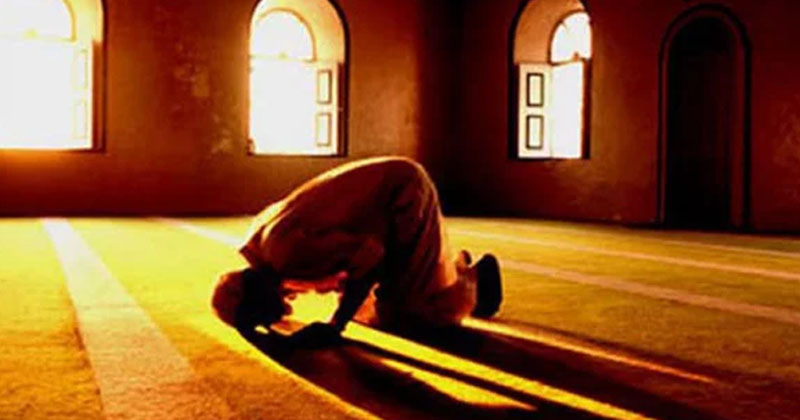
Prostration in prayer is among the moments when a worshipper draws closest to Allah, which is why believers are encouraged to make abundant supplication while prostrating. According to a hadith, the Prophet (peace be upon him) said: “When a servant is in prostration, he is nearest to his Lord, so supplicate much [in that position].” (Sahih Muslim)
After first reciting “Subhana Rabbiyal A’la” upon prostrating, one may then supplicate to Allah — for one’s own needs, forgiveness of sins, guidance, sustenance, good health, deliverance from hardship, and for the good of this world and the hereafter. Various supplications for prostration are recorded in hadith. One of them, transliterated, reads: “Allahummaghfir li dhanbi kullahu, diqqahu wa jillahu, wa awwalahu wa akhirahu” — meaning: “O Allah, forgive me all my sins, small and great, first and last.”
A shorter supplication taught by the Prophet (peace be upon him) can also be recited in prostration, transliterated as “Rabbighfir li warhamni” — meaning: “My Lord, forgive me and have mercy on me.”
Whether a supplication is accepted, however, remains for Allah to decide. A worshipper should supplicate sincerely and remain hopeful of acceptance — the result of a prayer may come immediately, or Allah may instead use it to remove a hardship, or store its reward for the hereafter. Prostration in prayer should therefore be treated not merely as a formality, but as a special opportunity to lay one’s needs and hopes before Allah.