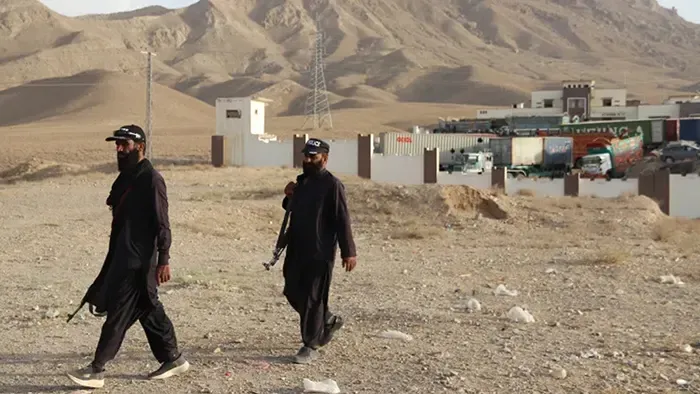
Armed violence has increased since June in the Pashtun-majority districts of Pakistan’s Balochistan province. Areas that had long remained largely outside the province’s protracted conflict have now become fresh targets of attacks.
Pakistani security forces said they repelled an attack by the Pakistani Taliban, or Tehrik-i-Taliban Pakistan (TTP), on a customs post in the Ziarat Cross area of Pashtun-majority Pishin district on Sept. 1. Several armed fighters and six security and customs personnel were killed in the incident.
Three days later, they claimed 26 more TTP fighters were killed in an operation in the Shaban area on the outskirts of Quetta. On Sept. 3, a paramilitary convoy returning from Ziarat came under attack. The Balochistan Liberation Army (BLA) claimed responsibility for the attack, but the Pakistani military’s media wing, ISPR, did not officially confirm the incident.
According to the Pakistan Institute for Conflict and Security Studies (PICSS), which monitors violence, Balochistan has become Pakistan’s most violent province this year. It has described July as the deadliest month of 2026. In the first week of that month alone, 102 people were killed in 25 attacks in Balochistan.
Before June, 11 Pashtun-majority districts — Zhob, Sherani, Killa Saifullah, Loralai, Musakhel, Duki, Barkhan, Pishin, Killa Abdullah, Ziarat and Harnai — saw no armed attacks from January through May. But since June, at least 13 attacks have occurred in these areas.
In July, 27 police personnel guarding a dam project near Ziarat were killed. The deteriorating security situation has also damaged key trade routes in Balochistan. Traders say the Taftan-Quetta and Quetta-Karachi highways have been effectively paralyzed for months. More than 100 cargo trucks have been set on fire during this period, and two drivers have been killed.
Analysts say the TTP and BLA are trying to expand their activities beyond their traditional strongholds. Key roads and trade routes in northern Balochistan have now become strategically important targets for them. However, opinions differ on whether there is direct coordination between the two groups. Some analysts believe that some TTP fighters have moved into Balochistan following military operations in Khyber Pakhtunkhwa.
Analysts warn that the expansion of armed groups could further inflame existing political and economic grievances in Pashtun-majority areas, raising fears that Balochistan’s long-running security crisis could become even more complex.