Analysis
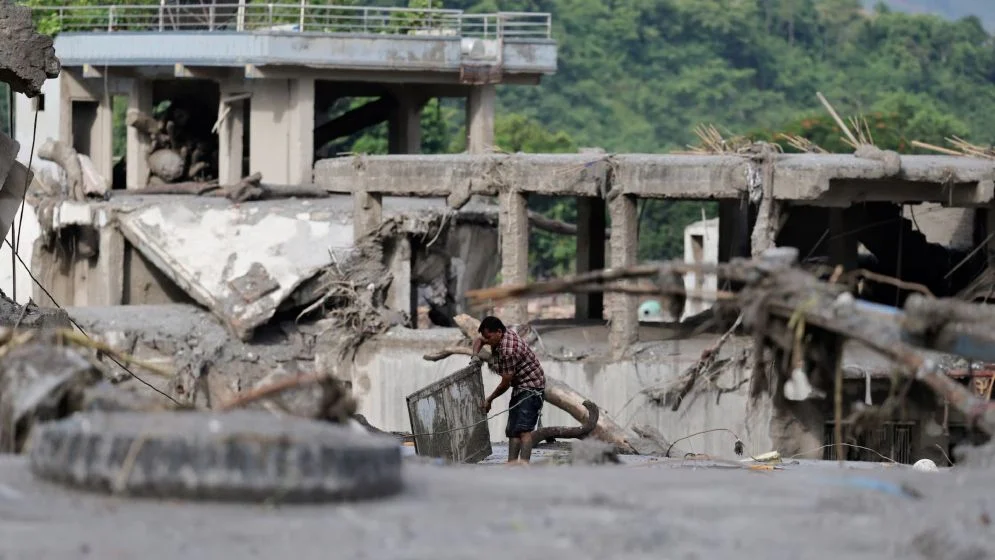
Nepal’s recent devastating flood on the Bhotekoshi and Trishuli rivers has shown just how fragile the country’s roads and bridges are in the face of nature’s power. The sudden flood was triggered by a mountain collapse caused by melting ice in Tibet, China.
The powerful surge of water instantly destroyed a border-area police station, a customs office, several markets, a hydropower station, and roughly 40 kilometers of road and 64 bridges. With this main route connecting to the capital, Kathmandu, now cut off, the entire country’s economy and supply of essential goods face a serious threat.
According to experts, Nepal’s own flawed planning is largely responsible for such repeated damage along riverbanks. Roads and bridges here are built based on very old rainfall data that is no longer of much use.
In addition, reckless extraction of sand and stone from rivers, combined with dumping excavated soil into rivers, is causing riverbeds to fill up, allowing water to easily flood into settlements. Meanwhile, building multiple power stations on a single river means that when one upstream dam breaks, it can topple all the dams downstream like a house of cards.
To weather this immediate shock, temporary bridges built with army assistance are needed now to quickly restore transportation links. But to survive in the long run, proper planning is needed across the entire river basin. It is essential to completely halt construction of any new building or road too close to riverbanks. Since most of Nepal’s rivers originate in Tibet, joint monitoring with China and India is needed to establish technology for early disaster warning.
At the same time, local administrations need to stop reckless sand and stone extraction and introduce early-warning systems to alert people living along riverbanks of danger. No country can achieve sustainable development by fighting against nature. This great disaster on the Trishuli River has proven that building infrastructure alone is not enough — how well it can withstand a natural disaster is now the biggest question.