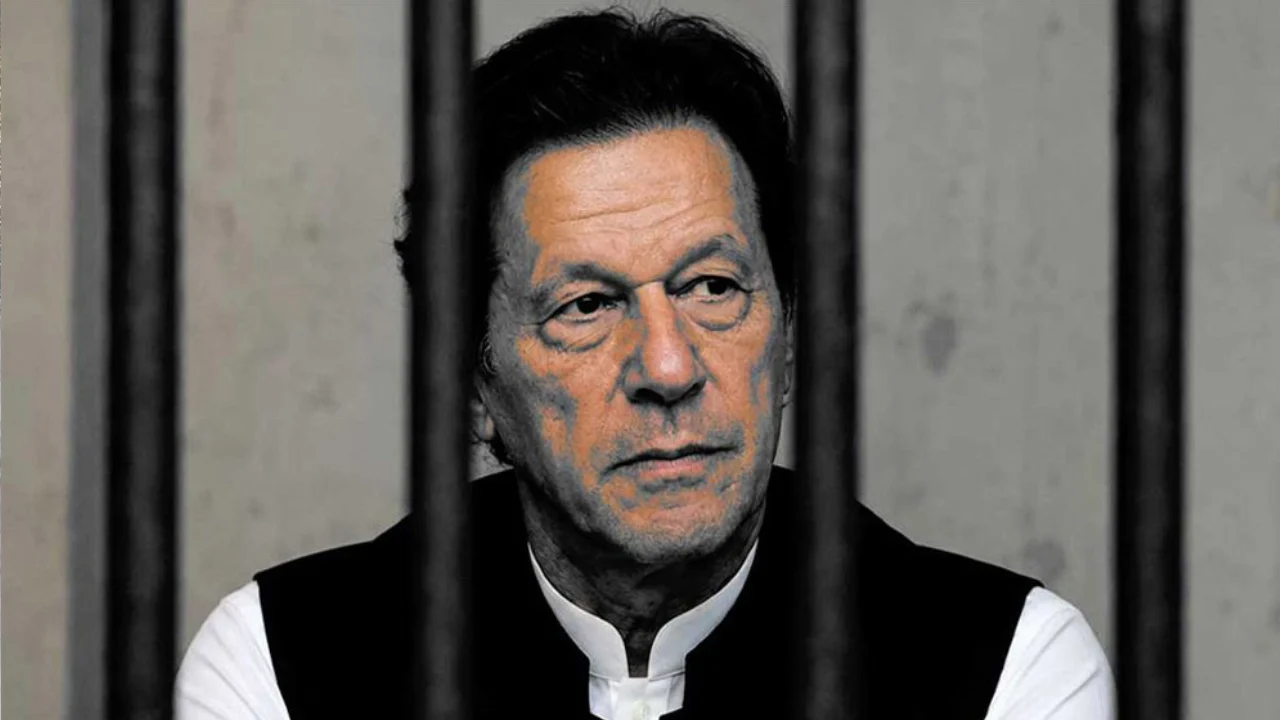
Imran Khan may be held in prison, but it is proving difficult to keep his international profile, his cricketing legacy and his political symbolism similarly contained. Pakistani authorities want to keep the matter confined within the country, but intervention from figures across the international cricket world is turning it into an international humanitarian and political issue.
These observations come from an analytical article published August 31, 2026, in South Asia Monitor titled “Imran Khan, the Cricketing World and the Paradox Confronting Pakistan,” written by Indian journalist, editor and regional and global affairs analyst Raju Korti.
Fresh controversy from Atherton’s interview
Former England captain Michael Atherton conducted an 18-minute interview at Lord’s with Imran Khan’s two sons, Suleiman and Kasim. In it, they alleged that Imran is being held in extreme isolation, that his health is deteriorating, and that authorities are trying to kill him — though that last allegation is attributed to the family. The Pakistan Cricket Board (PCB) reacted sharply against the interview and filed a formal complaint with Sky Sports.
Why cricket has internationalized the Imran issue
Imran Khan is not just Pakistan’s former prime minister; he is one of the most important figures in Pakistan’s cricket history. Under his captaincy in 1992, Pakistan won its first and, to date, only Cricket World Cup. As a result, the cricket world’s emotional attachment to him extends well beyond his political identity. When a former England captain like Atherton voices concern over his health and humane treatment, it becomes difficult to simply dismiss that as internal Pakistani political commentary.
An appeal from 22 former captains
Twenty-two former international cricket captains have appealed to Pakistani Prime Minister Shehbaz Sharif to ensure Imran receives proper medical treatment and humane treatment. The list includes well-known names in international cricket, including India’s Sunil Gavaskar, Kapil Dev and Dilip Vengsarkar, and Australia’s Greg Chappell and Ian Chappell. In other words, the Imran issue is no longer just a dispute among Pakistan’s political parties — cricket’s international network has begun taking a moral position on it as well.
Concern from Greg Chappell and Javed Miandad
Former Australian captain Greg Chappell has voiced concern over the deterioration in Imran’s physical condition. According to Chappell, Imran today looks far frailer than when he saw him in Pakistan a few years ago. Former Pakistani star Javed Miandad, who played alongside Imran in the same dressing room, has responded emotionally. Australian cricketer Usman Khawaja has also mocked the PCB’s response.
These are not political activists; they are Imran’s former cricketing colleagues and influential voices in international cricket. Their statements therefore carry a distinct moral and symbolic weight. The article goes on to analyze Pakistan’s political and military power structure through the lens of Imran Khan’s imprisonment, the concerns over his health, and the cricket world’s reaction.
Where does real power lie — the government, or the military establishment?
Viewing Imran’s imprisonment merely as a decision by the Shehbaz Sharif government or prison authorities fails to fully capture Pakistan’s actual power structure. His imprisonment and political future are deeply tied to the long-running power struggle between Imran’s political movement and Pakistan’s military establishment. The author’s analysis holds that the military establishment views Imran not merely as a political rival, but as a potential challenge to its long-standing power structure.
How effective is cricketing pressure?
Not very, in the immediate term. Popular figures in international cricket can generate moral and international pressure on Pakistan. But there is no guarantee that pressure will directly change political decisions within Pakistan’s security and military establishment. Still, the pressure isn’t entirely without effect — it internationalizes the Imran issue, creates an international record around his treatment and imprisonment, increases international scrutiny of the Pakistani government, and could raise the political cost further if his health continues to deteriorate.
Why does the lack of information on his health matter?
Not every allegation about Imran’s health should be accepted as fact. The problem is that Imran Khan is 73 years old, is in prison, his family has raised complaints about his medical treatment, and his actual health condition is difficult to verify independently. That creates an information vacuum in which rumor and speculation can easily spread. The remedy: an independent medical examination, regular health reports, adequate access for family and lawyers, and transparent disclosure of his actual health condition.
Pakistan’s biggest ‘paradox’
Keeping Imran Khan imprisoned may not actually solve Pakistan’s problem, because it creates two possibilities. On one hand, keeping him in prison for a long time could render him politically inactive. On the other, if his health worsens further, or the perception of mistreatment grows stronger, he could become an even bigger symbol of resistance. That is the paradox at the heart of Pakistan’s power structure.
In South Asian politics, the military establishment, the elected government, popular political leadership and public opinion cannot be viewed in isolation from one another. In Imran Khan’s case, cricket is an important foundation of his political popularity.
As a result, his cricketing identity continues to reinforce his political identity internationally. On the other hand, there is no guarantee that keeping a popular leader out of the political arena for a long time will automatically end his popularity. Sometimes imprisonment itself can turn a leader into an even more powerful political symbol.
It is possible to keep Imran Khan in prison, but it is difficult to imprison his legacy. As the World Cup-winning captain of 1992, his profile extends beyond Pakistan’s borders into world cricket, and the question of his imprisonment is, in the end, reaching the international cricketing arena as well.
As a result, the problem for Pakistan is no longer simply how to politically control Imran Khan — it is also whether, in trying to control him, it is turning him into an even bigger political symbol.