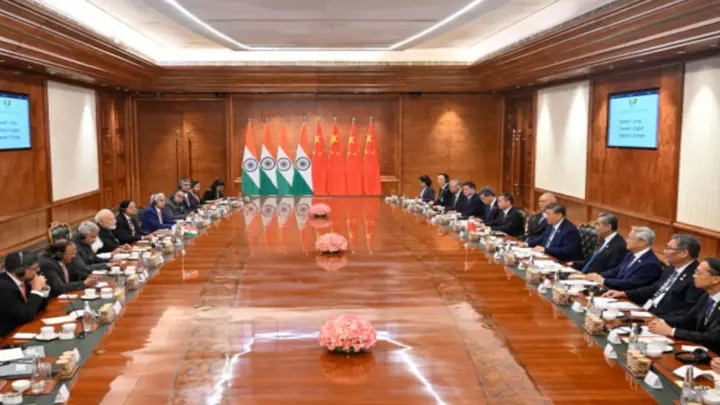
Separate statements issued by India and China after Saturday’s meeting between Prime Minister Narendra Modi and President Xi Jinping have revealed a clear difference in how the two countries view the relationship between their bilateral ties and the border dispute.
China’s statement said the two countries must advance bilateral relations and work toward resolving the border issue simultaneously. Alongside maintaining peace and stability in the border areas, it said, both sides should strive for “parallel and mutually reinforcing progress” in these two areas.
China’s statement said: “The sources of friction must be removed through the political wisdom of mutual respect and mutual understanding. Both sides should stay committed to advancing bilateral relations and resolving the border issue, strive for parallel and mutually reinforcing progress in both areas, and maintain peace and stability in the border areas.”
India’s published statement, however, framed the border situation differently. It said Prime Minister Modi stressed that maintaining peace and stability in the border areas is “an essential foundation for the continued development of bilateral relations.” He also emphasised the need for both countries to abide by existing border-related agreements and understandings.
According to India’s statement, the two leaders reaffirmed their commitment to a “fair, reasonable and mutually acceptable” resolution of the border issue, taking into account the overall bilateral relationship and the long-term interests of both countries’ people. The difference between the two statements essentially concerns the sequencing of progress.
China’s statement suggests advancing the broader bilateral relationship and the border issue simultaneously — meaning the overall relationship between the two countries can move forward even while the border dispute remains unresolved. India’s statement, on the other hand, presents peace and stability in the border areas as the foundation for developing the broader bilateral relationship.