Analysis
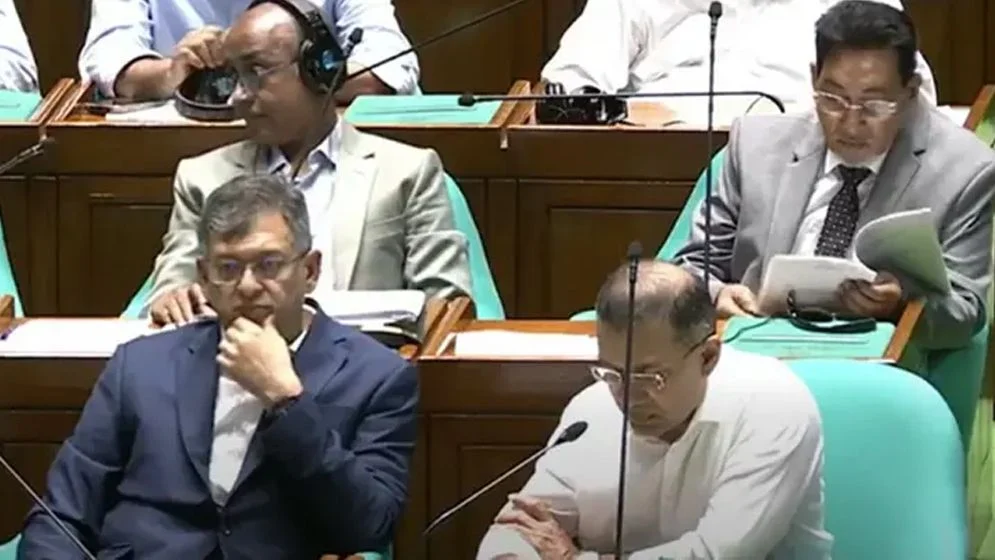
After Mirza Fakhrul Islam Alamgir was elected president and vacated his parliamentary seat, BNP Standing Committee member and Home Minister Salahuddin Ahmed has taken his place. On Thursday, August 27, the first day of the 13th National Parliament’s third session, he was given the seat next to Prime Minister and House Leader Tareque Rahman under the new seating arrangement. Mirza Fakhrul had occupied that seat until now.
In Bangladesh’s political culture, the seat next to the prime minister in parliament’s front row is not merely a place to sit — it also carries political and organizational significance. As a result, seating Salahuddin Ahmed in Fakhrul’s former seat has sparked fresh discussion within and outside BNP. Although this is technically part of parliament’s routine seating reorganization, many political observers see a symbolic message about the party’s future leadership in it.
Discussion has now begun in political circles over whether Salahuddin Ahmed is being made deputy leader of the house.
However, no formal decision or announcement has yet been made regarding making Salahuddin Ahmed deputy leader. The authority to decide who becomes deputy leader rests with the house leader and prime minister. People familiar with the matter say there is no scope to read the new seating arrangement directly as a decision on becoming deputy leader. Even so, many consider his placement in this important seat suggestive.
Until now, the seat next to House Leader Tareque Rahman was occupied by BNP’s recently departed secretary general and local government minister, Mirza Fakhrul Islam Alamgir. The seat after his was occupied by Finance Minister Amir Khasru Mahmud Chowdhury. After that was Salahuddin’s seat.
After being elected president, Mirza Fakhrul resigned as secretary general and local government minister. At the same time, his parliamentary seat, Thakurgaon-1, was declared vacant.
Under the new arrangement, Salahuddin has moved into Mirza Fakhrul Islam’s seat. Amir Khasru Mahmud Chowdhury occupies the seat after his. After that is BNP’s senior leader Dr Khondaker Mosharraf Hossain.
Senior BNP leader Khondaker Mosharraf Hossain now sits in Salahuddin’s former seat. In the new arrangement of the front row’s 10 treasury bench seats, BNP Standing Committee’s newest member, Amanullah Aman, has moved forward from the back row.
Seating Salahuddin next to the prime minister is also gaining significance because of his political and government position. A member of BNP’s national standing committee, Salahuddin currently serves as home minister. In addition, his name is also being discussed as a possible future secretary general of the party. With this leader holding an important position in both government and party policymaking, discussion has intensified over whether there are plans to bring him into a more prominent role in parliamentary proceedings.
Asked about this, BNP’s acting secretary general, Ruhul Kabir Rizvi, told media Saturday that he knew nothing about the matter. He said it was within the authority of the prime minister and house leader.
The post of deputy leader of the house is an important one that supports the house leader. In the house leader’s absence, the deputy leader plays an important role in conducting parliamentary proceedings. There is precedent for placing senior leaders of the ruling party in this post in the past as well.
Whether seating Salahuddin next to the house leader is merely a new seating arrangement, or preparation to give him a more important role in parliament, will become clear once a formal decision is made.
However, while BNP has filled all its other posts, it has so far left the deputy leader post vacant. A kind of competition exists among senior leaders around this post.
Because of this competition, Khaleda Zia also left the post of deputy leader of the house vacant in the 11th parliament. She had also left the post of deputy leader of the opposition vacant in the 2008 parliament. At the time, three senior leaders had hoped to become deputy leader. They were Barrister Moudud Ahmed, Barrister Jamiruddin, and Salahuddin Quader Chowdhury.