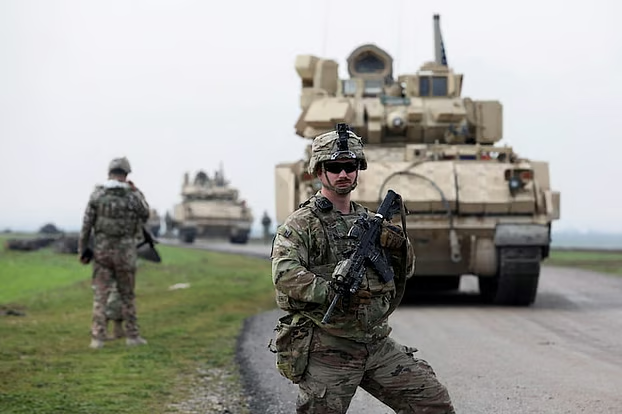
The United States is considering reducing its troop presence and military installations in the Middle East. Six sources said that if the Trump administration can end the ongoing conflict with Iran, some steps to reduce troops and military installations could begin as early as next year. The sources also said military and intelligence officials are quietly discussing the matter.
If implemented, such a move would mark another major shift in U.S. national security strategy toward the Middle East since 9/11. Over the past 25 years, various efforts have been made to withdraw from the region, but Washington has repeatedly been drawn back in due to conflicts and its so-called counterterrorism operations in countries including Iraq, Afghanistan, Syria, Yemen and Libya.
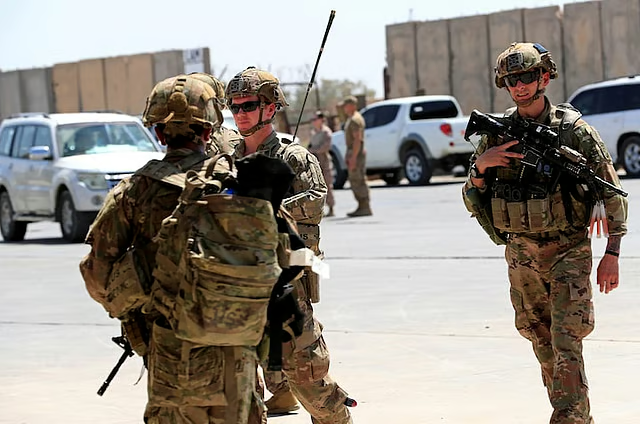
US soldiers during a ceremony handing over control of Taji military base, north of the Iraqi capital, Baghdad, to Iraqi security forces.
About 50,000 U.S. troops are currently stationed at various bases across the Middle East, along with two aircraft carriers and more than a dozen guided-missile destroyers, among other significant military assets. However, months of war with Iran have exposed the vulnerabilities of these military installations. Several U.S. bases have been damaged by Iranian drone and missile attacks, and the United States says 18 U.S. troops have been killed in the war so far.
Military and intelligence officials involved in the discussions say various options are being considered regarding the future scale of the U.S. presence in the Middle East, including not rebuilding some installations and conducting certain sensitive operations without permanent bases.
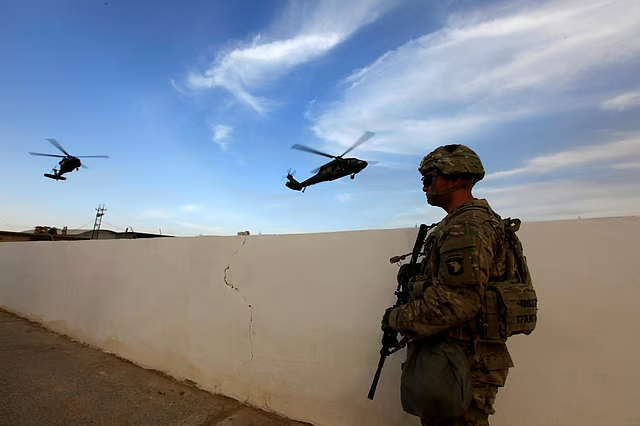
A U.S. soldier stands alert with a weapon at a base in the nearby Makhmur area during an operation against the Islamic State (ISIS) in Mosul, Iraq.
Plans to move bases underground
Two sources familiar with the discussions said the military is also working to enhance security for U.S. troops who will remain in the Middle East once the war ends. As part of this, moving some military installations underground is being considered, an idea that has taken on new urgency after Iranian drone and missile attacks exposed the vulnerability of these bases.
A U.S. official, speaking on condition of anonymity, said, “The vulnerabilities were always known, but the United States never treated the matter with sufficient urgency.”
Two sources said the military has drawn up several possible plans to change the structure of U.S. troop deployment in the Middle East starting as early as next year. However, with the conflict with Iran still ongoing, it is unlikely that strategically important positions needed for conducting airstrikes will be given up any time soon.
The U.S. Defense Department declined to comment on the internal discussions. One U.S. official said they would not speculate on the future structure of troop deployment. The CIA also did not comment on the matter.
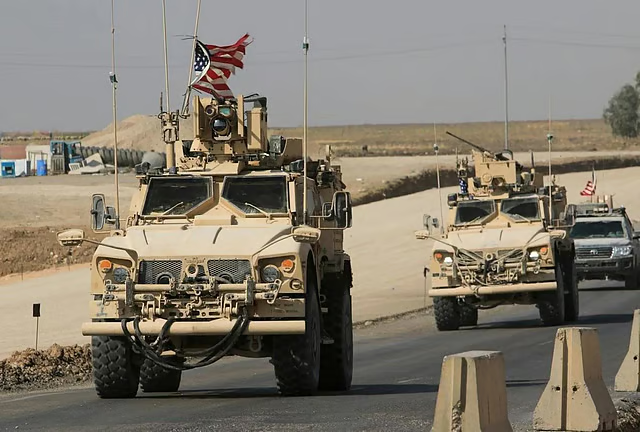
A convoy of U.S. military vehicles near the city of Qamishli, Syria.
US presence surged after 9/11
After the devastating attacks on the United States on Sept. 11, 2001, the U.S. military and intelligence presence in the Middle East was expanded dramatically. The United States built a large network of permanent bases and intelligence installations for the wars in Iraq and Afghanistan and, later, for conducting so-called counterterrorism operations across the Middle East.
Two years after 9/11, during the invasion of Iraq, there were an estimated 250,000 U.S. troops in the Middle East. According to publicly available figures, that number never fell below 100,000 between 2007 and 2011.
In 2011, then-U.S. President Barack Obama announced a reduction in troops in Afghanistan and withdrew combat troops from Iraq. But U.S. troops were later sent back after the rise of ISIS in Iraq. Since then, the number of U.S. troops in the Middle East has fluctuated between 30,000 and 60,000. During the same period, attacks by armed groups allied with Iran also became a major concern for U.S. policymakers.
Although planners are now discussing possible options for reducing troop levels, the United States does not appear to be close to any agreement with Iran that could end the conflict. Iran continues to carry out sustained attacks on U.S. bases and forces deployed in the region. Roughly a month ago, the two sides exchanged fire for the first time. Last week, Iran struck U.S. bases in Jordan and the United Arab Emirates.
A convoy of US military vehicles is seen near the Syria-Iraq border.
Questions also over rebuilding damaged bases
Iranian strikes have caused significant damage to U.S. military installations in the Middle East. A U.S. official and a former intelligence official said a CIA base in Riyadh, Saudi Arabia, was effectively destroyed in an Iranian attack.
U.S. military installations in Bahrain, Qatar, Saudi Arabia and Kuwait have also come under Iranian drone and missile attacks. Officials are also considering not rebuilding some of the damaged installations, partly because of the potential cost involved.
In April, top Pentagon military official Jules J. Hurst III said it was still unclear how much it would cost to repair U.S. bases and installations damaged by the war, adding that the cost would also depend on the outcome of an assessment of what the U.S. military posture in the Middle East should look like.
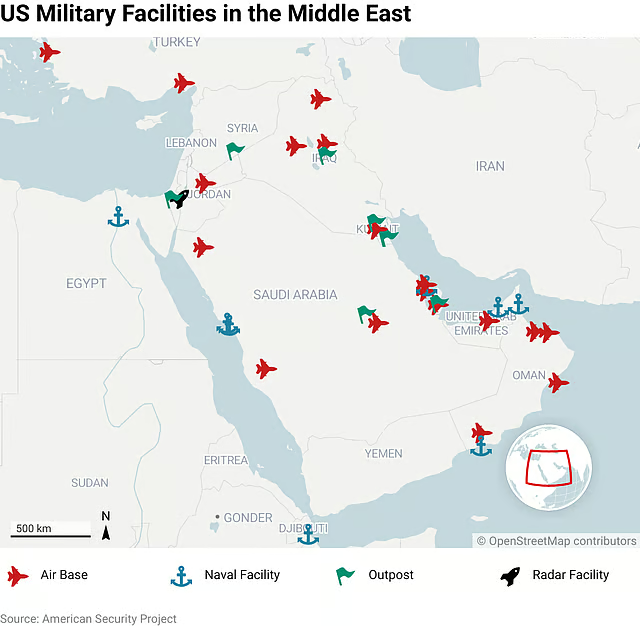
Various US military bases across the Middle East
Three sources familiar with the discussions said senior Pentagon officials are interested in reducing U.S. troop levels in some Gulf countries, while also planning to place greater defense responsibility on regional allies.
However, no formal review has yet begun. Military and intelligence officials are instead preparing for possible scenarios, mindful of President Donald Trump’s tendency to change positions quickly.
Earlier attempts to leave the Middle East
According to former U.S. officials and historians, the CIA was searching for a new mission at the time of 9/11, after the collapse of its principal adversary, the Soviet Union. The agency had analysts with deep expertise in terrorism and the Middle East, but not many of them. According to University of Texas at Austin historian Jeffrey Rogg, the CIA likely had only a few hundred personnel in the region at the time.
Everything changed after 9/11. The agency began recruiting extensively and built up a much larger paramilitary corps. These officers carried weapons and worked closely with the U.S. military to hunt down “terrorists.”
But both agencies have gone through ups and downs in their engagement with the region over the past two decades. Presidents from both the Democratic and Republican parties have, at various points, desperately wanted to withdraw from the region. Obama devised a plan to shift U.S. military and intelligence resources toward Asia. Trump’s first-term administration likewise identified China as the greatest threat to the United States in its first National Security Strategy.
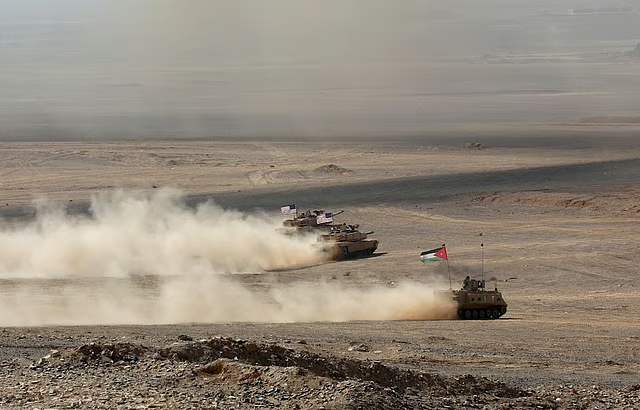
Military vehicles fly the flags of Jordan and the United States as part of the “Eager Lion” joint military exercise in Zarqa, Jordan.
But that plan eventually became something of a running joke in national security circles, as one crisis and policy decision after another — including the unexpected rise of ISIS and the killing of top Iranian general Qassem Soleimani during Trump’s first term — repeatedly pulled the United States back into the Middle East.
According to a CNN report, senior U.S. military officials recently warned Trump that military actions escalating the conflict with Iran would likely not succeed in achieving his stated goals. As a result, Trump has decided to focus on increasing economic pressure in the hope of creating conditions that could lead to the collapse of Iran’s ruling system.
There is no clear timeline for how long this strategy might take to produce results. Many analysts believe Iran’s current leadership is prepared to endure months of economic pressure, and that the likelihood of it capitulating in the near future is low.
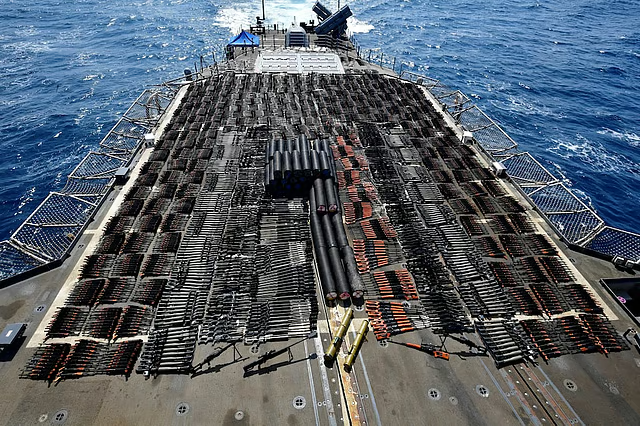
Weapons seized from an unidentified vessel in international waters of the northern Arabian Sea are displayed on the deck of the US warship USS Monterey.
A source told CNN that Pentagon officials believe some large, permanent military bases will be maintained in the region. However, whether these installations are rebuilt may depend on how willing the host countries are to share in the reconstruction costs. A source familiar with the discussions said the cost could run into several billion dollars, adding that many of these bases were originally built and financed by the host countries themselves.
It appears nearly certain that in the short term, U.S. troops and bases in neighboring countries will continue to face attacks from Iran. Against this backdrop, a top U.S. Navy official said last week that U.S. forces would not be returning “anytime soon” to the traditional Fifth Fleet base in Bahrain.