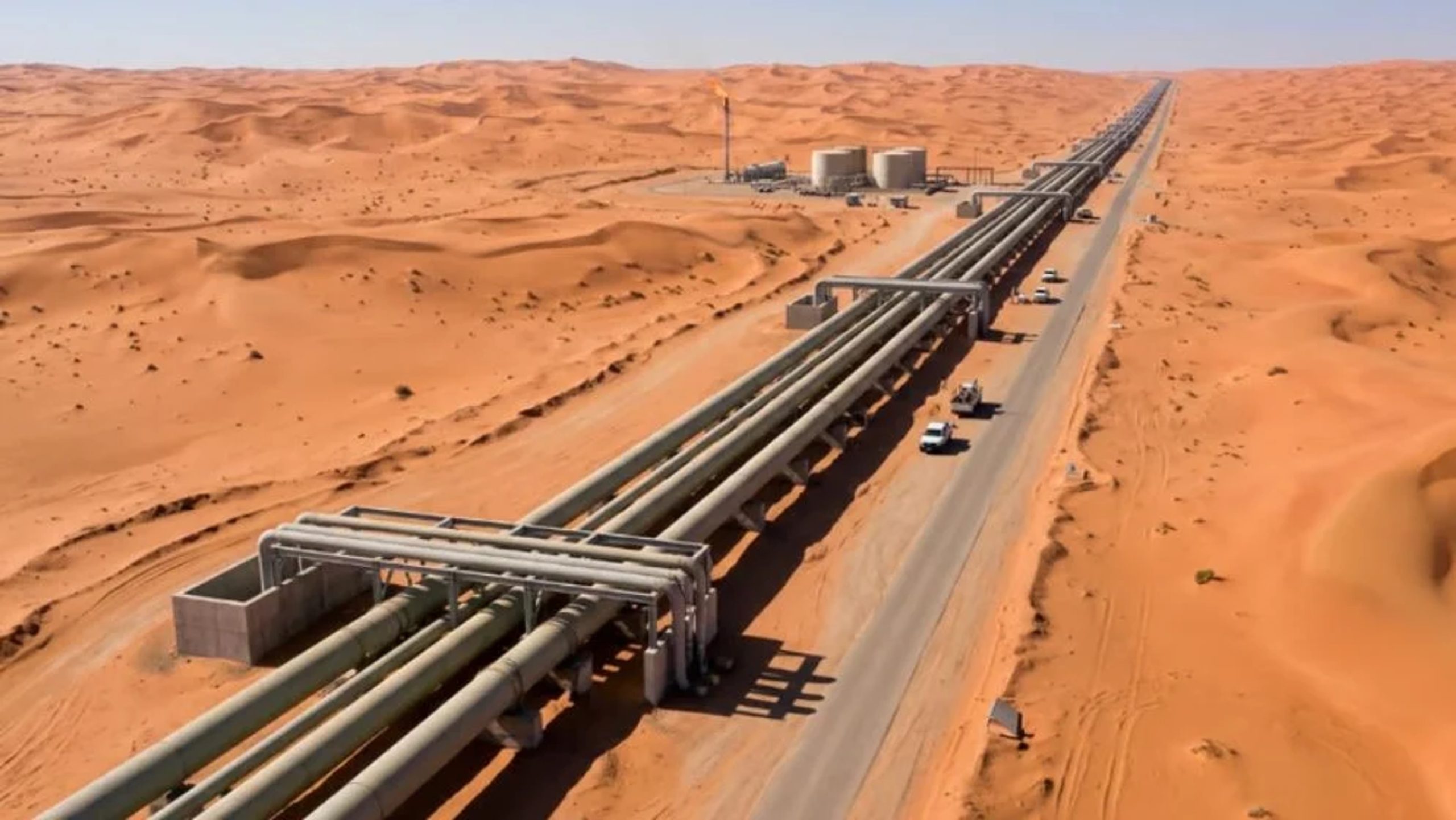
Satellite images have revealed devastating damage to Saudi Arabia’s main East-West pipeline following a drone attack. If Saudi Arabia cannot quickly restore the pipeline, the country could run out of oil stocks to export within days. This has raised serious fears that nearly four percent of total global energy supply could be cut off entirely.
Satellite images released Sunday night show that a pumping station along the roughly 1,200-kilometre pipeline was completely destroyed by fire. With supply falling from Saudi Arabia, the world’s largest oil exporter, the global energy shortage is set to deepen further. High energy prices have already driven inflation and the cost of goods worldwide to sky-high levels.
Amid this, Yemen’s Houthi rebels have launched fresh attacks on Saudi Arabia while also seizing a strategic island in the Red Sea, further extending their reach. This instability has pushed Brent crude oil prices in international markets up more than 3.5 percent, to $108 a barrel — the highest since this past May.
Saudi authorities have not yet given any clear indication of exactly how long it will take to repair the pipeline since the attack. According to Reuters and other sources, fully repairing the pipeline could take anywhere from a few weeks to about a month and a half.
Even though the main Persian Gulf shipping route has been closed for the past six months, Saudi Arabia had been able to move roughly 4 million barrels of oil a day — about four percent of global demand — through this desert pipeline to Red Sea ports. But with the pipeline now shut, the oil already stockpiled at those ports can sustain exports for, at most, five to seven days. After that, there would be no other option left.
This oil crisis is also driving up petrol and diesel prices sharply in global markets. In the US market, diesel prices have broken records, surpassing $6 a gallon. Altogether, the conflict in the Middle East involving the United States and Israel has now entered its seventh month, creating the risk of a major global energy crisis.