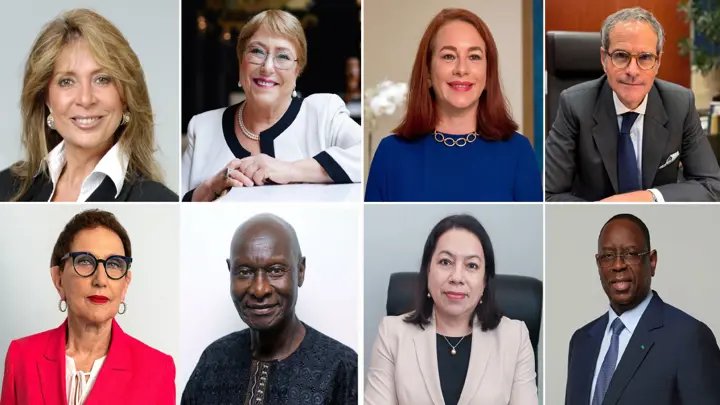
The process to select a new United Nations secretary-general has begun as current chief Antonio Guterres’s term nears its end. Eight candidates are contesting this important post this time. The race to determine the UN’s next leadership is taking place amid criticism and pressure from various sides, including the United States and Israel.
The post of UN secretary-general is seen as one of the toughest diplomatic responsibilities in the world. The secretary-general holds no direct state power or military force. Yet their role in the world’s conflicts, wars, humanitarian crises, peacekeeping and international diplomacy is extremely important.
Eight candidates are contesting this year’s selection. Guyana’s Carolyn Rodrigues-Birkett has emerged as a frontrunner. The other women candidates are Rebeca Grynspan of Costa Rica, Michelle Bachelet of Chile, Maria Fernanda Espinosa of Ecuador, and Yvonne Baki of Ecuador. The three male candidates are Rafael Grossi of Argentina, Macky Sall of Senegal, and Olara Otunnu of Uganda.
This selection, however, is not decided by direct vote. The General Assembly appoints the secretary-general following a recommendation from the UN Security Council. As a result, alongside candidates’ qualifications, political support from the Security Council’s permanent members is also extremely important.
The roles of the United States, China, Russia, the United Kingdom and France are especially significant in selecting the UN secretary-general. Opposition from any one of these five permanent Security Council members can become a major obstacle to a candidate’s selection. Diplomatic understanding and acceptability are therefore extremely important for candidates.
The current global situation has also made this selection particularly significant. The Ukraine war, the Gaza and Palestine crisis, the Iran war, US-China rivalry, and debate over the UN’s effectiveness — taken together, the new secretary-general will have to navigate an extremely complex international environment.
In particular, the UN’s relationship with the United States and Israel has grown more tense in recent years. As a result, the new secretary-general will have to manage political pressure from powerful states on one hand, while maintaining the credibility of the UN charter, international law and multilateral diplomacy on the other.
Regional balance has also become an important factor in the race. The UN secretary-general has traditionally been selected with consideration for balanced representation across the world’s different regions. So alongside a candidate’s personal qualifications, which region they come from and how acceptable they are to various powers is also part of the electoral calculation.
The next secretary-general will not simply be the UN’s administrative head; they will have to take charge at a time when the international system is going through deep division. Reducing war and conflict, keeping the door to dialogue open among the great powers, and rebuilding the world’s trust in the UN will be the new secretary-general’s biggest challenges.