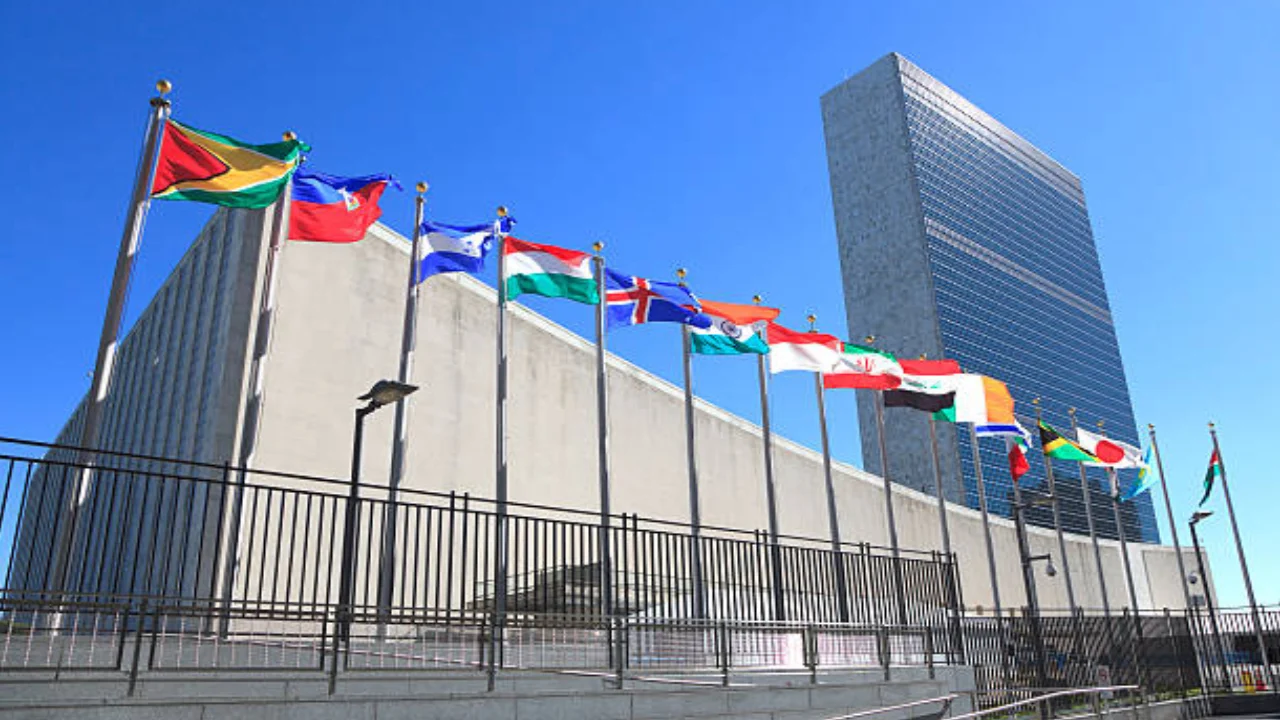
Pakistan Muslim League-Nawaz (PML-N) leader and former senator, retired Lt. Gen. Abdul Qayyum, has called for restructuring the United Nations to make it more effective and neutral. In his view, the veto power held by a few Security Council members, along with limited representation for various continents and the Muslim world, is hampering the UN’s ability to function impartially.
He made the remarks while speaking at an event organized by the Universal Peace Federation (UPF) UK. Noting that the UN plays a commendable role in important areas such as peacekeeping, health, education, climate change and refugee issues, Qayyum said the organization’s effectiveness is limited when member states fail to implement its charter and resolutions.
He said an arms race, undeclared nuclear weapons, political repression and serious human rights violations continue in various parts of the world. He also referenced the situations in Palestine and Kashmir. In his view, power struggles, border disputes, poverty, inequality, nationalism, racism, religious extremism and disregard for international law are among the leading causes of conflict.
Abdul Qayyum emphasized “geopolitical realities, global power balance and pragmatic diplomacy.” He called on states to refrain from interfering in the internal affairs of other countries. In his view, small states’ security guarantees should rest not on the military strength of any superpower, but on the foundation of international law.
He further said military power also has its limits. Citing NATO’s failure in Afghanistan and the failure of US efforts at regime change in Iran, he said some countries are prepared to endure economic pressure for a long time to protect their independence and sovereignty.
He emphasized dialogue, mediation and adherence to international law as essential to establishing lasting peace in the world. He also called for ensuring fair trade on international waterways, access to energy and mineral resources, tolerance, arms control, poverty reduction, education and human rights.
According to Qayyum, these goals are consistent with the UN’s core objectives. However, he said, the UN’s success ultimately depends on the cooperation of member states and their adherence to international law.