Violence in Yemen has reached a devastating scale. On one side stand forces loyal to the internationally recognised government; on the other, Houthi rebels. With the Houthis armed with advanced weaponry, government forces are struggling to match them, and the rebels are seizing one strategically important area after another. The Houthis have also been launching drone attacks on Saudi Arabia.
The Iran-backed Houthis have long enjoyed the support of some Muslims, but that support could now fade. One of their drones came close to the holy city of Mecca before Saudi forces destroyed it. The holy Kaaba and the Prophet’s Mosque in Medina are Islam’s holiest sites, held in the highest reverence by Muslims. If a Houthi drone were ever to strike the holy city of Mecca, it could turn Muslim sentiment against them.
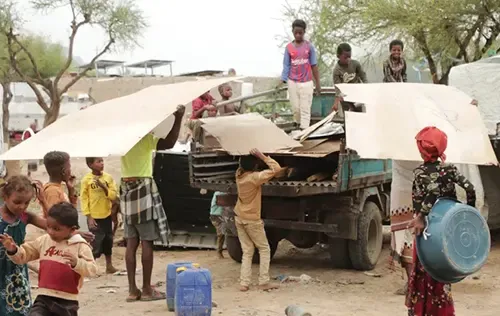
The news agency AFP reports that the violence in Yemen has displaced more than 100,000 people within the country. Thousands more are being forced into risky sea crossings of the Bab-el-Mandeb strait in search of safety, trying to reach Djibouti, according to the United Nations. In a statement, UNHCR warned that as more people are displaced by the violence, pressure on local communities’ limited resources is increasing, raising fears the humanitarian crisis could deepen further.
The agency said around $14 million in new funding is urgently needed to meet the emergency needs of displaced families inside Yemen, with additional support also required for those reaching Djibouti. The statement said many families have fled with only a few belongings on very short notice. Shelter, food, clean water, healthcare and protection are now all urgent needs, as host communities and sites designated for the displaced are coming under growing strain.
More than 65,000 registered refugees and asylum seekers in Yemen, most of them from Somalia and Ethiopia, are also at risk because of the fighting. The displacement began after Iran-aligned Houthi forces advanced rapidly and took control of Yemen’s entire Red Sea coastline, a move aimed at further tightening their grip on the Bab-el-Mandeb strait. This strategically vital waterway connects the Red Sea to the Gulf of Aden. With shipping through the Strait of Hormuz disrupted by the US war against Iran, Bab-el-Mandeb has also grown in importance as an alternative maritime route.
Displaced woman Aisha Muhammad had to flee last week, leaving her five children behind, after Houthi forces seized her village near the port city of Mokha. Muhammad said they were being held down and shot at, trapped inside their own homes. “We are just cooking rice, there’s no bread, there’s nothing else,” she said. “My daughters called me and said they want to join me. But the situation has become so difficult that it isn’t possible.”
Hussein Haidara, displaced from Hodeidah, said he had to flee suddenly with his family. “You can barely manage to bring your children and only the most essential few belongings,” he said. “We were terrified by the shelling and sniper fire. Out of fear for our children’s and family’s safety, there was no option but to flee as quickly as possible.”
UNHCR said more than 2,400 people have crossed the Bab-el-Mandeb strait to reach Djibouti in the past four days alone. The agency said most of them are women, children and elderly people.