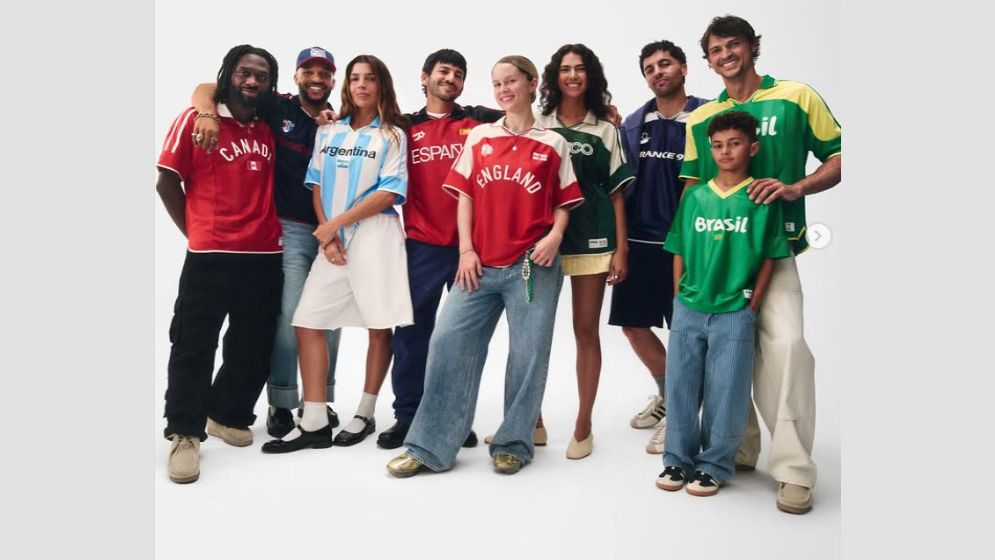
The fashion world has always drawn inspiration from football. But the picture in 2026 is a little different — this time control has passed into football’s own hands. At this year’s FIFA World Cup, this mega event is not merely creating a temporary fashion trend, but changing the very direction of the fashion world.
From elite luxury brands to streetwear and global sportswear giants, the core inspiration for everyone’s designs is now football. The design, styling and marketing of clothing are all now revolving around football.
At the center of this change is the modern ‘jersey.’ Once confined to stadium galleries and supporters, it has now effortlessly found a place in fashion shows, the social media feeds of influencers and major fashion collaborations.
The touch of this evolution is clear in the jersey designs for the upcoming 2026 World Cup for teams such as Brazil, France and Nigeria. Alongside technological innovations such as aero-fit cooling systems, equal attention has been paid to the aesthetics of how the jerseys will look as everyday wear off the pitch.
The world’s top luxury brands are not far behind either. The famous brand ‘Loewe’ has become the official wardrobe partner of the Spanish national team. It has created a fine blend of sports identity with its own craftsmanship. On the other side, ‘Boggi Milano’ has joined as FIFA’s official formal-wear partner, bringing a touch of classic tailoring to football’s institutional look.
Joint ventures, or collaborations, among fashion designers have accelerated this trend further. One example is the joint effort of ‘Jacquemus’ and Nike for the French national team. They have presented football’s boots and clothing in a minimalist and attractive form suited to runway models.
At the same time, this football fashion has now come further within reach of ordinary people.
The clothing maker ‘Gap’ has brought out a FIFA World Cup collection. On the other side, retailers such as ‘Urban Outfitters’ are turning football accessories into everyday fashion through caps, oversized T-shirts and casual layering.
The world of streetwear has also seized on this trend. Teaming up with ‘Adidas,’ ‘Kith’ has turned football into a collectible fashion item, one often linked with the names of superstars such as Lionel Messi.
Brazilian forward Vinicius Junior, as one of football’s leading faces for Nike, also represents this change, in which jerseys are designed not merely as playing kit but as an ‘identity system’ of their own that can spread worldwide.
Musicians and digital content creators are playing a big role in shaping this aesthetic look of football off the pitch.
The popular American singer Olivia Rodrigo was recently seen in an FC Barcelona jersey. It proves how a club’s own identity is now spreading through younger generations and celebrity styling.
One of the best examples of this global change is the ‘Mundial Collection,’ a joint effort with ‘Adidas Originals’ by the Hong Kong-based brand Clot. It is a splendid blend of Asian streetwear with football’s global heritage.
Similarly, the renowned designer Priya Ahluwalia, in a joint venture with the sports brand Puma, has brought out her Indian and Nigerian family background in the design of football clothing, essentially telling a kind of cultural story.
Even New York City Mayor Zohran Mamdani was recently seen praying after wearing a FIFA Cup jersey. He has also announced that new World Cup jerseys made with a New York City theme and within ordinary people’s means will be brought to market.
All in all, these changes point to a larger reality. Football fashion is no longer merely the trend or fashion of a particular season. It is now a vast global system formed by the joint coordination of athletes, designers, brands and digital culture.
বাংলায় মূল প্রতিবেদন পড়ুন · Read the original Bengali report