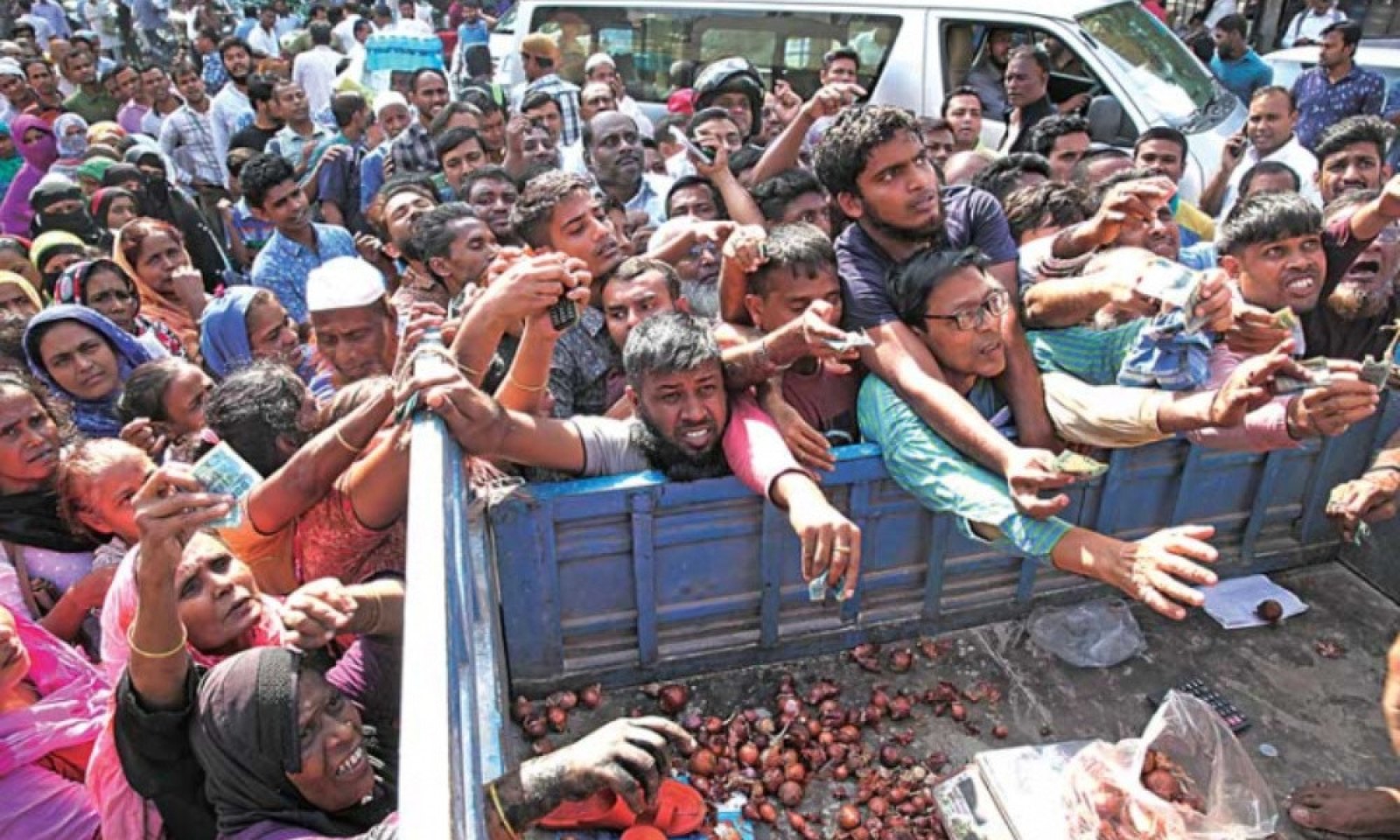
A large number of people in the country are losing the means to buy food. High inflation, a squeeze on incomes and jobs, and the effects of natural disasters are raising concern about food security. A World Food Programme (WFP) forecast says 1 crore 81 lakh people in the country may be at risk of acute food insecurity in the last four months of 2026, 28 lakh more than at the start of the year.
Friday, 16 October, is World Food Day. This year’s theme is “Today’s innovation, tomorrow’s nutrition”. The day was agreed at the 20th conference of the UN Food and Agriculture Organization (FAO) in 1979 and first marked in 1981. On a day that highlights access to food and nutrition, the country’s food security situation is under discussion again.
A WFP report published on 22 September says several factors are behind the rising risk of food insecurity. High prices and falling purchasing power, together with flood damage to farmland, child malnutrition and uncertainty over continued food aid for Rohingya refugees, are making the situation more complex.
Food is available, but many families cannot afford it. According to the state-run Trading Corporation of Bangladesh (TCB), coarse rice now costs at least Tk 50 a kilogram in the market, and loose flour about Tk 50 a kilogram. A large share of the monthly spending of people on limited incomes is going on food.
Food prices began rising in early 2022 after the Russia-Ukraine war. In July 2024 food inflation passed 14 percent, the highest in about a decade, and stayed above 10 percent for several months after. Inflation has since come down, but prices have not returned to their earlier levels.
According to the Bangladesh Bureau of Statistics (BBS), food inflation in September was 7.22 percent and non-food inflation 9.30 percent. Food prices are rising more slowly, but the pressure on ordinary people’s spending has not fully eased.
There are also worries about the economy’s future. The International Monetary Fund (IMF) forecast on 13 October that Bangladesh’s GDP growth could fall to 3.2 percent in the current 2026-27 fiscal year, while average inflation could rise to 10.9 percent. If slow growth and inflationary pressure persist, people’s incomes, purchasing power and the investment climate could face further strain.
Disasters have also hit farm production. The WFP report says floods and waterlogging damaged about 80,000 hectares of farmland in 2026, affecting 2 lakh 30 thousand farming households and 13 lakh people. The damage has both cut production and narrowed the income of many who depend on farming.
Remittances also matter for food security. The report notes that about half of Bangladesh’s remittances come from the Middle East. If instability in the region disrupts the flow, the economy and families’ purchasing power could be affected.
Alongside the lack of food, malnutrition is a concern. According to the WFP, one in four children under five in the country is stunted, meaning short for their age, and 11 percent are wasted, meaning underweight for their height. Two in every five households have a significant shortfall of micronutrients. Without enough food and nutrients, children’s normal growth and development are held back.
Government food distribution figures also show a shortfall. According to the food ministry, 8 lakh 34 thousand tonnes of rice and wheat were distributed through various programmes from 1 July to 8 October this year, 48,000 tonnes less than in the same period last year. The country currently holds about 23.5 lakh tonnes of food grain in stock.
Economists advise putting the most vulnerable people first in tackling food insecurity. Selim Raihan, a professor of economics at Dhaka University and executive director of SANEM, said the government’s first task in the crisis should be to identify vulnerable groups and get quick, effective help to them.
Food aid must be increased for low-income families, day labourers, farm workers, women-headed households and people in disaster-hit areas, he said. The sale of rice, lentils and other essentials at fair prices, and targeted cash support for families in genuine need, must also be widened.
Selim Raihan also stressed preventing artificial shortages and price manipulation in the market. Regular monitoring to prevent hoarding and transparency in the food supply chain are urgent, he said, and food aid must reach those who really need it.
বাংলায় মূল প্রতিবেদন পড়ুন · Read the original Bengali report