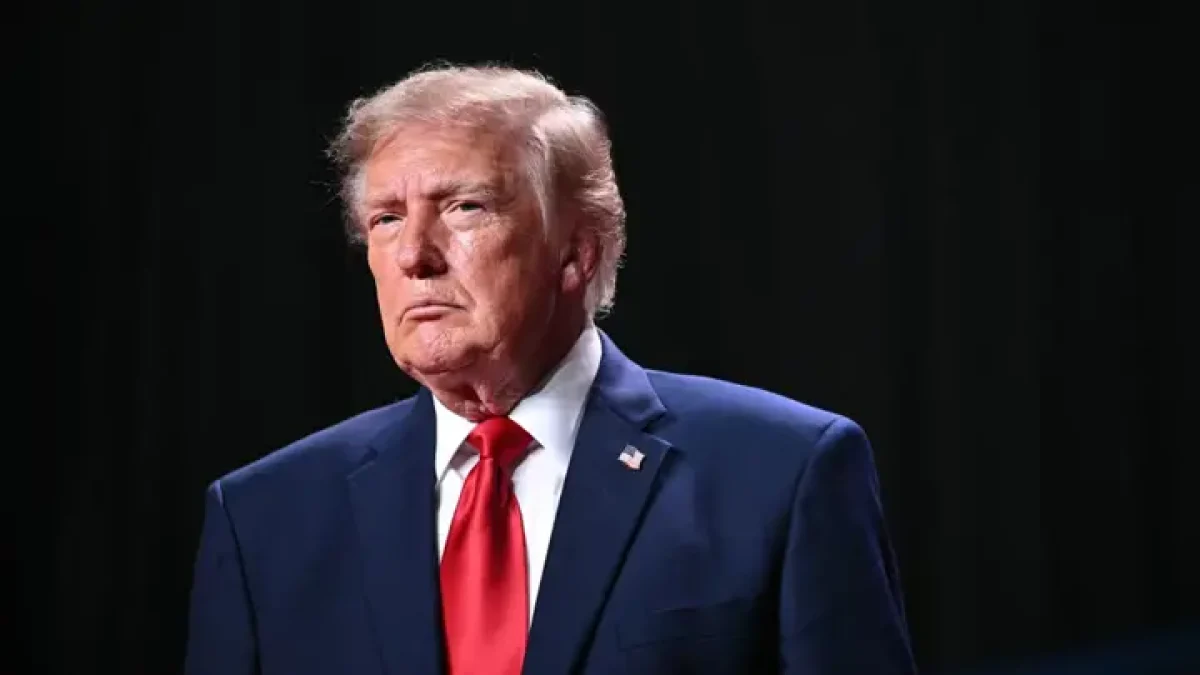
US voters could deal an almost fatal blow to President Donald Trump’s political standing in the 3 November midterm elections. If the polls are right, Trump could suffer a political collapse next week.
Trump’s popularity is close to the lowest point of either of his two terms. The still unresolved war with Iran has pushed up fuel prices, deepening the anger of voters who were already upset about the cost of living. His average approval rating now stands at about 37 percent.
Pollsters see a strong chance that Democrats will win the House of Representatives. They also have a chance in the Senate, although the contest there is harder. Polls have been wrong before, and they could be wrong again.
Still, talk has grown louder of a large electoral wave in the Democrats’ favour, whether it turns out to be a small swell, a huge tsunami or something in between.
This is not only a sign of political change in the United States; its effects have spread elsewhere in the world. The political current that rose with Trump’s victory in 2016 (nationalism, populism and contempt for established political institutions and allies) now shows signs of fading across a large part of the democratic world.
The political situation in the United States is therefore about more than one midterm election. It raises a bigger question: is the global political trend that grew stronger with Trump’s rise now losing its appeal?
Cost of living and the Iran war are big challenges for Trump
One of the biggest reasons for Trump’s falling popularity is economic discontent. Before the election he promised to fix the economy and bring down the cost of living. But with almost two years of his second term gone, many Americans see little real sign of that promise being kept.
The ongoing war with Iran in particular has made the situation more complicated. The conflict has unsettled energy supplies and international markets, and petrol and other fuel prices have risen. As a result, frustration is growing among Americans over inflation and the pressure of everyday costs.
A survey by the Associated Press and the NORC Center for Public Affairs Research also reflects this discontent. About 80 percent of voters surveyed said the economy or the cost of living would be one of their main considerations in the coming midterm election. About two-thirds also named healthcare and the Iran war as important issues.
The survey also found that about 80 percent of registered voters are unhappy with Trump’s handling of the cost of living. About three-quarters view his management of the economy negatively. Signs of discontent over the economy are showing even among Republican voters.
This has created a political opening for the Democrats. But it does not mean voters are enthusiastic about the party. In the survey, about 40 percent of voters expressed a favourable view of the Democratic Party. In other words, despite the anger at Trump, the Democrats still have to prove they are acceptable.
Trump’s political followers under pressure in Europe too
Outside the United States, too, a fresh debate has begun about the influence of Trump’s political ideas and tactics. In Europe in particular, several leading figures of nationalist and populist politics now face a range of challenges.
British politician Nigel Farage is a widely discussed example. One of the main faces of the Brexit campaign and leader of Reform UK, Farage has long built his popularity on opposition to immigration, nationalism and criticism of the established political system. His message has a good deal in common with Trump’s “America First” policy.
Recently, however, support for his party, Reform UK, has shown signs of ebbing. Its support was above 30 percent in August 2025 but fell to about 25 percent by August 2026. Political controversies, questions about the party’s leadership and the rise of rival parties have also created challenges for it.
Yet there is no basis for concluding that every right-wing or nationalist party in Europe is losing popularity. In France, Marine Le Pen’s National Rally is still a major force in the country’s politics. In Britain, meanwhile, parties such as Reform UK are cutting into the vote banks of the traditional parties.
In several large European democracies, the influence of right-wing populist politics is still growing. The positions of the National Rally in France and Reform UK in Britain are examples of that trend. The rise of these parties is forcing traditional conservative parties to rethink their positions on issues such as immigration and national identity.
So it cannot be said that the influence of Trump’s political model in Europe is coming to a complete end. Instead, the current is losing popularity in some places while gaining fresh strength in others. But there are signs that the unconditional support Trump’s positions and policies once enjoyed no longer holds everywhere.
Is the foundation of Trump’s political model weakening?
After winning the US presidential election in 2016, Trump not only changed the politics of the Republican Party but also became the symbol of a new trend in international politics. Key features of his political strategy were opposition to the established political system, putting national interest above everything else, and preferring bilateral bargaining to global cooperation.
Through his “America First” policy he spoke of protecting America’s economy, industry and jobs. To that end he imposed tariffs on imported goods, put pressure on trading partners and reopened international agreements.
At the same time he put immigration control, border security and questions of national identity at the centre of his political campaigns. By attacking established political leaders and institutions, he presented himself as the representative of ordinary people.
This strategy appealed to politicians in many countries beyond the United States. In various countries, nationalist and populist leaders tried to win support the way Trump did, by attacking the established political system, speaking against immigration and putting national interest first.
Over time, however, the limits of this political strategy have also come into view. Economic crises, inflation, international conflict and strained relations with allies in particular are raising new questions among voters. Whether nationalist rhetoric or opposition to the establishment alone can hold public support over the long term is now also under debate.
Will Trump’s influence end so easily?
Even if the Republicans do not get the result they hope for in the midterms, there is no reason to think Trump’s political influence will end overnight. His personal base is still a major force in US politics. The political positions and election strategy of a large part of the Republican Party are also tied to his influence.
Whatever the midterm result, debate will grow over the Republican Party’s future leadership and Trump’s political legacy.
The future roles of leaders such as Vice President JD Vance and Secretary of State Marco Rubio could also become important. Among the Democrats, meanwhile, there are differences over the party’s own political programme and future leadership beyond opposing Trump.
Trump’s political movement also does not depend on one leader’s popularity alone. In the United States, issues such as immigration, national identity, trade policy and distrust of established political institutions remain an important part of political debate. So even if Trump’s popularity falls, there is no guarantee his followers will lose their footing on these issues entirely.
In Europe, too, the base of nationalist politics is still quite strong. The current rises and falls according to each country’s political and economic realities. It is therefore hard to read the political trend of the whole world from the election result of any one country.
All in all, the 3 November US midterm election matters not only for the Trump administration but also for understanding the future of his influence and political ideas in world politics.
If the Republicans do badly, new questions could arise over Trump’s political authority and his followers’ strategy. At the same time, debate over the future of nationalist and populist politics around the world will grow louder.
But whether the Trump era is ending cannot yet be answered for certain. Rather, how far his influence on world politics lasts is one of the most important questions of the days ahead.
Sources: Newsweek, Associated Press, Sky News and CBS News
বাংলায় মূল প্রতিবেদন পড়ুন · Read the original Bengali report