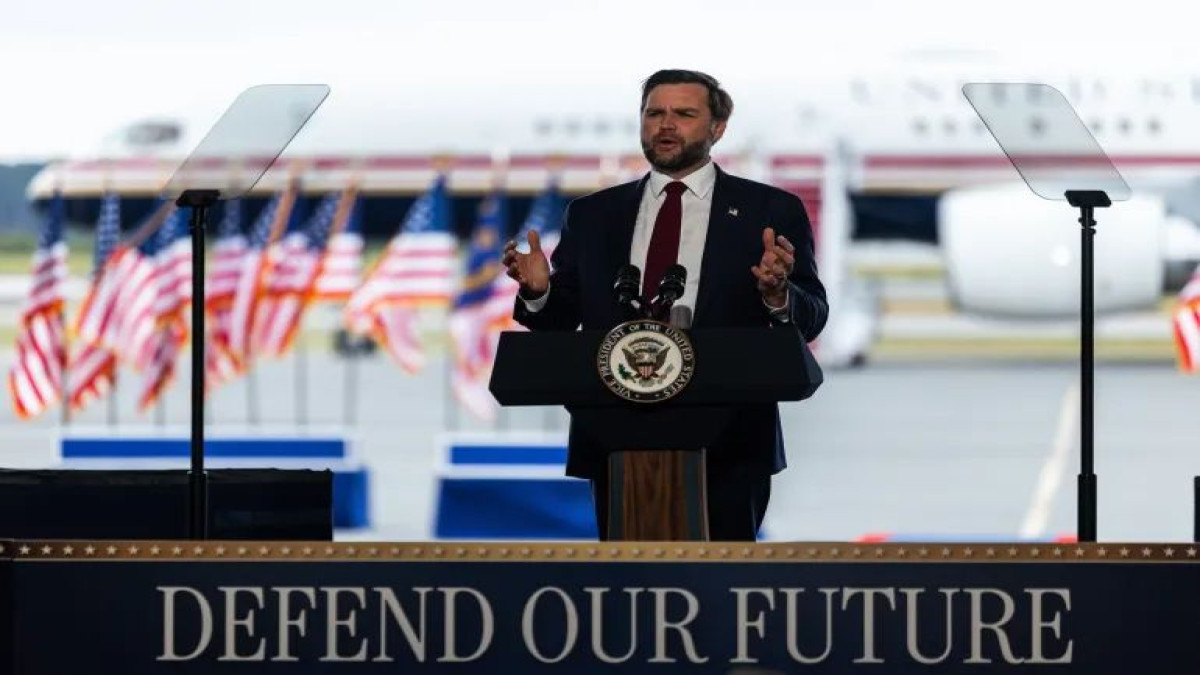
US Vice President JD Vance has written to Mohsen Rezaei, head of Iran’s Supreme National Security Council. The letter is a last-minute effort to restart peace talks between the two countries and avoid a new military conflict.
But President Donald Trump has warned Gulf allies to prepare for a short but intense military operation in Iran after next week’s US midterm elections.
Al Jazeera reported on 29 October that, according to the Wall Street Journal and the New York Times, Vance’s letter speaks of narrowing the differences between the two countries and finding a way to talks. Iran’s leaders are reported to have received the letter positively. It sets out no specific terms for a peace deal, however; instead it discusses a possible framework for negotiations.
The New York Times reported that the letter proposes an early meeting of US and Iranian officials. Vance himself may lead the US delegation. He also led the US delegation at the two countries’ talks last June.
Qatari mediators delivered the letter to Rezaei on Sunday. Vance has called for direct talks and said Iran’s nuclear programme must be on the table from the start. If Iran agrees, a meeting could take place in Qatar or Turkey as early as next week.
Iran has said nothing officially about the letter. But Foreign Minister Abbas Araghchi said on social media on Wednesday that Tehran “continues to give diplomacy a chance”. Rezaei is due to give his formal reply on Thursday.
According to Hamidreza Azizi, a senior analyst at the International Crisis Group, writing to Rezaei may signal a shift in how Washington sees the internal balance of power in Tehran.
Can Vance stop Trump?
Vance is thought to be more reluctant than Trump about a long war with Iran. US media have reported that before the United States joined Israel in the war against Iran in February, he favoured stronger diplomatic efforts. He has also privately expressed concern about the war dragging on.
There are conflicting reports, however, on whether the decision to send this letter was taken on Trump’s instructions. The Wall Street Journal said Trump himself had asked Vance to send it. Trump later denied this. He told reporters he had allowed Vance to contact Iran, but in his account the aim was to help Iran with “medical supplies and things”.
According to Ali Vaez of the International Crisis Group, Tehran sees Vance as someone who can get his views to the president and who understands the cost of failure. But even if a channel through Vance is possible, the fundamental differences between the two countries will not be easy to resolve.
Rouzbeh Parsi, a researcher at Sweden’s Lund University, has described Vance as the “voice of conscience” on Iran in the Trump administration. In his view, however, Vance has never had enough influence to change Trump’s decisions.
Azizi also said that despite Vance’s objections and dissent, there have been two wars in less than a year. Tehran therefore still views US initiatives and military threats with deep suspicion. Trump makes the final decision, and he is hard to trust; that weighs heavily in Iran’s calculations.
Why is Trump warning the Gulf states?
Iran has warned that it will respond more harshly if it comes under fresh attack from the United States and Israel. Tehran says oil installations in the Gulf region, undersea communication cables, data centres and artificial intelligence infrastructure could also be targets.
Mehdi Mohammadi, an adviser to Iran’s parliamentary speaker Mohammad Ghalibaf, said on 21 October: “Our strategy is to recognise no red lines.”
In this situation the Gulf states have stepped up diplomacy with Iran. Officials from Saudi Arabia, Qatar, Pakistan and Turkey took part in talks with Iranian officials in Tehran on Monday.
Is an attack imminent after the midterms?
Many analysts fear the United States may strike Iran after next week’s election. According to Ali Vaez, the risk of an attack is “dangerously high”. He believes the 3 November election could end Trump’s political restraint.
“Military preparations are under way, and time for diplomacy is running out,” Vaez said. The idea that Trump’s power will shrink after the election may also prove wrong; he may instead take even bigger risks.
Rouzbeh Parsi fears a new military operation could bring terrible destruction. In his words: “Both sides are under pressure to prove their strength. So this round of military conflict will be bigger, with more destruction and bloodshed.”
বাংলায় মূল প্রতিবেদন পড়ুন · Read the original Bengali report