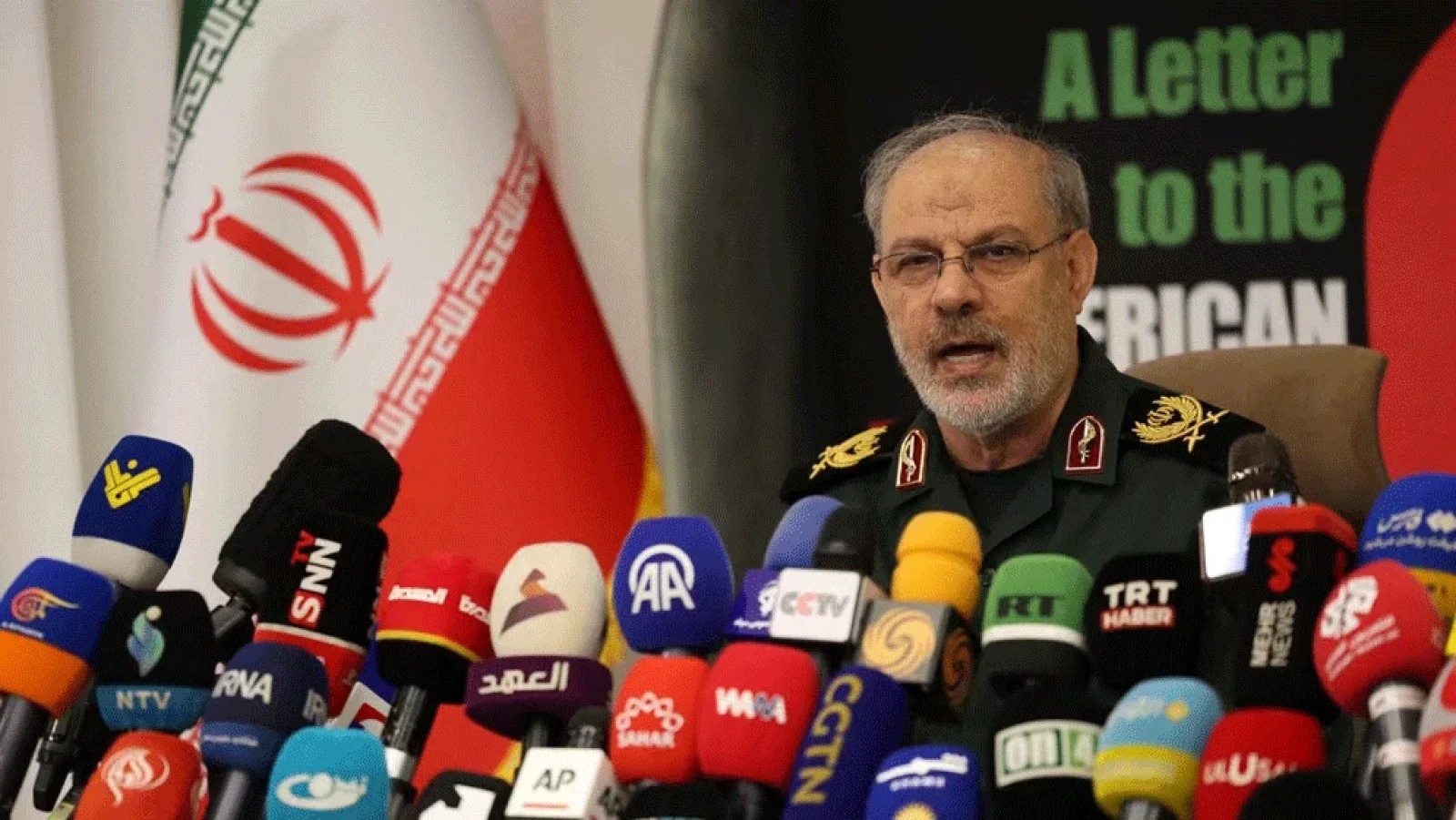
Iran has signalled that it is preparing for renewed war with the United States, while openly threatening Washington and its allies. Tehran is believed to be trying to deter US President Donald Trump from restarting the conflict.
Over the past month, Iranian military commanders have claimed in a series of public statements that the country has built up large stocks of new weapons, which could be used against targets beyond the Middle East if the United States resumes attacks.
Iranian officials have threatened to widen the range of their strikes if the conflict restarts. Possible targets include undersea internet cables, artificial intelligence (AI) data centres and regional oil and gas installations.
“The world will be surprised,” Hossein Mohebbi, a spokesman for Iran’s Revolutionary Guards, said late last month. “We have new targets that have not yet been struck.”
About nine months after the United States and Israel went to war with Iran in February, the conflict has largely reached a stalemate, leaving uncertainty over Trump’s ultimate aim while economic turmoil grows around the world.
Both sides claim victory. Tehran says it has survived despite so many attacks; Washington says it has inflicted heavy damage on Iran’s government. Meanwhile the Trump administration keeps testing new economic and military steps to force Iran to give in, while Tehran continues to resist the pressure.
“The war is not over. The Islamic Revolutionary Guard Corps has prepared itself for a long war,” Mohebbi said.
Ordinary Iranians fear war
While Iran’s military commanders stress strength and readiness, ordinary people are worried about the prospect of war again. Worn down by long conflict and economic uncertainty, Iranians are living in fear of renewed attacks.
“Every day and every night we wait for the bombing to start again,” a 70-year-old Tehran resident told CNN last week. “I have charged all my power banks, stored water and got everything I need ready, because the attacks could start again any day, at any moment.”
A mother of two said she was afraid every morning when she sent her children to school. Revolutionary Guards members can be seen along their route, and military bases remain active.
“I want to know what else exactly the United States wants to bomb,” she said. “They could not remove Iran’s leadership. They could not reach a solution through talks either. So what is the point of starting the war again?”
Another Tehran resident told CNN that Iranians are now “certain” the war will resume.
“Everyone is talking about it now. It is always going round in your head: will they strike tonight, or tomorrow? There is so much talk around that there is no chance to relax even a little. That makes things worse,” the resident said.
The Iranians who spoke to CNN asked not to be named so that they could speak freely about their fears of war.
Hints that Europe could be targeted
White House advisers have held several meetings in recent weeks to decide on possible steps over Iran. Trump has said publicly that he will take no new action before the midterm elections. But some advisers told CNN privately that they were not sure whether that was final, or whether it might change before the 3 November election.
Citing several US officials, CNN reported that the US military has drawn up new plans to strike Iran’s energy infrastructure and nuclear sites if Trump orders military operations to resume, before or after the midterms.
The plans include the possible use of the GBU-43/B Massive Ordnance Air Blast (MOAB), the huge bomb known as the “mother of all bombs” and the largest non-nuclear bomb in the US arsenal. Its use could significantly escalate the conflict.
Iran’s army commander Alireza Sheikh said on Saturday: “This propaganda is meant to frighten the Iranian people. The Iranian people are the mother of all bombs.”
Iran has also signalled a new, more aggressive military posture, suggesting it might strike pre-emptively rather than wait to be attacked first.
Last week, Revolutionary Guards social media accounts said military exercises had been held across Iran, including the simultaneous launch of 30 ballistic missiles.
Farzin Nadimi, a senior fellow at the Washington Institute, which researches US foreign policy in the Middle East, said that if Tehran decided to strike Europe with new long-range missiles, US military installations there could be possible targets.
These include US forces at air bases in England and the Ramstein military logistics hub in Germany, the largest US military installation outside the United States.
“Iran would probably not use this option unless the conflict escalated to a very high level,” Nadimi said.
US officials said all US long-range bombers deployed in the United Kingdom were brought home earlier this month after an unspecified new threat.
A few days before that, the British government arrested several people over alleged Iranian involvement in a plan to attack the air base in the UK where the US bombers were stationed.
Amid concern over Iran’s missile and drone capabilities, Nadimi also pointed to the possible use of more advanced technology.
In his view, Iran could build more advanced, coordinated fleets of AI-driven drones to improve its chances of hitting targets. Fitted with cameras and data links, such drones could communicate with each other, change their flight paths and speed, and evade enemy jamming and air defences.
“They have not yet demonstrated these capabilities, but they have talked in the past about developing this kind of technology,” Nadimi said.
Iran could also try to upgrade its cruise missiles to supersonic speed, making them harder to intercept in flight, and could try to disrupt satellites used for military communications and surveillance.
Fears of new conflict in the Middle East
Iran’s military commanders are preparing as if renewed conflict were almost inevitable, while trying to deter Washington by spelling out the consequences of an attack.
“Tehran wants to make clear that the next round of war will spread over a wider area, with less restraint, and could be more deadly,” Ali Vaez, deputy director of the International Crisis Group’s Middle East and North Africa programme, told CNN.
“The danger, though, is that Washington may see as provocation the steps Iran regards as deterrence. That could make more likely the very war Tehran is trying to avoid,” he said.
When the United States and Israel went to war with Iran in February, the country’s supreme leader Ayatollah Ali Khamenei was killed, along with military commanders, senior officials and civilians, children among them.
In response, Iran mainly struck its Arab neighbours, accusing them of colluding with Washington against it.
Iran effectively closed the Strait of Hormuz to shipping, the only sea route for its neighbours’ oil exports. Civilian infrastructure in cities in Arab countries was then attacked.
Dubai, known as a tourist hub, was hit. Kuwait’s water desalination plants were struck. Attacks on data centres disrupted banking services in several Middle Eastern countries.
On 2 October, ships were seen around the Strait of Hormuz near the Khasab coast in Oman’s Musandam region.
According to the United Arab Emirates defence ministry, Iran fired more than 2,500 missiles and drones at the UAE alone, more than at any other country, Israel included. Abu Dhabi intercepted almost all of them.
Last week Mohsen Rezaei, head of Iran’s Supreme National Security Council, warned that if attacks resumed, Iran would retaliate against US sites and assets in the Middle East, including US installations inside the UAE.
“If war starts again, the many undersea cables in the region’s seas, data centres, AI facilities and other infrastructure could be destroyed,” Rezaei said.
The UAE, for its part, says it is better prepared than before to face renewed conflict.
“We do not want war. But if war starts today, we are far better prepared to face any kind of threat than we were on 28 February,” Ali al-Nuaimi, chairman of the defence, interior and foreign affairs committee of the country’s Federal National Council, told reporters on Thursday.
“We will do whatever is needed to protect our national security, our sovereignty and our people,” he said. Source: CNN
বাংলায় মূল প্রতিবেদন পড়ুন · Read the original Bengali report