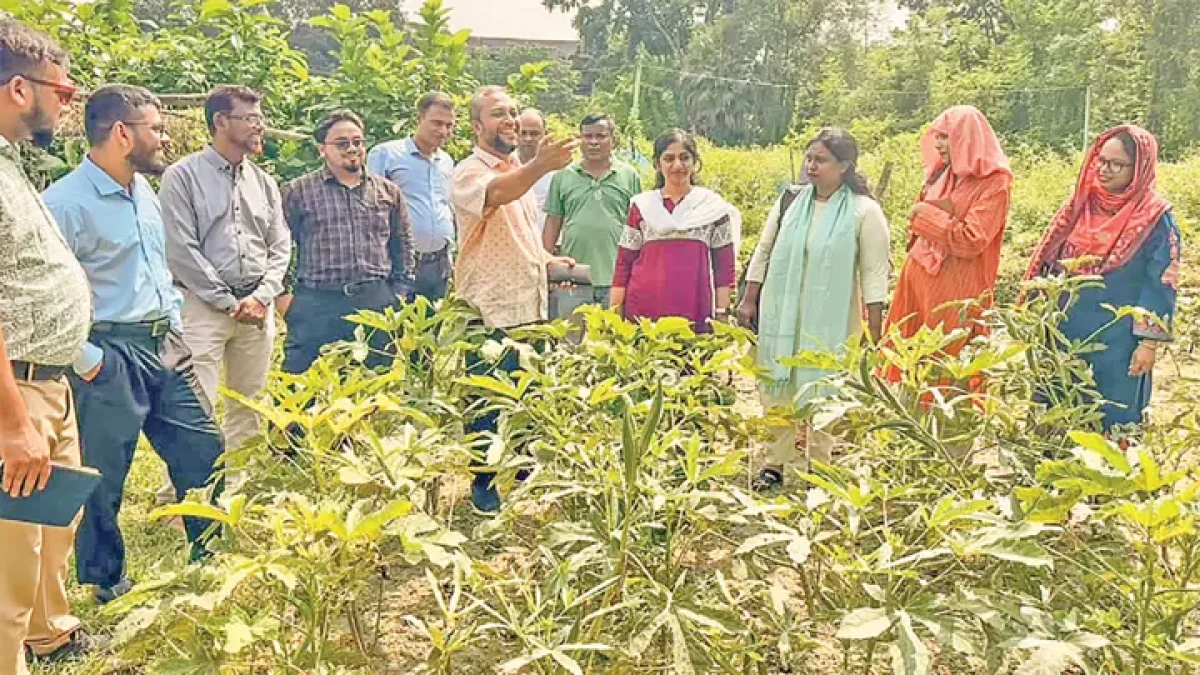
Researchers at Hajee Mohammad Danesh Science and Technology University (HSTU) in Dinajpur have had promising success growing brinjal and okra in the monsoon without chemical pesticides or fungicides, using beneficial endophytic bacteria. The research was led by Professor Dr Md Azizul Haque of the university’s Department of Biochemistry and Molecular Biology, with support from a BRAC microfinance project.
The method had earlier worked for potato farming. According to the research team, applying the bacteria to the same farmland continuously for about four years improved the soil’s nitrogen and phosphorus status, showing strong potential to use less urea and TSP fertiliser than in conventional farming. Most notably, brinjal and okra plants grown on low land showed no viral disease, wilting or insect attack despite heavy rain and high soil moisture. As part of the research, a specialised machine has been developed to produce liquid bio-fertiliser in the country.
The researchers said the technology, based on the idea of “soil microbiome engineering”, will play a big role in producing safe food by reducing dependence on imports and the use of chemicals. To spread its benefits across the country, they have proposed a national trial programme coordinated by the Ministry of Agriculture, BARI, BARC and the Department of Agricultural Extension.
বাংলায় মূল প্রতিবেদন পড়ুন · Read the original Bengali report