Next year’s Bishwa Ijtema has been proposed for two phases — Jan. 8-10 and Jan. 15-17 — Home Minister Salahuddin Ahmed has said. He gave the update to reporters Thursday afternoon after a meeting with the Sad faction of Tabligh Jamaat.
The home minister said discussions on the Ijtema dates were held with all relevant parties, and the two-phase proposal for Jan. 8-10 and Jan. 15-17 emerged from those talks. He said, however, that no final decision has yet been made.
He said that after the proposed two phases conclude, the Sad faction wants to hold its own Ijtema in a single phase at a reasonable later date. That will be discussed with the other side, he said, along with taking the views of all relevant parties and intelligence agencies.
The minister said the government’s top priority is maintaining peace and order. He said the government is treating it as a priority to ensure no clashes occur around the Ijtema, noting that clashes and casualties between the two factions have occurred around the gathering in the past. He said any decision would be made taking all these factors into account.
On the Sad faction’s demands, the home minister said the Zubayer faction wants to hold its Ijtema in the proposed first and second phases. The Sad faction, on the other hand, has asked to hold a single-phase Ijtema sometime between those two phases, before Ramadan. They have also asked to hold an Ijtema in late November, before the proposed two phases begin.
The minister said the Sad faction had earlier been offered the option of holding an Ijtema at a different location. He said the government had offered the necessary cooperation for that, but Maulana Sad’s followers did not agree to hold their Ijtema elsewhere. The government has called on both sides to hold the Ijtema together.
The home minister also said no final decision has yet been made on Maulana Sad’s visit to Bangladesh. He said that as a religious matter, Maulana Sad’s arrival will be handled by the religious affairs ministry, and the necessary clearance will be obtained under visa policy once the related process is complete.
The home minister said the government has not yet made a final decision on the Ijtema’s date and arrangements. He said the next decision will be made after discussions with all relevant parties and taking law-and-order conditions into account.
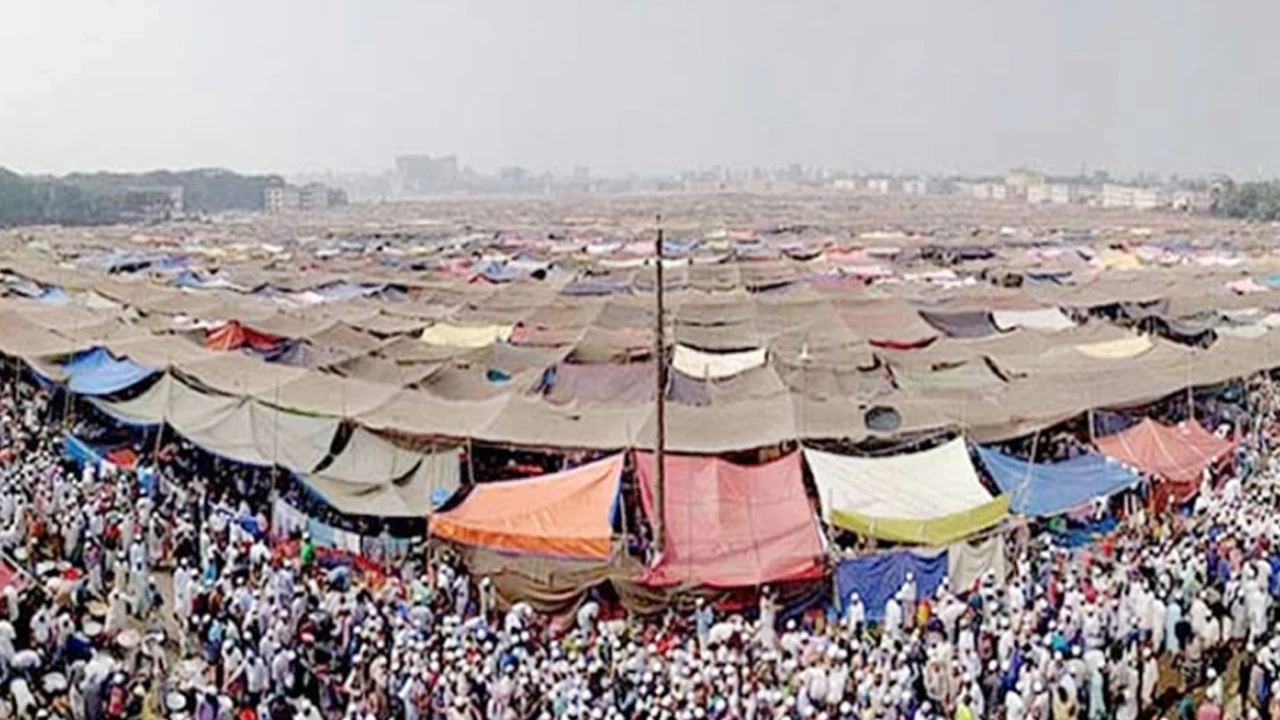
A vast temporary camp is set up every year on the bank of the Turag River in Tongi for the Bishwa Ijtema. Worshippers come from districts across the country, as well as from abroad, to take part.
Arrangements are made for worshippers’ accommodation, food, water, medical care and security at the Ijtema ground. Special measures are also taken to manage traffic in and around the capital, Dhaka, during the event.