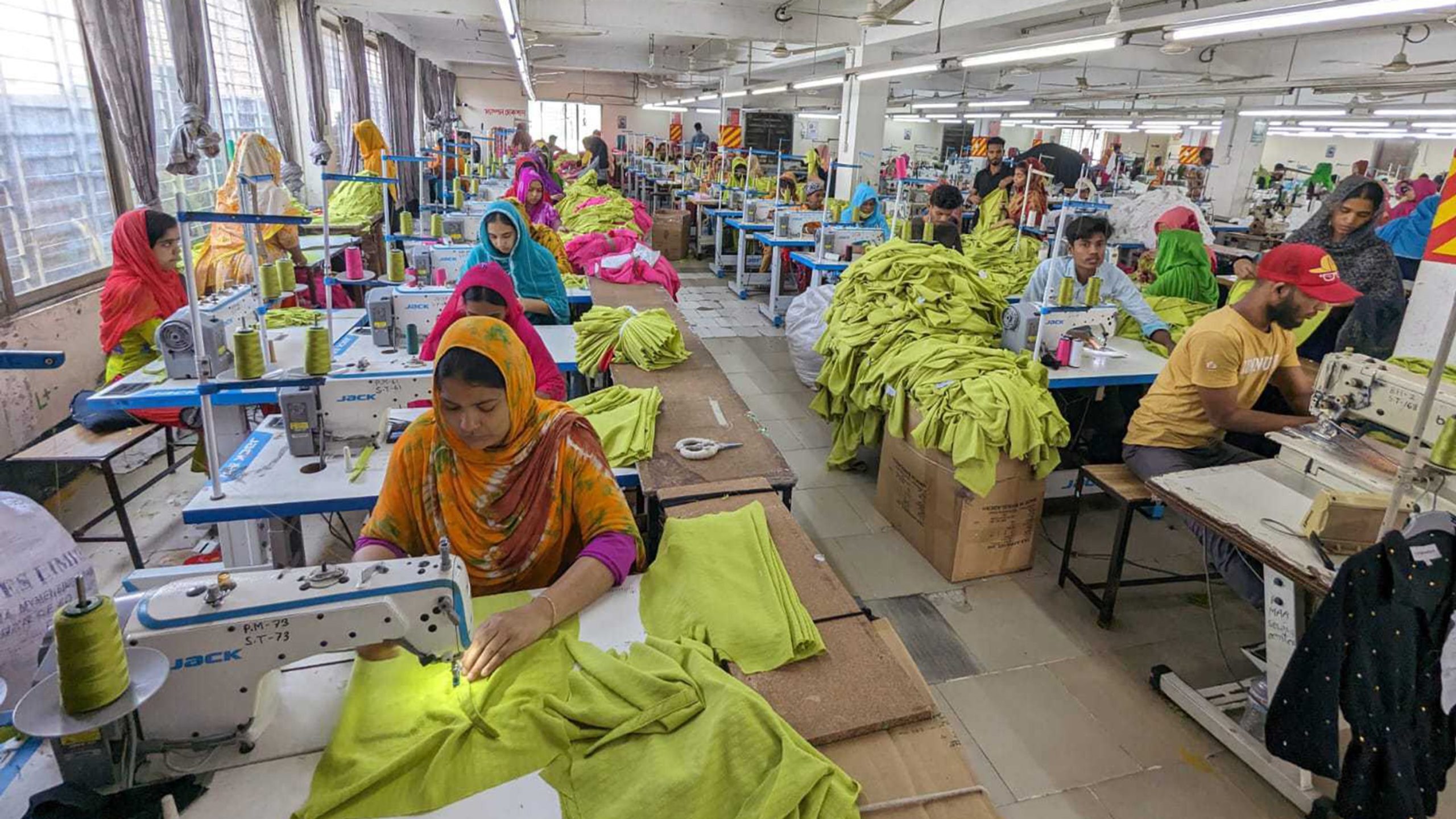
The Trump administration has imposed new tariffs at rates of 10 and 12.5 percent on goods from 60 trade partners, including the European Union (EU). Bangladesh is among those covered by the tariffs, which take effect today. The decision was taken on the charge of laxity in enforcing the ban on importing goods produced with forced labour. At the same time, the temporary 10 percent US tariff imposed worldwide is also expiring. Reuters reports.
The White House move is being seen as the latest step to re-establish the global tariff system in line with President Donald Trump’s election promise. Last February, the US higher court struck down the so-called reciprocal tariffs of 10 to 50 percent that Trump had imposed last year under the national emergency law. The aim of those tariffs was to reduce the US trade deficit.
According to a notice published in the Federal Register yesterday, the new tariffs will apply to 99.4 percent of the total goods imported into the United States. However, a number of items — including fuel oil and gas, fertiliser and some food products — will be excluded.
The tariffs are being imposed under Section 301 of the Trade Act of 1974. As a result, even after the Supreme Court ruling, the United States will effectively be able to maintain a minimum tariff on almost all imported goods. Moreover, because Section 301 has survived in court in the past, the risk of a legal challenge to the new tariffs is considered comparatively low.
US Trade Representative Jamieson Greer said in a statement that for nearly a century there has been a ban on importing goods produced with forced labour into the United States, and “we enforce it strictly.” The time has now come for the country’s trade partners to take similar measures, he said. Today’s step, he added, will contribute to the welfare of workers around the world by correcting human-rights violations and distorted trade practices.
Greer had earlier said that for countries whose trade agreements with Washington set a maximum US tariff rate, the new “forced labour” tariff would not go above that ceiling.
A 10 percent tariff on Bangladesh
Under the final decision, an additional 10 percent tariff will be imposed on goods from Argentina, Bangladesh, Britain, Cambodia, Canada, Ecuador, El Salvador, Guatemala, Honduras, India, Indonesia, Jordan, Malaysia, Mexico, Pakistan, Sri Lanka and Trinidad and Tobago.
For the EU, Taiwan, Japan, South Korea and Switzerland, on the other hand, the total tariff rate — combined with the existing “most-favoured-nation” tariff — will be 10 or 12.5 percent.
A 12.5 percent tariff will be imposed on goods from the remaining 38 countries. China is among them. The United States alleges that the country holds Uyghur minorities in labour camps and puts them to work. Beijing, however, has been denying the allegation.
Trump administration officials have told Chinese officials that the 20 percent tariff rate agreed in the trade-war truce with President Xi Jinping last November will be restored, and will not be raised any higher. Before Friday’s new measures took effect, setting aside the 25 percent tariff imposed on industrial goods during Trump’s first term, the effective tariff on Chinese goods was 10 percent.
According to a USTR document, the tariff was set on the basis of the findings of an investigation concerning Bangladesh. This took into account Bangladesh’s obligations, under the Agreement on Reciprocal Trade (ART), to ban the import of goods produced with forced labour. Public opinion, testimony, and the advice of the Section 301 committee and advisory committees were also taken into account. After this, in line with the president’s specific instructions, the Trade Representative decided to impose a 10 percent tariff on Bangladeshi goods, except for the exemptions listed in Annex 1 and Annex 2, Parts A and J of the notice.
It was further stated that, in line with the president’s specific instructions, the Trade Representative decided that the set tariff rate, the scope of the tariff and the exemptions are appropriate for eliminating the activities, policies and practices identified as actionable in the investigation.
It may be noted that Annex 1 and Annex 2, Parts A and J of the notice do not contain anything written separately for any country. Rather, they give the list (by HTSUS code) of goods that will be exempt from the 10 percent tariff.
Protests from various countries
Several countries protested immediately after the new tariffs were announced.
Norway’s foreign minister, Espen Barth Eide, said there was no basis for imposing the tariff on Norway, because “we already have clear rules to prevent trade in goods produced with forced labour.”
Australia and Brazil called the tariff unreasonable and demanded its withdrawal. Canada, which this week faced new Trump tariffs on 2,000 crore dollars’ worth of goods, reacted comparatively cautiously, calling it a “unilateral” step.
Massachusetts’s Democratic governor, Maura Healey, criticised the tariff, saying: “This will raise costs, hurt businesses and weaken US competitiveness. No one can afford to bear the burden.”
Same rate, different legal basis
Tim Brightbill, a trade lawyer at the Washington law firm Wiley Rein, said the forced-labour tariff, as expected, largely maintains the current tariff rates set in various trade agreements and takes the place of the Section 122 10 percent tariff that expired on Friday.
A senior Trump administration official rejected this idea, however, saying it was not correct to think of it as a direct replacement for the earlier tariff simply because of its timing, rate and applicability to almost all imports.
In his account, the US ban on importing goods made with forced labour is enforced more strictly than in any other country in the world. As a result, rival countries gain an unfair trade advantage by failing to take proper measures.
Ryan Majerus, a former commerce department official and now a trade lawyer, said that because Section 301 has survived in court in the past, it could be harder to strike down the new tariffs through a legal challenge.
Goods that will remain tariff-free
The administration official said fuel oil and gas, fertiliser, some food products, and goods such as cars, steel, aluminium and copper — already subject to tariffs under Section 232 in the interest of national security — will remain outside the scope of the new tariffs.
In addition, goods meeting the conditions of the United States-Mexico-Canada trade agreement (USMCA) will also remain tariff-free. This is because North America’s integrated supply chain and the high level of US content in these goods were taken into consideration.
বাংলায় মূল প্রতিবেদন পড়ুন · Read the original Bengali report