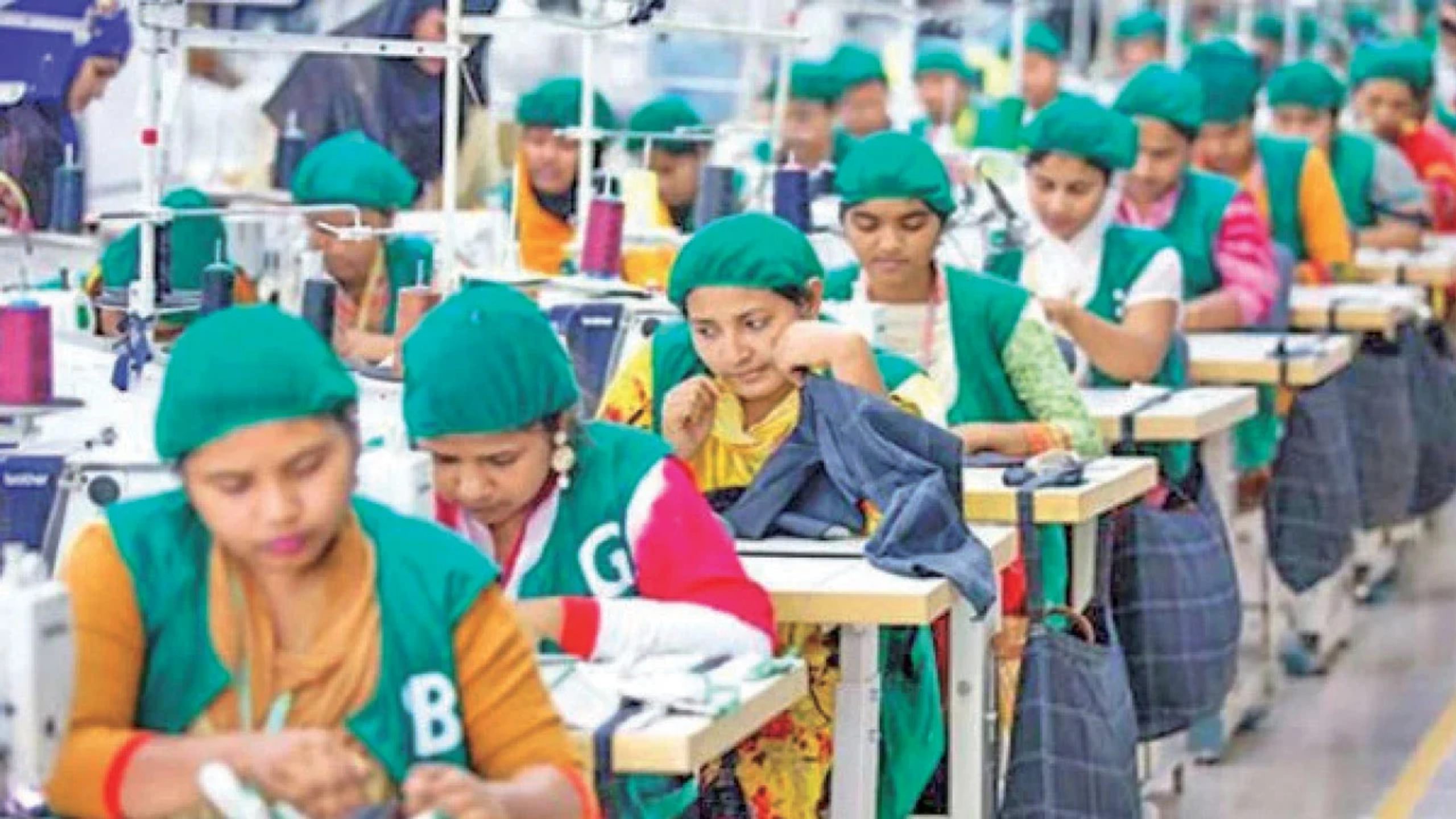
Bangladesh’s ready-made garment (RMG) export earnings fell slightly in the first six months of this year. From January to June, garment exports stood at 1,933.57 crore dollars, 0.63 percent less than the 1,945.93 crore dollars in the same period last year. Within this, woven exports rose somewhat, but overall exports fell because of negative growth in knit products.
According to the Export Promotion Bureau (EPB), export earnings from woven garments in the first six months of 2026 came to 919.95 crore dollars. In the same period last year this earning was 913.76 crore dollars — growth of 0.68 percent in the sector.
Knit garment export earnings, on the other hand, fell 1.80 percent. From January to June this year, knit products worth 1,013.58 crore dollars were exported. In the same period of 2025 this earning was 1,032.17 crore dollars.
Month by month, garment exports took a knock at the very start of the year. In January, total RMG exports were 361.48 crore dollars, 1.35 percent less than the same month a year earlier. Exports fell 13.21 percent in February and 19.35 percent in March. In this period exports of both woven and knit garments fell.
The sector rebounded in April, however. That month total garment exports rose 31.21 percent to 314.09 crore dollars. Woven exports rose 32.65 percent and knit garments 30.2 percent.
Exports fell again the following month, in May. Total earnings that month were 359.41 crore dollars, 8.29 percent less than a year earlier. In June, though, garment exports returned to growth. In the final month, goods worth 338.77 crore dollars were exported, 21.52 percent more than a year before. In June, woven garments grew 24.2 percent and knits 19.49 percent.
Mohammad Hatem, president of the Bangladesh Knitwear Manufacturers and Exporters Association (BKMEA), told Amar Desh that there is some relief in the overall picture of garment exports in the first half of this year. But there is doubt over whether this first-half growth will hold by year-end.
He said that during the BNP’s earlier term, around 2005 and 2006, thanks to economic stability, the BKMEA then had a membership of 2,500. After that, as the country’s economy collapsed under what he called long fascist rule, industrialists’ businesses shut down, and the BKMEA’s membership has now fallen to 800.
Those in the sector say that although exports fell at the start of the year, the situation improved significantly by June. Holding on to growth in woven garments is a positive sign of Bangladesh’s capacity. A fall of just 0.63 percent shows that, amid various uncertainties in the global economy and market crises, the country’s garment sector has been able to hold a broadly stable position. Because of timely delivery, production capacity and environmentally friendly factories, Bangladesh’s acceptability to international buyers is also still on firm ground.
In their view, many challenges lie ahead. The slow pace of the world economy, weak demand in the US and European markets, higher production costs and an energy crisis, along with pressure from buyers to supply goods at lower prices, could hold back export growth. Added to this, the fear of reduced tariff benefits after graduation from least-developed-country status will put Bangladesh’s garment exports under fresh competition. In this situation, surviving in the long run will require moving away from a conventional, product-dependent business.
Experts say that alongside greater use of artificial intelligence and automation technology in the production process, emphasis must be placed on higher-value garments, diversified products and creating new markets. This would increase production efficiency on one hand and further strengthen the competitiveness of Bangladesh’s garment industry in the global market on the other.
বাংলায় মূল প্রতিবেদন পড়ুন · Read the original Bengali report