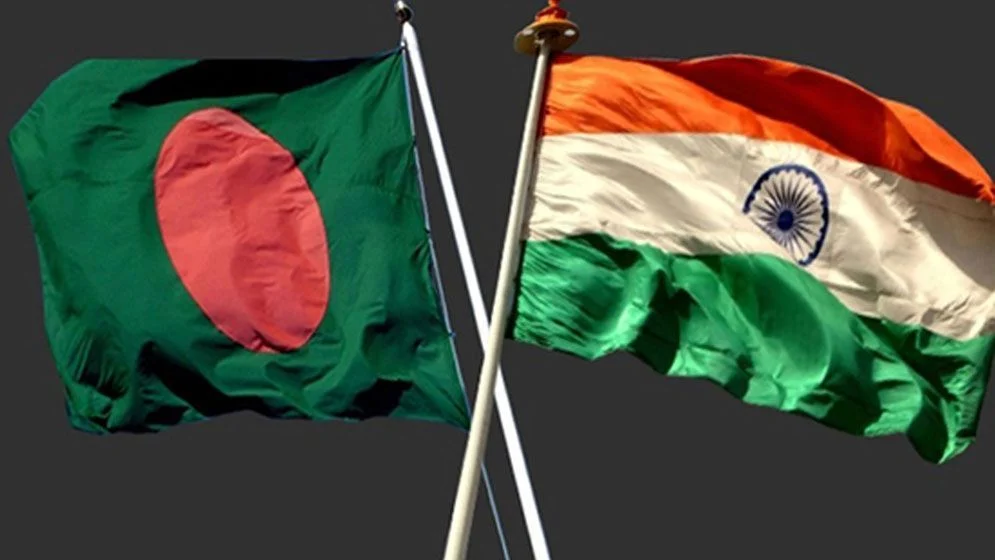
Bangladesh does not want to sacrifice its own interests in order to serve as a “corridor” for India’s power transmission. Following a fresh push from India to route a 765kV high-voltage line from Bornagar in Assam to Katihar in Bihar through Bangladesh, Dhaka is putting forward four conditions. The government does not want to decide on granting the corridor until it gets answers on whether electricity generated by damming the Brahmaputra will flow through this line, whether Bangladesh will get the opportunity to bring in cheaper hydropower from Nepal and Bhutan, and what Bangladesh’s actual benefit would be.
Following the push from the Indian government, the Foreign Ministry and the Power Division have prepared several documents on the matter.
Government sources say Bangladesh is initially considering putting forward four conditions to India. If these are met, Bangladesh could make a positive decision on building the high-voltage transmission line. Among these, the main condition is that India must disclose whether electricity generated by damming the Brahmaputra River will be routed through this high-voltage line, since that would have a significant negative impact on northern Bangladesh during the dry season.
The second condition is that Bangladesh must be given the opportunity to build a separate grid line to import cheap hydropower from Nepal and Bhutan. The third is that it must be made clear how much electricity Bangladesh would be able to import through that line. The fourth condition is that an economic cost-benefit analysis must be conducted before any line is routed through Bangladesh.
India’s High Commissioner to Dhaka, Dinesh Trivedi, met with Power and Energy Minister Iqbal Hasan Mahmud on August 6. During that meeting, he raised the issue of building the 765kV grid line. After the meeting, Iqbal Hasan Mahmud said: “We are not thinking about this the way India wants to route the grid line through Bangladesh. Dhaka is thinking about a joint grid line involving four countries — Nepal, India, Bhutan and Bangladesh. That is what we want to discuss.”
It is understood that, prior to this, Power Secretary Mirana Mahrukh visited Delhi in late July and discussed the power issue with a senior Indian official. Various sources have confirmed that the matter was discussed there as well.
Professor M Tamim, vice-chancellor of Bangladesh Independent University and an energy expert, recently said building a grid line with India, Nepal and Bhutan is essential to meet Bangladesh’s energy security needs, particularly electricity demand. He said Bangladesh could import power from whichever of these countries offers it most cheaply.