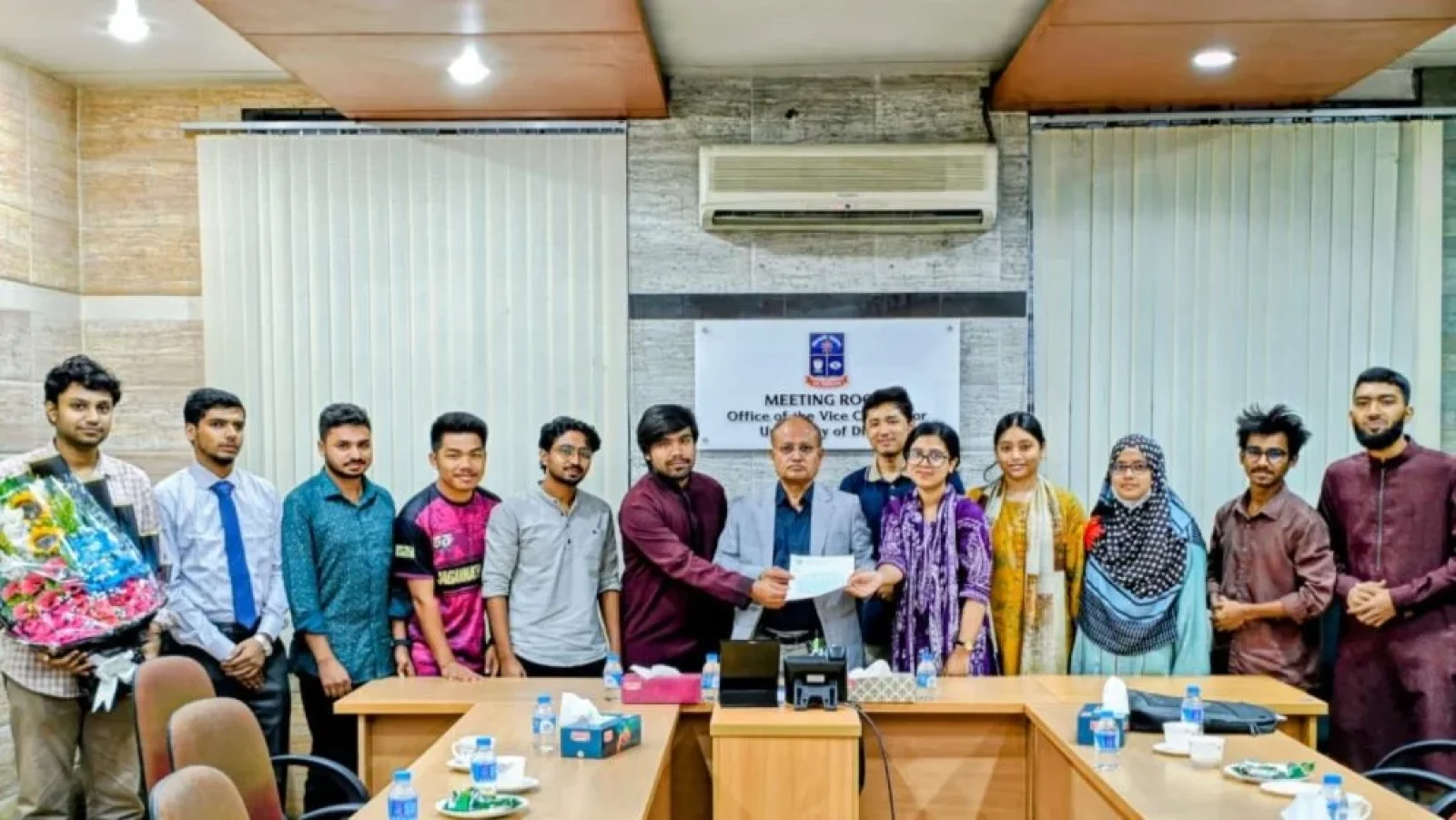
The Dhaka University unit of the Human Rights Defenders Society (HRDS) has put forward 14 demands to protect human rights, ensure a discrimination-free environment and safeguard students’ rights at the university, including holding DUCSU and hall union elections regularly.
A memorandum setting out the demands was handed to vice-chancellor Professor Dr ABM Obaidul Islam on Wednesday afternoon (September 23).
The organisation’s leaders greeted the vice-chancellor with flowers as they handed over the memorandum, formally launching the unit’s activities. The 14 demands include effective policies to guarantee students’ rights to free expression, conscience, association and peaceful assembly. The group also called for an independent and effective human rights desk or cell under the university to receive complaints of rights violations, harassment, discrimination, abuse and security concerns.
HRDS called for online and offline complaint systems through which students can report rights violations anonymously. It also asked for policies and monitoring so that no student faces discrimination because of gender, disability, financial status, region, language, social identity, religious belief or any other identity. The demands include making the sexual harassment prevention committee more effective and ensuring confidential, impartial, fast and victim-friendly investigations. HRDS also wants stronger security for students on campus, in residential halls, on transport, in libraries and at other key places, and swift remedies for harassment or violence.
Another demand is a university-based referral system to give students facing legal complications, unlawful harassment or rights violations initial legal advice and support. The group also called for regular training for students, teachers, officers, staff and hall personnel on human rights, gender equality, anti-harassment, digital rights and conflict resolution, effective action against discrimination and harassment in the allocation of hall seats, food, medical care, security and administrative services, and accessible infrastructure for students with disabilities in university buildings, transport, libraries and residential halls.
বাংলায় মূল প্রতিবেদন পড়ুন · Read the original Bengali report