Sea, hills, forests, haors and archaeological sites a thousand years old: Bangladesh is rich in the variety of its tourism assets. Hotels, restaurants, transport, boat trips and local businesses generate economic activity around these destinations. But with no complete account of income by destination, it is hard to say how much economic benefit tourism brings to each region. Government revenue figures exist for the Sundarbans and Paharpur, but for many other destinations visitor numbers, spending and local business income are not measured together. In some places foreign visitors are few; in others the question is how to balance conservation with local livelihoods. This report looks at the published data, the economic realities and the investment opportunities at ten of the country’s main tourist destinations.
A 2024 study by the World Travel and Tourism Council (WTTC) found that domestic and foreign visitors together spent about Tk 88,630 crore in Bangladesh in 2023. The council forecasts that this could reach about Tk 156,510 crore by 2034. These are figures for visitor spending, not direct government revenue, and the forecast cannot be treated as certain future income.
According to the Bangladesh Bureau of Statistics (BBS) Tourism Satellite Account 2020, tourism’s direct contribution to GDP in fiscal 2018-19 was about Tk 76,691 crore, or 3.02 percent of GDP at the time. The base year of this widely quoted national figure is now more than seven years old, which makes the need for updated, region-level data all the clearer.
1. Cox’s Bazar
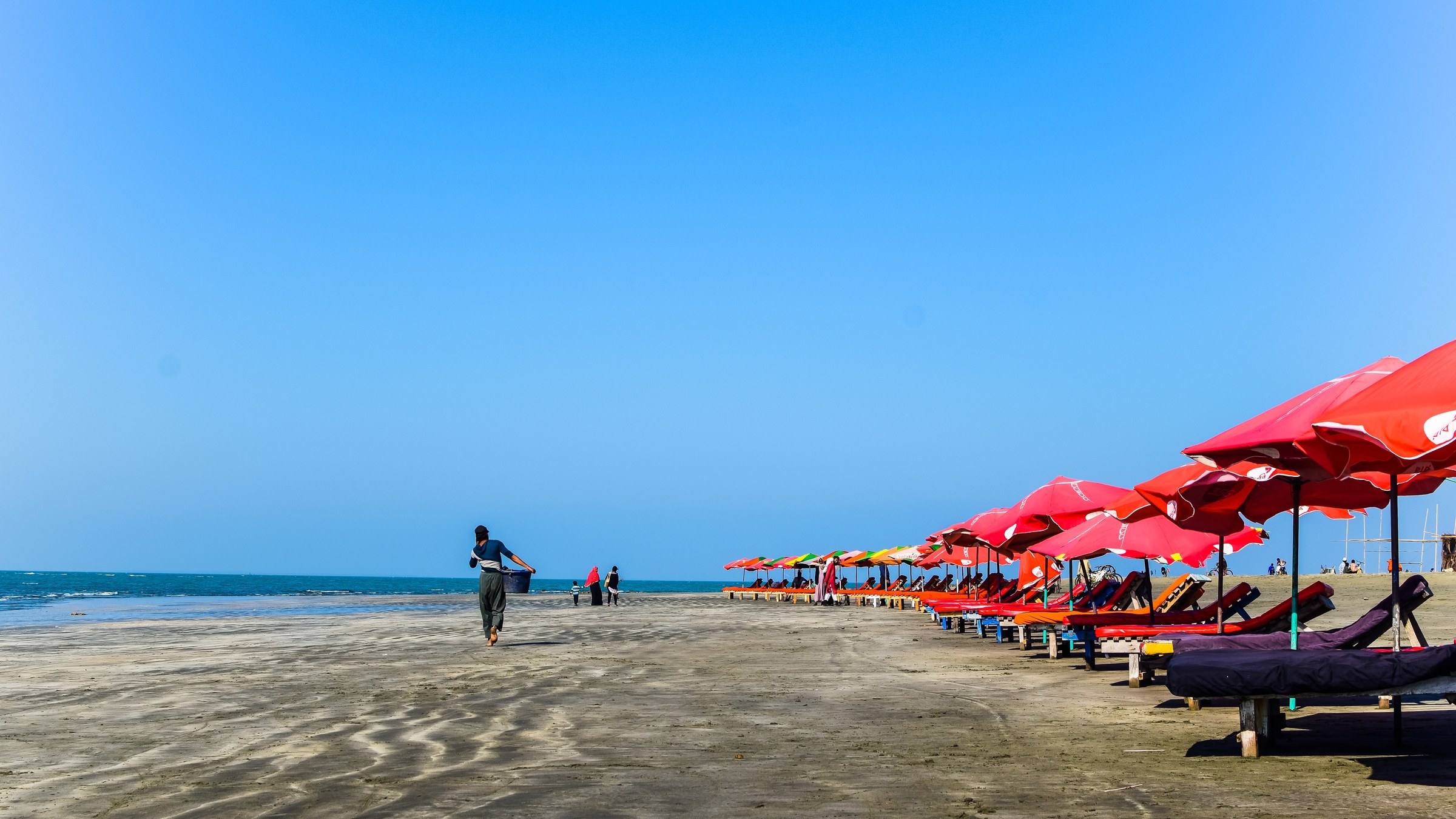
One of the country’s largest tourism service markets has grown up around the beach at Cox’s Bazar. Hotels, resorts, restaurants, transport and small businesses depend on the flow of visitors to Kolatoli, Sugandha, Laboni, Inani and Himchhari. But how long visitors stay, how much they spend on average and how much of that spending stays in the local economy are questions without complete answers.
The economic potential of Cox’s Bazar is not limited to building new hotels. Longer stays, safe water sports, experiences built on local food and culture, and business conferences could create demand for new services within the existing market.
Tourism’s environmental pressure on the beach cannot be ignored either. A study published in Marine Pollution Bulletin in October 2026 identified 903 pieces of plastic waste of 28 types on ten beaches along the Cox’s Bazar coast. About 71 percent of all the plastic waste found was on recreational beaches. The finding points to the need for investment in cleaning and waste management at tourist sites.
New investment therefore has to go hand in hand with protecting the beach environment and making good use of existing infrastructure.
2. Sundarbans
The most notable feature of the Sundarbans’ tourism economy is that relatively specific figures exist for government revenue and visitor numbers.
According to a Bangladesh Sangbad Sangstha (BSS) report of 20 October 2024, 211,057 tourists visited the Sundarbans in fiscal 2023-24, of whom 2,622 were foreigners. The Forest Department collected about Tk 3.61 crore in tourism revenue that year.
That means only 1.24 percent of all visitors were foreign, a figure that matters in any discussion of expanding international eco-tourism. More information is needed to establish how far travel costs, the permit process, difficult access or the season explain the low foreign share.
Later figures published in a Daily Inqilab report of 18 October 2026 put the Sundarbans’ tourism revenue at about Tk 5.38 crore in fiscal 2024-25, falling to about Tk 4.49 crore in fiscal 2025-26. The swing raises questions about whether revenue growth will last. These figures cover government revenue only, not what visitors spend on boat hire, food, transport and other services.
Before planning to grow international tourism in the Sundarbans, the obstacles foreign visitors face need to be identified. Then the scope for trained nature guides, quality boats and specialised wildlife-watching services can be assessed.
But increasing visitor numbers without limit is not the right strategy for the Sundarbans. Plans to raise tourism income in this UNESCO World Heritage forest must respect the conditions of biodiversity conservation and controlled boat traffic.
3. Saint Martin’s Island
The tourism economy of Saint Martin’s Island is now tied directly to government travel rules and conservation policy. Accommodation, restaurants, sea transport and local businesses have grown up around tourism on this coral island, but the season’s dates and the number of visitors allowed largely set the scale of business.
Under a revised decision of the Ministry of Environment, Forest and Climate Change dated 27 October 2026, tourists may visit the island and stay overnight from 1 November 2026 to 15 March 2027. The average daily limit has been set at 3,500 visitors, with an environmental conservation fee of Tk 100 per visitor.
Ships carrying tourists need approval from the relevant authorities, and tourists need a travel pass and a ticket with a QR code. Because the necessary approvals were not complete by the end of October, media reported that tourist ships could not start on 1 November as planned. Once approval came, MV Bar Aulia left Nuniachhara jetty in Cox’s Bazar for the island on the morning of 5 November with 836 tourists. MV Karnaphuli and MV Teknaf were reported to start sailing from 6 November.
This shows an important reality of the island’s tourism business. If transport approvals and ticketing are not ready after the season is declared, hotels, restaurants and local businesses struggle to open.
Assessing the scope for higher income on Saint Martin’s therefore means looking not only at visitor numbers but also at the certainty of operating through the permitted season, local employment and how environmental restrictions are enforced. A long-term tourism economy cannot survive on the island without protecting its coral and marine life.
4. Bandarban
In Bandarban’s hill tourism, access restrictions are as real as the economic opportunities. Destinations such as Nilgiri, Nilachal, Boga Lake and Keokradong draw visitors, but not every area is equally open.
In June 2025 some tourist areas in Ruma and Thanchi, closed for a long time for security reasons, reopened. Under the district administration’s instructions, visitors must go only to approved places, use registered guides and register at set checkpoints. In October that year access to Keokradong was reopened.
Foreign visitors also need prior permission to travel in the hill districts. Tourism information from Bangladesh’s Ministry of Foreign Affairs states that government permission is required. Any plan to expand international tourism has to take these conditions into account.
One of the best ways to raise local income from tourism in Bandarban is through registered guides, local accommodation, traditional food and handicrafts. But such ventures must secure the consent, partnership and cultural rights of the hill communities.
Clear information on which areas are open to visitors, which are restricted and how local communities will benefit should be the basis of any investment plan.
5. Rangamati
Boat tourism, accommodation, food and a market for local handicrafts have grown up in Rangamati around Kaptai Lake. The combined setting of hills and lake has made it one of the country’s best-known destinations.
But Rangamati’s economic potential is not limited to boat trips on the lake. Planned multi-day trips, chances to get to know local culture and better access to handicrafts could expand the market for local businesses.
Local communities’ participation matters especially in this region’s tourism economy. Linking makers of bamboo, cane, textile and other traditional goods directly to the tourist market could reduce dependence on middlemen and raise producers’ income.
At the same time, Kaptai Lake is a vital means of livelihood and transport for local people. Plans for tourist boat traffic, new infrastructure and business expansion must give weight to local needs and to the lake’s environment.
6. Jaflong
The economic reality of Jaflong in Sylhet is bound up with both tourism and stone collection. The Piyain river, the hill views and the stony riverbanks attract visitors, but stone extraction has long set livelihoods against conservation.
In August 2025 a case was filed over the alleged illegal removal of stones from an ecologically critical area of Jaflong. According to a report in The Daily Star of 19 August, the case alleged that about 40,000 cubic feet of stone was removed illegally between 7 and 9 August.
The case shows a central conflict in Jaflong’s tourism economy. The river and stones that draw visitors are also a source of local livelihoods. Plans to expand tourism cannot ignore conservation or alternative livelihoods for people who depend on stone.
To keep visitors in Jaflong longer, combined travel packages with Bisnakandi, Ratargul and other Sylhet destinations could be developed. This could create extra demand for transport, accommodation, food and guide services.
But Jaflong’s economic development is not only a question of expanding tourism services; it is also about balancing the river’s environment, legal control of stone extraction and local people’s livelihoods.
7. Sreemangal
Sreemangal’s tea gardens attract visitors, but they are first of all commercial production sites. Plans to expand tea tourism therefore depend on the gardens’ permission, the participation of workers and fitting tourism around production.
Accommodation, food, transport and local produce businesses exist in Sreemangal around the tea gardens, Lawachara National Park and the surrounding countryside. But developing tea tourism as a distinct economic activity needs a clear plan for what experiences will be offered to visitors and who will run them.
Approved tea garden visits, learning about tea production and processing, and selling local tea and farm produce could create a market for new services. If garden owners, local entrepreneurs and tea workers run these activities together, the income could be shared more widely.
Tea workers in particular should be seen not only as staff for tourism services but as partners in training, fair pay and income sharing. If tourism income rises but workers’ living standards do not, the social benefit of that growth will be limited.
At the same time, controlled nature walks and trained guides must be prioritised to protect the biodiversity of Lawachara National Park.
8. Kuakata
The opening of the Padma Bridge created new road links from Dhaka to the south. Kuakata in Patuakhali is one of the destinations that stands to benefit.
Known as a beach where both sunrise and sunset can be seen, Kuakata has room to expand accommodation, restaurants, local seafood and coastal tourism services. A route-planning service gives the road distance from Dhaka to Kuakata via the Padma Bridge as about 296 kilometres, with an estimated driving time of 6 hours 41 minutes. This is not a verified travel time for a given day; traffic and stops can change it.
New investment in Kuakata needs to weigh visitor demand, seasonal use of accommodation and operating costs alongside better transport links. Not only new hotels but local food, safe beach visits and planned entertainment could diversify the tourism economy.
Because it is a coastal area, cyclones, storm surges and environmental risks along the coast are major considerations for investors. Long-term business stability is hard to secure without disaster-resilient infrastructure and environmentally sound tourism services.
9. Tanguar Haor
At Tanguar Haor in Sunamganj, the tourism economy is directly linked to the wetland environment and local livelihoods. Boat trips in the monsoon and watching migratory birds in winter are the haor’s main attractions.
Houseboats and boat trips have opened up room to expand tourism services, but it matters to measure who gets the economic benefit and how much pressure the environment is under. The International Union for Conservation of Nature (IUCN) has highlighted the importance of Tanguar Haor’s biodiversity and of local communities’ livelihoods.
Registered houseboats, trained local boatmen, food supply and controlled nature trips could increase local business opportunities. But if local people do not take part in tourism services, income may flow out of the area.
On the other hand, too many boats, noise and waste can strain the wetland. Controlling the timing, areas and activities of tourism is needed to protect bird habitats and aquatic life in particular.
Investment at Tanguar Haor should therefore prioritise local income and jobs within environmental limits rather than more visitors.
10. Paharpur
The Buddhist monastery at Paharpur in Naogaon is one of Bangladesh’s most important archaeological sites for tourism. Recognised by UNESCO as World Heritage, it carries historical and cultural importance for visitors from home and abroad.
A Bangladesh Sangbad Sangstha report of 28 September 2025 said that large numbers of visitors come to the Paharpur monastery every day and that it earns more than Tk 1 crore a year in government revenue.
These figures on visitors and revenue raise important questions about the site’s economic activity. But because the report gives no specific annual visitor count, the government revenue per visitor cannot be reliably calculated. Nor does government revenue reflect what visitors spend on food, transport and local shopping.
Paharpur has room for trained guides, historical information services, museum-based education and a wider market for local handicrafts. Linking it with Mahasthangarh and other historic sites in the north in travel packages could also lengthen visitors’ stays.
But at archaeological sites, conservation must come before tourism growth. Efforts to raise income that damage historic structures will weaken the tourism economy itself in the long run.
Where could investment be prioritised?
The ten destinations do not share the same economic features. In some, new services can be added to an existing market; in others, local entrepreneurs’ participation can grow; and in others environmental restrictions limit the scope for investment. Setting investment priorities therefore requires weighing not only visitor appeal but the cost of doing business, market readiness and risk.
Below is a preliminary priority order for possible investment, based on published information. It is not a ranking of verified profit or return on investment; it is an analysis based on the existing market, the possible scale of ventures and the constraints identified.
| Priority | Destination | Reason to invest and main constraint |
|---|---|---|
| 1 | Cox’s Bazar | Room to add new services to an established tourism market; environmental pressure |
| 2 | Sylhet and Sreemangal | Multi-day trips, local produce and guide services; tea gardens need permission and workers’ participation |
| 3 | Kuakata | Road access via the Padma Bridge; seasonal demand and disaster risk to weigh |
| 4 | Paharpur | Smaller ventures in guides, information services and local goods; conservation of the site is essential |
| 5 | Rangamati | Boat tourism and handicrafts; local rights and environmental limits |
| 6 | Bandarban | Local guides and culture-based tourism; access restrictions matter |
| 7 | Jaflong | Combined travel packages; conflict between stone extraction and conservation |
| 8 | Sundarbans | Specialised eco-tourism; strict forest conservation conditions |
| 9 | Tanguar Haor | Local boat tourism and houseboats; the wetland’s carrying capacity is limited |
| 10 | Saint Martin’s Island | Scope in controlled tourism services; seasonal permits, transport and environmental restrictions are major factors |
This order cannot be used as a final investment decision. Working out where investment would pay back fastest, where operating costs are lowest or where risk is smallest requires comparable data on average visitor spending, actual business income, capital investment, operating costs and seasonal demand.
Why tourism needs proper accounts
One of the main limitations of Bangladesh’s tourism economy is the gap between national and regional data. WTTC figures give a sense of total visitor spending, but not of how much of it is spent at which destination. Likewise, government revenue figures do not show the full income of hotels, restaurants, transport and local businesses.
The Sundarbans data give some idea of the link between visitor numbers and government revenue, and the Paharpur data give a sense of revenue. But regular, comparable data of the same kind are hard to find for the other destinations.
This gap also affects investment planning. Without data on actual visitor demand, length of stay, average spending and local employment, it is hard to assess whether a new project makes economic sense. Collecting and publishing data by destination should therefore be treated as an important part of developing the sector.
Tourism’s future depends on income, local participation and conservation
Bangladesh’s tourism assets are varied, but the economic potential of every destination cannot be tapped in the same way. Expanding services in the existing market at Cox’s Bazar, involving tea workers in Sreemangal, reconciling stone-dependent livelihoods with conservation in Jaflong and running controlled tourism on Saint Martin’s Island each need a separate plan.
Turning tourism into a long-term economic sector requires, alongside investment, the publication of reliable data, the participation of local people and the protection of natural and historic assets.
How much money tourism brings in, how much of it reaches local people and how well the country’s natural and historic assets are protected: the answers to these questions will decide the success of Bangladesh’s tourism industry.
বাংলায় মূল প্রতিবেদন পড়ুন · Read the original Bengali report