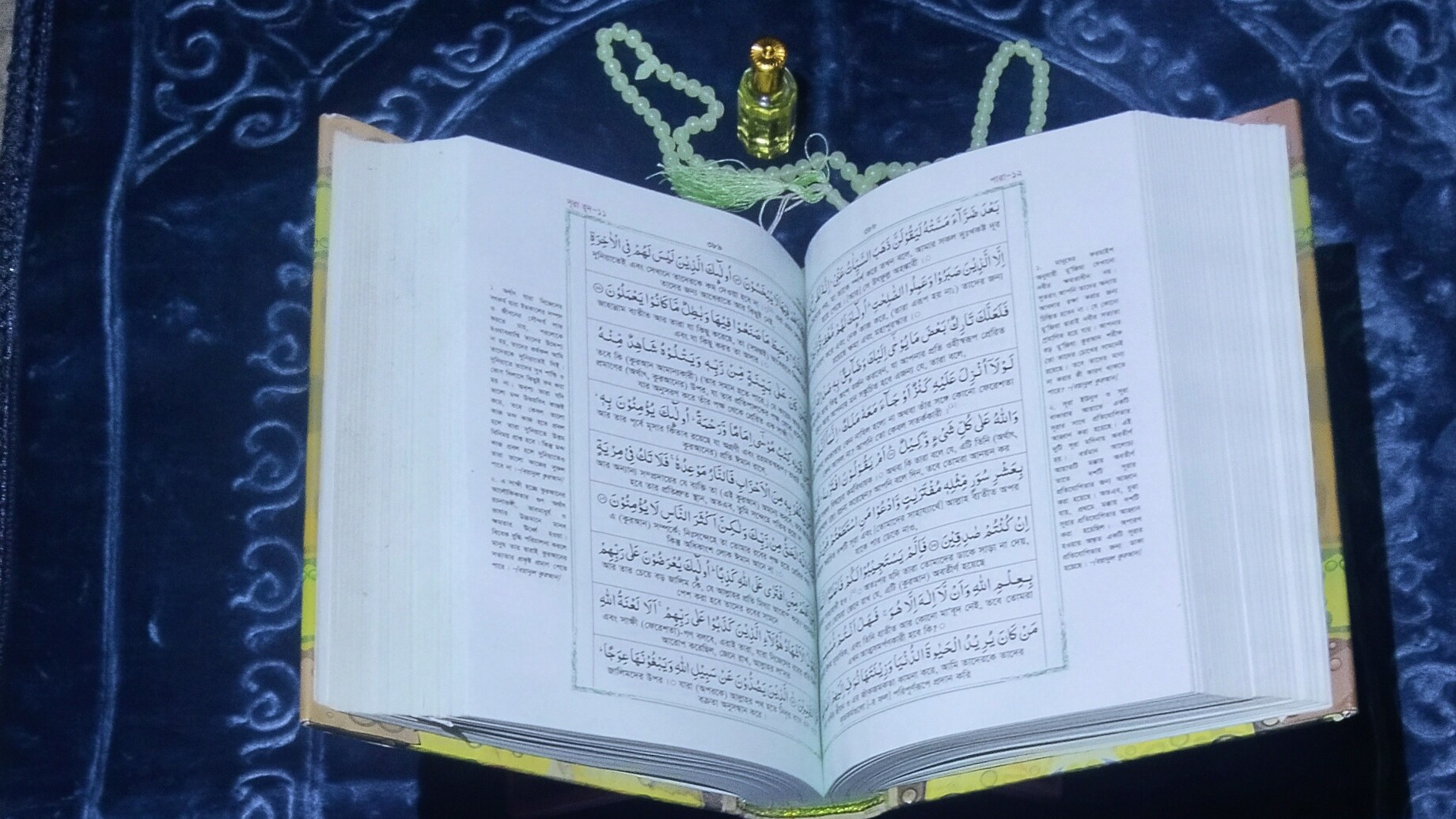
Life holds a strange contradiction. Some people earn a great deal of money, yet have nothing left at the end of the month. Some are busy all day, yet feel at night that nothing important got done. Others earn comparatively little and live with limited means, yet their lives show a kind of contentment and steadiness. Is the difference only a matter of financial management, personal skill or luck? In discussing this question, the Islamic view of life brings forward an important idea: barakah.
We usually take barakah to mean an increase in wealth. But it means more than growth in quantity. Barakah is a goodness granted by Allah through which wealth, opportunity, time or work becomes beneficial and fruitful for a person. It also carries the idea of lasting good and its continuity.
Suppose two people earn the same amount. One can meet their needs and still spend something to help others. The other is in financial trouble for one reason or another. The first person’s experience may be a good example of barakah.
The idea of barakah in Islam teaches us to ask questions. How beneficial is what we are earning? Is our income just? Is our time being spent on meaningful work? Is our presence of benefit to our family and society? Looking for the answers, we find that the Quran and Sunnah tie the attainment of barakah closely to a person’s faith, character, earnings, social relationships and responsible conduct.
1. Taqwa: the most important foundation of barakah
Allah says in the Quran:
“If the people of the towns had believed and been mindful of Allah, We would have opened to them blessings from the heavens and the earth.”
Surah Al-A’raf, 7:96 (paraphrased)
This verse is fundamental to any discussion of barakah. It names faith and taqwa as the conditions for receiving blessings.
Taqwa does not mean only praying, fasting or performing religious rituals in public. It means being conscious of Allah in one’s work and decisions. Whether a trader hides a defect in their goods, whether an employee shirks their duties, or whether a person violates someone else’s rights: taqwa is tested in these decisions too.
Seen this way, barakah is also a moral matter. The effort to earn Allah’s pleasure is meant to show in both a person’s private worship and their social conduct.
2. Istighfar: the boundless chance to turn back from our mistakes
Every life has its mistakes. Sometimes we err without understanding; sometimes we knowingly do wrong. But Islam gives special weight to remorse after a mistake, to asking Allah’s forgiveness and to correcting oneself. Istighfar is not only a way to be forgiven for sins; the Quran also links it to Allah’s mercy and to worldly good.
In the Holy Quran, the Prophet Nuh (peace be upon him) called on his people to seek Allah’s forgiveness, saying:
“Ask forgiveness of your Lord. He is indeed Most Forgiving. He will send down abundant rain upon you and strengthen you with wealth and children.”
Surah Nuh, 71:10–12 (paraphrased)
These verses clearly connect seeking forgiveness with Allah’s grace, sustenance and worldly prosperity. But if istighfar is reduced to saying “astaghfirullah”, its real meaning is lost. Sincere repentance requires admitting the mistake, turning away from the wrong and firmly resolving not to repeat it. So alongside wishing for barakah in life, it is just as important to try to correct one’s own actions and behaviour.
3. Gratitude: learning the value of what we have
People commonly pay more attention to what they lack. As a result, they often fail to appreciate what they already have.
Allah says:
“If you are grateful, I will surely give you more.”
Surah Ibrahim, 14:7 (paraphrased)
This verse links gratitude to an increase in blessings. But blessings cannot be limited to money and wealth. Health, family, safety, education, time and the ability to help others are also important blessings. Gratitude is not only saying “alhamdulillah”. It also shows in how people use the blessings Allah has given them. Someone grateful for good health will try to look after their body. Someone grateful for wealth will avoid waste and misuse. Someone grateful for their family will be responsible towards them. Here gratitude turns from a private feeling into practical conduct, and this is how the discussion of barakah becomes part of everyday life.
4. Halal earnings: what matters is the ethics of income, not its size
We usually judge a person’s success by how much they earn. But Islam considers the source and method of earning as important as the amount. The Messenger of Allah (peace be upon him) said that if buyer and seller are truthful and make clear the condition of the goods, their transaction is blessed, and that lying and concealing defects destroy the blessing of that transaction. (Sahih al-Bukhari, Hadith 2079)
This hadith teaches a basic lesson. Not all profit is good, and not all financial success is moral success. A trader may make more money for a while through deceit, but by Islamic ethics that cannot be called blessed income.
The same applies to other professions. Neglecting duties at work, depriving others of what they are owed, gaining advantage through false information or earning money unfairly all conflict with the moral basis of barakah. This does not mean an honest trader will never make a loss. Markets, competition and economic conditions can bring losses to an honest person too. But honesty is itself a religious and moral duty, and barakah is Allah’s grace.
5. Charity: thinking of others’ needs beyond our own wealth
By ordinary financial arithmetic, giving reduces the money in one’s hands. But Islam does not treat charity as a mere transfer of money.
The Messenger of Allah (peace be upon him) said:
“Charity does not decrease wealth.”
Sahih Muslim, Hadith 2588 (paraphrased)
To understand this hadith, one distinction matters. Giving may reduce one’s cash at that moment. There is no need to read the hadith as denying that arithmetic. Islamic interpretation instead stresses the reward of giving, its spiritual good and its barakah.
Sadaqah makes people aware of needs beyond their own. There are many people in society for whom even a small sum can be real help. Giving can build compassion, responsibility and social bonds. But the aim of giving should be Allah’s pleasure and the good of people. It should not be seen as a strategy for getting rich quickly.
6. Family ties: barakah is not a private matter alone
Modern life is becoming increasingly individual. Work, personal goals and financial pressure often make people forget the importance of keeping in touch with family and relatives. But Islam gives special standing to maintaining the ties of kinship.
The Messenger of Allah (peace be upon him) said that whoever would like their provision to be increased and their life to be extended should maintain the ties of kinship. (Sahih al-Bukhari, Hadith 5986)
This hadith shows an important social side of barakah.
A person’s wellbeing is not tied to their private wealth alone. Family, kinship and mutual support are also important parts of life. Looking after elderly parents, helping a sick relative, standing by the family in times of need, or not cutting off relationships without reason: through these, the duty of kinship is fulfilled.
7. Barakah in time: being busy is not the same as being productive
People today have far more technology than before. Communication is faster, information is easier to find, and many daily tasks take less time. Yet the shortage of time does not seem to ease. One reason may be the difference between being busy and being productive. A person can be busy all day while their most important responsibilities remain undone. The Islamic view of life treats time as an important blessing from Allah. In Surah Al-Asr, Allah swears by time and links people’s escape from loss to faith, good deeds, urging one another to truth and patience.
Using time meaningfully is therefore not only a question of efficiency; it is also a question of setting life’s priorities.
Prayer, livelihood, education, family, rest and duties to society all need to be held in an orderly balance.
One person spends most of the day on things that benefit neither themselves nor anyone else. Another completes the necessary tasks in limited time and still keeps time for family and worship. The second person’s use of time may show a practical side of goodness. But getting more done is not certain proof of barakah. Illness, disability, family responsibilities and life’s many circumstances affect how much a person can do.
8. Remembrance of Allah, prayer and the Quran
In discussions of barakah, the remembrance of Allah is given special weight. The Quran says:
“Surely in the remembrance of Allah do hearts find rest.”
Surah Ar-Ra’d, 13:28 (paraphrased)
This verse shows the importance of remembering Allah in a person’s spiritual life.
Prayer, recitation of the Quran and dhikr are important ways of building awareness of Allah in a person’s life. They keep daily life connected with worship.
9. Obstacles to barakah: injustice, deceit and irresponsibility
Alongside knowing the ways to barakah, it is necessary to understand which behaviour damages its moral foundation. Various teachings of the Quran and Sunnah tell us to refrain from lying, deceit, violating others’ rights, waste and unjust economic dealings.
Hadith 2079 in Sahih al-Bukhari in particular directly links lying and concealment in transactions with the loss of barakah. Here a common misconception needs correcting. When we see misfortune, illness or financial loss in someone’s life, we often assume that their barakah must have gone because of some sin.
Such a conclusion is not right.
In Islamic belief, trials can come into anyone’s life. The Quran speaks of being tested through fear, hunger and the loss of wealth and lives (Surah Al-Baqarah, 2:155). It is therefore wrong to read a person’s hardship as certain proof of their moral failure.
It is more important to look to our own conduct, to be compassionate towards others and to help them when they need it.
10. Barakah should change our idea of success
In the end, the discussion of barakah teaches us to rethink the usual idea of success.
We generally take success to mean a high income, a good job, a big house or social status. These achievements are not bad in themselves. Islam does not forbid earning a living or seeking progress by lawful means. But if they become the only measure of success, other important sides of life can be pushed out of view. One person gains great wealth but neglects their duties to their family. Another keeps their honesty within limited means, fulfils their responsibilities and helps others. These two lives cannot be judged by money alone. Barakah does not mean only getting more; being able to use what one has in a right and beneficial way is also an important part of it.
Barakah is connected with a person’s faith, taqwa, repentance, gratitude, honest earnings, charity, family ties and daily responsibilities.
Praying to Allah for barakah is important, and so is trying to correct the mistakes in one’s own life. If a person asks Allah for good while cheating in their earnings, violating others’ rights or neglecting their duties, there is a basic inconsistency in their conduct. Barakah teaches us that the purpose of life is not only to accumulate wealth but to use the blessings Allah has given properly, and to try to build a life in which our own progress goes together with the good of our family, our society and other people.
Finally, it should be remembered that barakah is Allah’s grace. People cannot oblige Allah to grant any particular worldly result through their good deeds. Their responsibility is to strive sincerely, follow Allah’s guidance and place their trust in Him.
For in the Islamic view of life, true success is not limited to how much we have achieved. The more important question is how just and beneficial our achievements are, and how far they serve to earn Allah’s pleasure.
বাংলায় মূল প্রতিবেদন পড়ুন · Read the original Bengali report