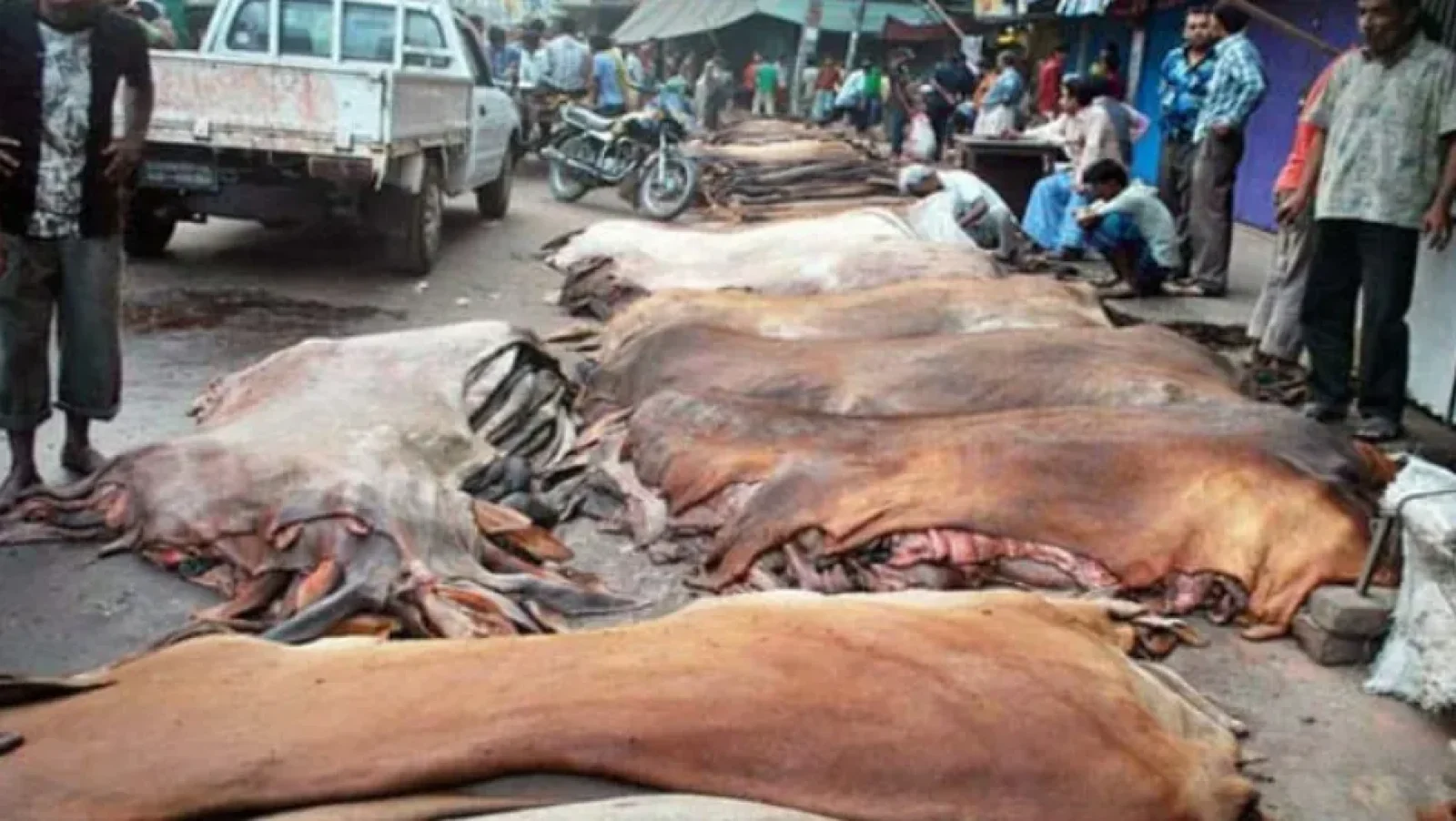
At a time when the government is implementing new plans to protect the environment, raw hide warehouses in the very centre of Kushtia town are threatening it, with hides processed and stored all day, spreading a foul stench. Many attempts have been made to move the town’s hide market, or chamrapatti, out of the residential area, but they have remained stuck on paper for unknown reasons.
That was the picture on a visit to the hide market. Although the rotting, foul-smelling waste has made life miserable for local residents, moving the market remains a dream. People walking through this upmarket part of town hold handkerchiefs to their noses, yet those charged with protecting the environment seem barely to notice the smell.
The hide market, where raw hides are salted, grew up on open land on the edge of the town before independence. At first it caused no problems, but over time an upmarket residential area has grown up around it, and the environment is polluted constantly. The pollution is so bad that local people, traders and bank customers find it hard to enter the area, yet no one has taken the initiative to move it.
Four vans loaded with hides pulled up in front of a warehouse. As soon as a hide was unloaded, a pungent smell of rot spread through the area, and shoppers, people in town on business, taxpayers at the Kushtia regional income tax office and Sonali Bank customers all pressed handkerchiefs to their faces, slowing their pace and hurrying away.
After unloading, traders wash the leftover rotting waste every day into the municipality’s covered drains. As the sun heats up, the blood-mixed hide waste in the drains rots further, spreading an even stronger stench and breeding huge numbers of mosquitoes that plague town residents, bank customers said.
A trader from Poradah who came to pay income tax said the stench makes it hard even to reach the office, and walking or riding a rickshaw past it makes him want to vomit. The guardian of a pupil at the government girls’ school said students and passers-by who face the smell daily suffer breathing problems and other illnesses. Those responsible for the environment, meanwhile, have taken no action, nor any initiative to ask higher authorities to relocate the market while keeping this economically important sector alive, he said.
Prominent hide traders and Kushtia municipal councillors said the traders are also determined to keep the environment free of pollution. The market began long before independence with a handful of warehouses and now has about 50 large and small ones.
Every year these warehouses salt between 280,000 and 400,000 cattle and buffalo hides and 350,000 to 400,000 goat and sheep skins, which are sent to tanneries in Hazaribagh in Dhaka and Noapara in Jashore, adding about Tk 80-90 crore a year to Kushtia’s economy.
It is everyone’s responsibility to keep this dynamic sector of Kushtia’s economy alive, one trader said. The hide traders also support protecting the environment, and are always in favour of moving the market if they get security for their business, a suitable site and environment, banking facilities and good transport links, but the question is who, or which institution, will take responsibility. If the Department of Environment or the ministry takes the initiative to relocate the market under a clear policy and protect the town’s environment, the traders will welcome it, he said.
Traders once dumped hide waste everywhere, causing serious pollution, but the system has been modernised, he said: leftover waste is now gathered at each warehouse and handed to the municipality’s rubbish trucks. The salting process caused no problems at first, but it does cause some problems now for the upmarket residential area that has grown up over time. Moving the hide market away from the Babar Ali Gate area is now the only demand of local people.
বাংলায় মূল প্রতিবেদন পড়ুন · Read the original Bengali report