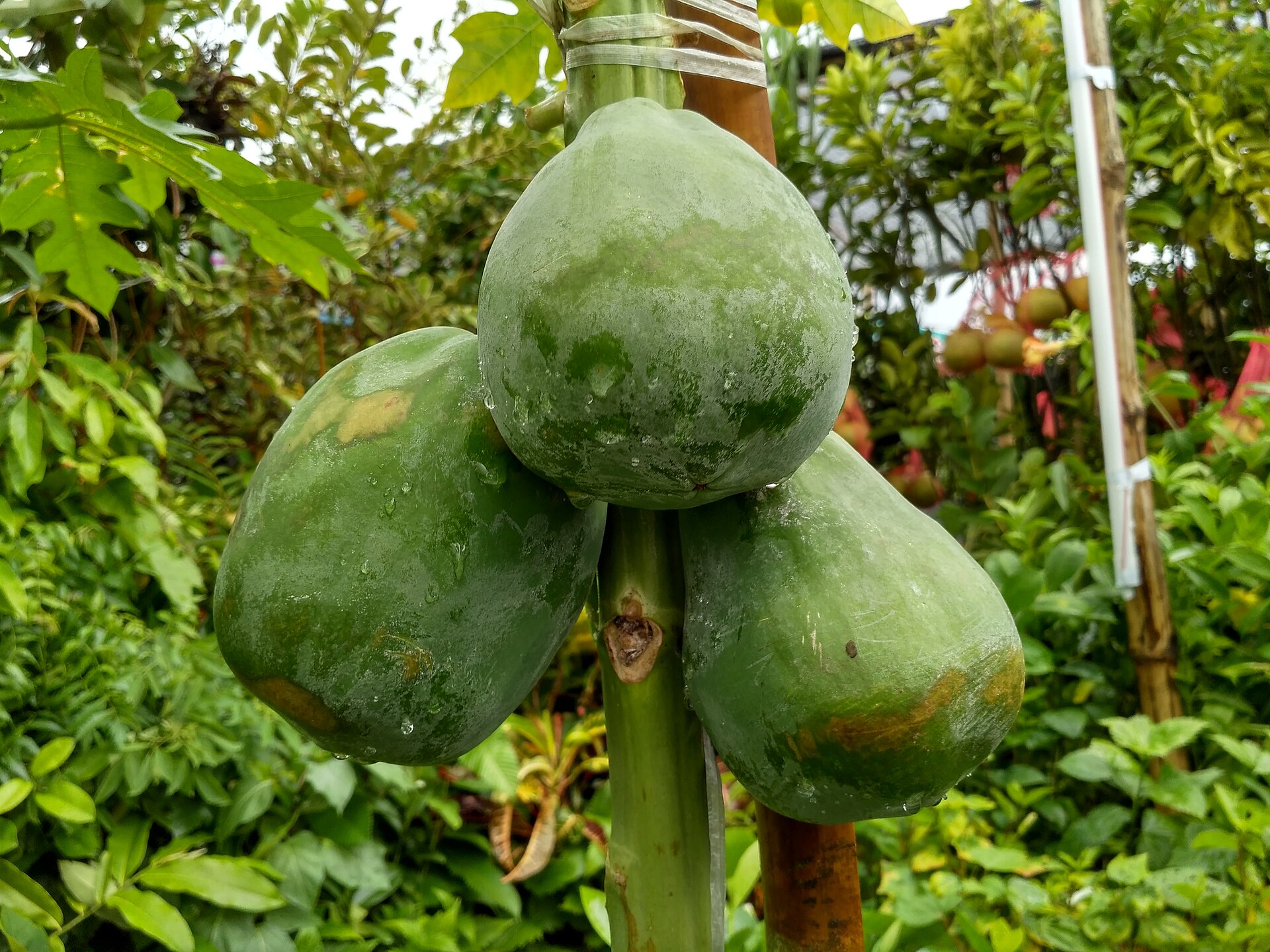
Commercial papaya farming is growing in Jashore, known as the granary of the south-west. Farmers in the district are taking up profitable fruit alongside traditional crops. With steady harvests at relatively low cost and demand in the market, they see promise in papaya. After meeting local demand, Jashore’s papayas are going to markets in Dhaka, Chattogram, Khulna and Rajshahi.
Papaya is grown commercially in Upashahar and Churamonkathi in Jashore Sadar upazila, and in parts of Sharsha, Jhikargachha, Abhaynagar and Manirampur. Alongside rice and jute, farmers are turning to fruit and vegetables, and interest in improved hybrid papaya varieties is rising.
According to the Department of Agricultural Extension (DAE) in Jashore, papaya has been grown on more land than targeted this season. Farmers are growing BARI Papaya-1, developed by the Bangladesh Agricultural Research Institute (BARI), and various hybrid varieties.
Abdul Malek, a farmer from Lebutala in Jashore Sadar, said: “This year I grew hybrid papaya on two bighas. From sowing the seed until the trees grew and started fruiting, it cost about Tk 25,000 to 30,000. I have already sold papayas worth about Tk 1 lakh to wholesalers, and the trees still carry plenty of fruit.”
“With rice you often take a loss, but the risk with papaya is much lower. Once the trees start fruiting, you get fruit regularly. You can sell papayas at the market every week and have cash in hand,” he said.
Seeing Abdul Malek’s success, other farmers and unemployed young people in the area are taking an interest in papaya. Women are also planting papaya trees in their yards to meet their families’ nutritional needs and earn extra income.
Green papaya is selling at Tk 30 to 40 a kilogram in the market, according to local traders. Wholesalers buy papayas straight from the orchards and send them by truck to wholesale markets around the country. Because green papaya is eaten as a vegetable and ripe papaya as a fruit, there is a market for both.
Dr Tanvir Islam, assistant professor in the Department of Food and Nutrition Science at Jashore University of Science and Technology, said: “Papaya is a nutritious fruit. There is demand for it both green and ripe. Green papaya is eaten as a vegetable and ripe papaya as a fruit. It contains vitamins A and C and other nutrients.”
Zahidul Islam Biswas, deputy director (acting) of the DAE in Jashore, said: “Jashore’s soil and weather suit papaya. We are advising farmers to use modern, scientific methods. In particular, we are stressing growing papaya on high ground so that water does not collect in the fields. We are also encouraging farmers to use organic pesticides against insects.”
“Heavy rain and waterlogging are the big challenges for papaya. Too much water can rot the base of the trees and kill them. And because there is not enough storage, farmers often have to sell papayas at a low price,” he said.
The spread of papaya farming in Jashore is opening new prospects for farmers’ incomes and rural jobs. To hold on to them, improved farming methods must go together with control of waterlogging, storage and a fair price.
বাংলায় মূল প্রতিবেদন পড়ুন · Read the original Bengali report