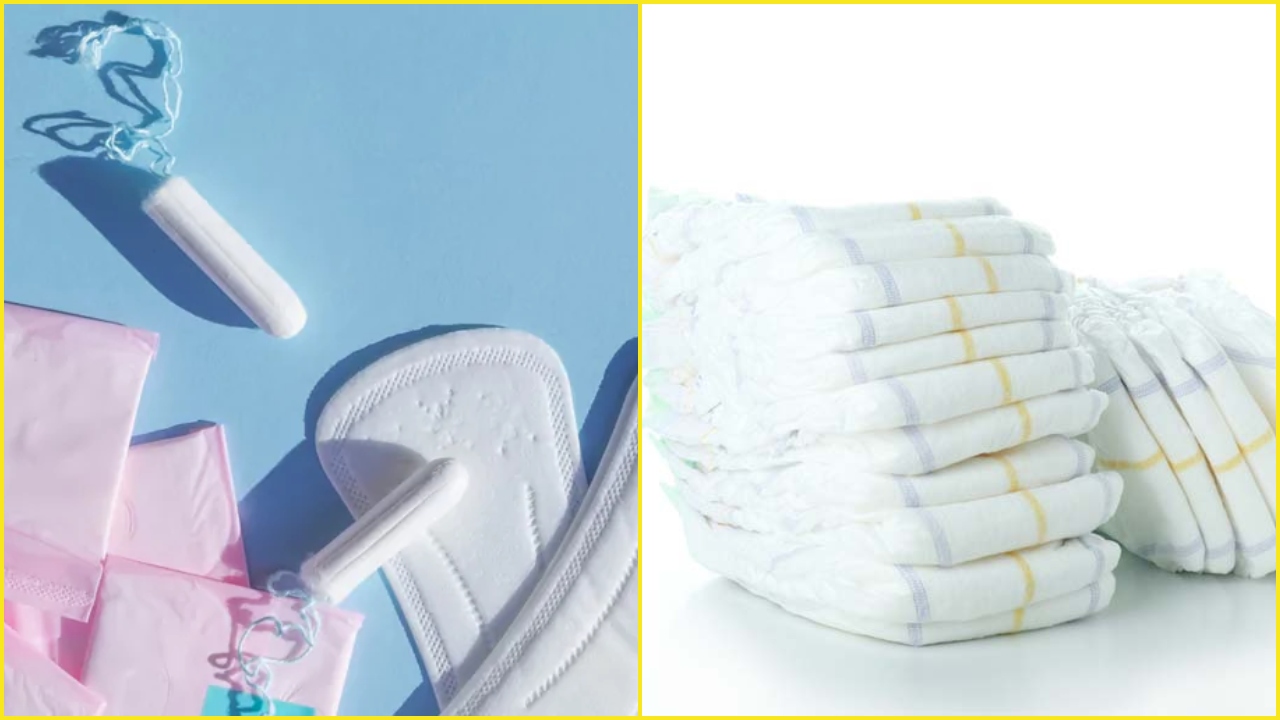
For women, sanitary napkins or pads are an essential product during menstruation. For families with young children or sick elderly parents at home, diapers are likewise a necessity. Industry owners say a rise in the import duty on nonwoven fabric — the raw material for napkins and diapers — could push up costs for such families.
Manufacturers have therefore demanded that the import duty on nonwoven products be kept at the previous 10 percent, against a proposal to raise it to 15 percent in the upcoming 2026-27 budget. In a letter to the finance ministry, Square Toiletries Limited, one of the country’s leading hygiene-product manufacturers, expressed deep concern over the proposed duty increase on raw materials for hygiene goods.
The company said that if the proposed duty structure took effect, the prices of essential items such as sanitary napkins and diapers would move beyond the reach of ordinary people, posing a significant public-health risk, particularly for women and children.
In an application sent to the finance secretary, Square Toiletries warned that only a very limited number of women in Bangladesh currently use sanitary napkins. If prices rose, it said, women could be forced back to unhygienic methods of managing menstruation, increasing their long-term health risks. Likewise, a rise in the price of children’s diapers would become a heavy burden for ordinary families.
According to information cited in the company’s submission, nonwoven fabric — the principal raw material for hygiene products — currently carries a 10 percent customs duty (CD) on import, but the 2026-27 budget proposes raising this to 15 percent. The regulatory duty (RD) is also proposed to rise from 3 percent to 5 percent. The company said such a high duty structure on raw materials for life-saving and hygiene products — customs duty of up to 25 percent plus additional regulatory duty — was rare worldwide.
The submission also pointed to complications in customs valuation, saying the Chattogram customs authority assesses duty on various raw materials at values far above the imported invoice price. The letter said nonwoven fabric was being assessed at 53 percent above its purchase price, and laminated back sheet at up to 74 percent above. Other raw materials such as SAP, air-laid and hook tape were also being assessed at 19 to 47 percent above value, it said, making production costs unsustainable.
To sustain the hygiene industry and protect consumers, Square Toiletries managing director Anjan Chowdhury made four specific demands of the government: keep the customs duty on nonwoven fabric at the previous 10 percent rather than raising it; exempt the hygiene industry from the increased regulatory duty; cut the total duty on raw materials from 25 percent to 10 percent; and assess imported raw materials on the basis of invoice value.
He expressed hope that the government would give serious consideration to the proposals to protect domestic industry at a time of rising global raw-material prices and higher shipping costs.
Industry insiders say diapers worth Tk 160 crore to Tk 180 crore are sold on average each month, putting the product’s annual market at Tk 1,920 crore to Tk 2,160 crore. The country’s sanitary napkin market is currently worth about Tk 600 crore. The market is growing by around 20 to 25 percent a year.
Before the Covid pandemic, foreign brands held 40 to 45 percent of Bangladesh’s baby-diaper market; that share has now fallen below 10 percent, meaning domestic companies now hold about 90 percent. Reduced import dependence is also saving foreign currency, although almost all raw materials must still be imported. The diaper market has been expanding at 25 to 30 percent a year, drawing new investment.
With leading industrial groups investing alongside pharmaceutical firms, the number of domestic diaper brands has crossed 10. They include Silicon Corporation’s Chu Chu Diaper, AB Group’s Thai Diaper, ACI’s Savlon Twinkle, Incepta’s NeoCare, Square’s SuperMom, Bashundhara’s Baby Diaper, Meghna Group’s Happy Nappy, SMC’s Smile, Pran’s Kidstar, Akij’s Mum Mum and Unimax Industries’ Avoni. One pharmaceutical company is planning to enter the diaper market.
বাংলায় মূল প্রতিবেদন পড়ুন · Read the original Bengali report