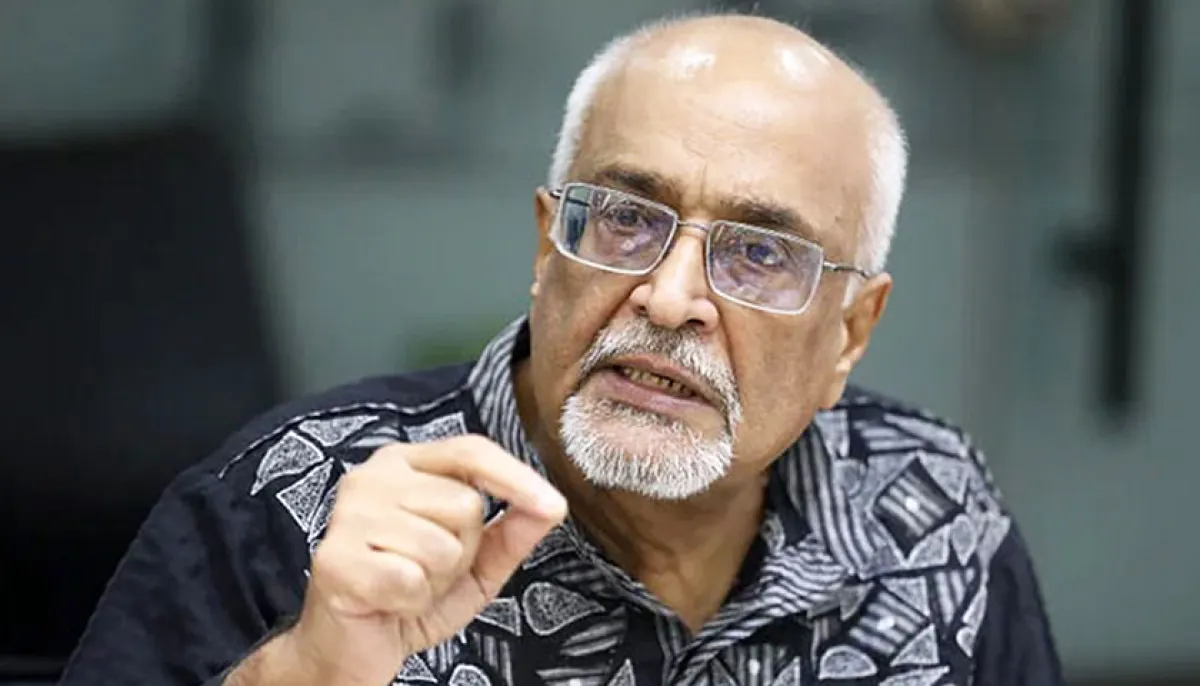
A Bangladesh that comes first, a Bangladesh of working people, a Bangladesh of justice, a Bangladesh of the new settlement — all of it must begin by giving priority to quality primary education, according to Dr Debapriya Bhattacharya, distinguished fellow of the Centre for Policy Dialogue (CPD) and convener of the Citizen’s Platform.
He made the remarks on Saturday (September 19) at a dialogue at a hotel in the capital, jointly organised by CPD and the Citizen’s Platform for SDGs, Bangladesh. The research report, titled Is the government keeping its promises? A focus on primary education, was presented by CPD additional research director Towfiqul Islam Khan.
The event heard a detailed research report on the present state of Bangladesh’s primary education sector, the challenges it faces, and progress on implementing the government’s election commitments.
Dr Debapriya Bhattacharya said the country is passing through a situation in which students sit examinations and are able to pass, while many institutions have been built around the country that cannot find students, and the most able people do not want to become teachers. These three large problems are troubling us, he said, and they need a solution.
He said that if we speak of Bangladesh first, then it must first be a Bangladesh of quality education. Those who say they want the rise of working people must understand that the rise has to come through giving their children real education. The children of working people and of those left behind must be educated and given a proper place to learn. Those who say they will make a new settlement must make it by effectively implementing the right to education. And for those who call for justice, he said, there can be no greater injustice than deprivation of education.
CPD’s newly appointed executive director, Dr Nazneen Ahmed, said that although access to and participation in education have increased in Bangladesh according to the gender index, women’s economic and social empowerment scores are not as encouraging as hoped. Parity between boys and girls has been achieved in primary education, but a wide gap remains between the educational opportunities of children from rich and poor families. Raising school attendance alone is not enough for quality and life skills: students must move beyond GPA-driven study and acquire practical life skills such as debating and sport. It is important that parents move away from a GPA-5 mindset, she said, because a GPA-5 does not give a complete picture of a child’s ability or aptitude. The keynote paper presented by CPD additional research director Towfiqul Islam Khan set out the historical background of the country’s primary education sector and its recent challenges.
The CPD report says Bangladesh saw success in primary school enrolment, school facilities and boy-girl parity during the period of the Millennium Development Goals. That success has recently stalled. Major shocks such as floods and Covid exposed the fragility of the education system. The principal crisis in the country’s education sector now is the division between its different streams, where unequal standards between institutions and certificates are creating inequality in learning outcomes and in access to quality education.
Analysing the state of implementation of the government’s election pledges after more than 200 days in office, the research team kept three main areas under scrutiny: progress on implementing the commitments in the election manifesto, policies and plans adopted outside the manifesto, and whether these political commitments are properly reflected in the budget. CPD takes the view that it is not enough simply to increase basic access to education; institutional inequality must be removed, and swift steps taken to implement political commitments on the ground through adequate budget allocation. Political declarations or general budget allocations alone will not bring overall change in education. Ensuring quality means not only increasing budget allocation but also giving importance to using it properly, and implementing declared policies quickly on the ground through a legal framework.