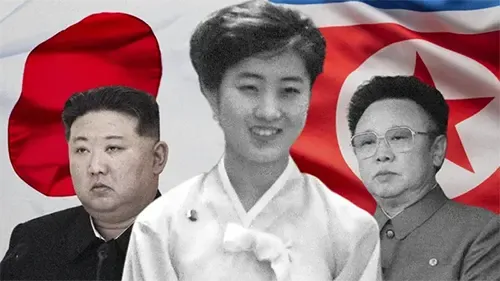
Countless mysteries surround North Korean leader Kim Jong Un, but the secrecy around his mother is among the most striking. In 15 years in power, he has not once publicly uttered her name. The legitimacy of Kim’s autocratic rule rests heavily on his so-called “Mount Paektu bloodline,” promoted as the inheritance of the Korean nation’s mythical founder, the BBC reports.
And in a country where such hereditary purity is held up as a matter of state pride, the identity of Kim’s mother is not just a secret but a potential threat to the system. According to popular belief, the history of the Korean nation began at Mount Paektu. The mountain, on the China-North Korea border, is regarded as the birthplace of Dangun, said to be the mythical founder of Korea’s first kingdom. Thousands of years later, North Korea’s founder, Kim Il Sung, is said to have used the mountain as his base while fighting Japanese colonial rule. His son, Kim Jong Il, is officially claimed to have been born on the slopes of this sacred mountain too, though various reports say he was probably actually born in Russia. Since then, Mount Paektu has for decades been used as one of the key symbols establishing the legitimacy of Kim-family rule.
Ryu Hyun-woo, a former diplomat who defected from North Korea, wrote in his book “Kim Jong Un’s Secret Vault” that Kim Jong Un, in his twenties, became successor without any notable achievements, solely because of the Paektu bloodline. But the reality of Kim’s maternal lineage tells a completely different story. A few hundred miles from Mount Paektu lies the historic Japanese city of Osaka. It was there, it is believed, that Kim’s mother, Ko Yong Hui, was born in 1952. According to information gathered by biographers, Ko Yong Hui’s parents were originally residents of Jeju Island, off the southern coast of present-day South Korea.
Their family living in Japan were Zainichi Koreans — ethnic-Korean migrants who moved to Japan during Japan’s colonial rule of the Korean peninsula from 1910 to 1945. When Ko Yong Hui was about 10 years old, her family moved to North Korea. They were among some 93,000 Koreans who migrated to North Korea between 1959 and 1984 under a resettlement programme. They had been promised that an ideal life awaited there, with free healthcare, education and jobs. At first, many viewed these migrants from Japan with envy, because they brought cash, clothing and household electrical goods with them.
But at the same time they were called by a derogatory name, “jaepo.” In the eyes of the state, they were a group seen as influenced by foreign and dangerous ideologies. North Korean society is extremely strictly stratified, a social structure many analysts compare to a caste system. This social classification is called “songbun.” In it, the jaepo belonged to the so-called wavering class — positioned between the core or loyal class and the hostile class. They were kept under strict state surveillance and had almost no chance of admission to good universities or of obtaining important government jobs. This is completely at odds with the Paektu-bloodline narrative the Kim family has long promoted.
বাংলায় মূল প্রতিবেদন পড়ুন · Read the original Bengali report