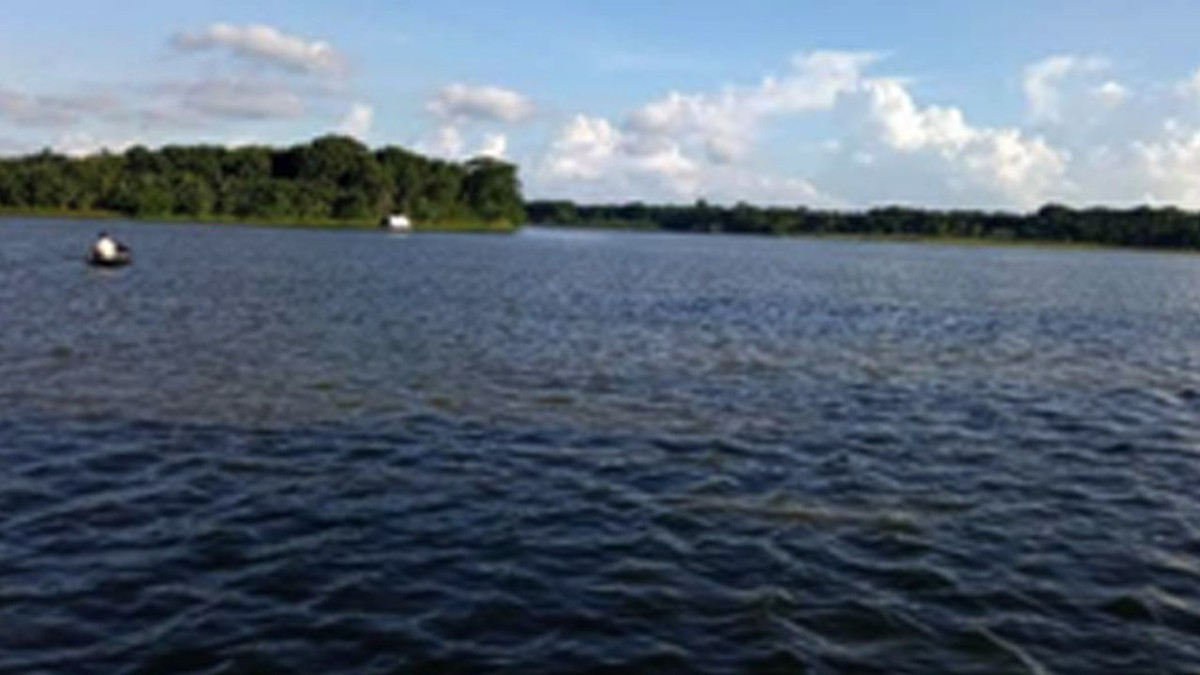
The Department of Fisheries has proposed a project costing Tk 475.5 million (Tk 47.55 crore) to develop fish resources in 29 baors, or oxbow lakes, in four districts of the country’s southwest, increase fish production and improve the lives of genuine fishers.
The five-year project, titled ‘Community-based fisheries resource management in selected baor areas’, plans to dredge the baors, set up fish sanctuaries, improve fry-production facilities, provide training and strengthen community-based management. It sets a target of raising fish production in the baors of Jashore, Jhenaidah, Chuadanga and Kushtia districts by at least 10 percent.
According to the Ministry of Fisheries and Livestock, the Jashore deputy commissioner took the initiative for a project to raise fish production in the region’s baors in 2025, under the interim government. Following this, a meeting chaired by the deputy commissioner last December, attended by an additional secretary and a joint secretary of the ministry, representatives of the fisheries department and local people, decided to take up the project. A meeting chaired by the then secretary approved it in January this year. A proposal for the project’s staffing structure was then sent to the Finance Division. After the staffing structure was approved under the present government, the project’s development project proposal (DPP) was sent to the Planning Commission. The project is now awaiting appraisal of its cost and activities.
Under the project, selected parts of baors that have filled up with silt are to be dredged to increase their depth and water-holding capacity. Tk 112.2 million (Tk 11.22 crore) has been proposed for this. It is expected to create conditions in which fish can live and grow even in the dry season.
To conserve native fish species and ensure natural breeding, Tk 23.2 million (Tk 2.32 crore) has been proposed for setting up sanctuaries in the 29 baors. The plan also includes Tk 17.3 million (Tk 1.73 crore) to repair 35 existing fry-production ponds, Tk 14 million (Tk 1.40 crore) for farm mechanisation, and Tk 12 million (Tk 1.20 crore) to install six deep tube wells for water supply.
As part of developing infrastructure for baor management, training, fry supply and extension services, Tk 73.1 million (Tk 7.31 crore) has been proposed to rebuild six dilapidated baor managers’ office buildings. Tk 29 million (Tk 2.90 crore) has been set aside for 290 beel nurseries over five years, and a separate Tk 76.2 million (Tk 7.62 crore) for releasing fry of carp and native species. Alongside raising fry in the beel nurseries, fry will be released into designated water bodies to boost production. Tk 800,000 (Tk 8 lakh) is proposed for equipment, including four desktop computers, two laptops, four printers and accessories.
The proposed project covers dredging, sanctuaries, fry production, water supply, infrastructure and training. Beyond raising fish output, it aims to conserve the natural environment of the baors and build sustainable fisheries management with the participation of local communities.
Asked about it, Fisheries and Livestock Secretary Md Delwar Hossain said the project’s aim was to raise fish production in the baors and build effective management by involving local fishers. There are plans to identify selected water bodies, set up sanctuaries, monitor the safety of fish and train local people.
He said fishing would be controlled in the designated sanctuary areas so that fish can breed and multiply naturally. When the fish spread into nearby rivers and beels in the monsoon, local fishers will be able to catch them there. This is expected to raise fish production and bring long-term benefits to fishers’ livelihoods. The proposed cost and the need for the various activities are now under appraisal, and a decision will follow once the Project Evaluation Committee (PEC) has reviewed them.
Dr Md Khaled Konok, acting director general of the Department of Fisheries, said: ‘This is a community-based fisheries development project. Projects like this to improve the lives of baor fishers have long been lacking. Many baors have become shallow, harming the conditions for fish to live and breed. The project aims to develop the water bodies and build an effective framework for community-based management.’
He said updating the list of genuine baor fishers was one of the project’s most important goals. The membership lists of fishers’ associations formed in the 1990s have not been updated for a long time. The project will make it possible to include genuine fishers, establish their rights and share the benefits of the catch fairly. There are also plans to provide the equipment and logistics needed for management. However, the figures in the project are proposed costs, and the need for infrastructure, the specifications and prices of equipment, and the staffing remain to be assessed and justified.
Those involved hope that, if implemented, the project will conserve the baors’ natural resources and raise the livelihoods and incomes of local fishers. If the target of at least a 10 percent rise in fish output is met, its benefits are likely to continue after the project ends.
বাংলায় মূল প্রতিবেদন পড়ুন · Read the original Bengali report