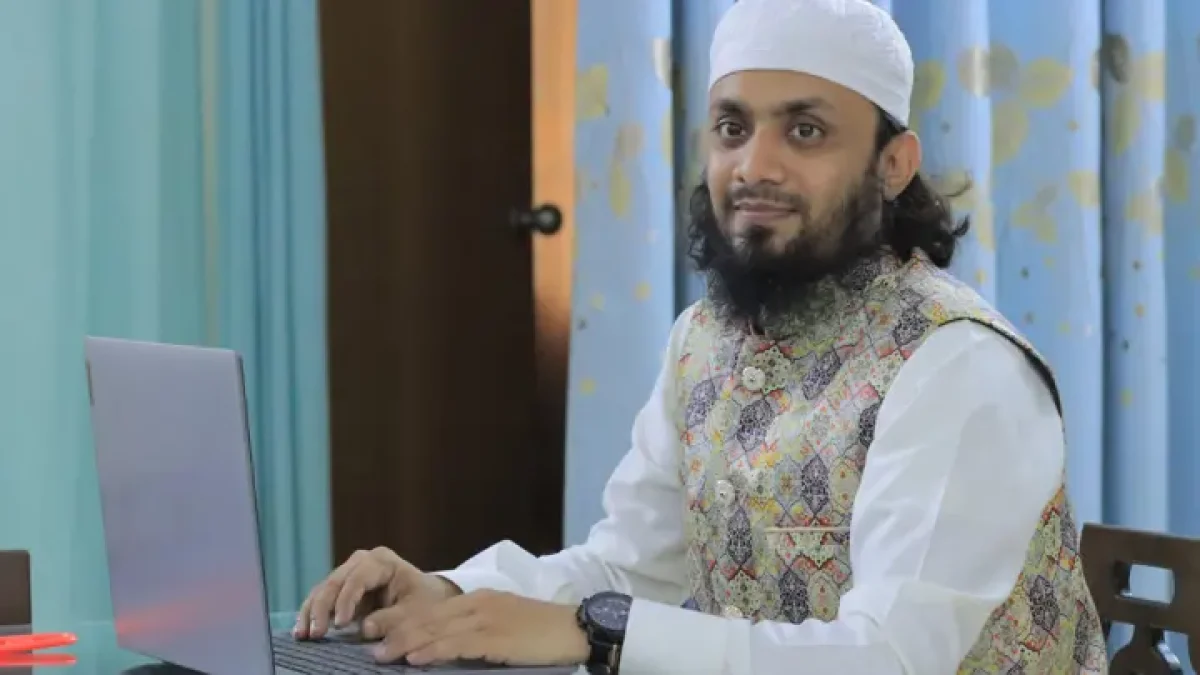
“Our salvation lies in practising the Sunnah; no argument will stand here,” Islamic scholar Abdul Hai Muhammad Saifullah wrote in a post on his verified Facebook page on Sunday.
In another Facebook post he wrote: “Discipline, affection and care towards a student all have their limits. For a religious teacher in particular, this ethic must be even stricter. Neither ‘like a father’ nor ‘like an elder brother’ can justify crossing the line. Anyone who does not understand the limits of affection and discipline should face questions about whether he is fit for the moral duty of teaching. When an allegation is made, we want an impartial investigation, and if the offence is proven, exemplary punishment. But there should be no biased judgment before the investigation either. The truth must be found and justice ensured.
“Covering up wrongdoing in a religious institution does double harm. It obstructs justice for the offence and destroys the institution’s credibility. ‘We will hide our own wrongs and speak out loudly about others’ wrongs’: what kind of morality is that? How can such a place be a religious institution? If we cannot call a spade a spade, if we cannot correct ourselves, by what right will we preach to everyone else? The standard of justice cannot change with the person, the post or the institution. The last word on everything is this: ‘There is no compromise on the safety of one’s own children.’ That is the last word. Never mind what anyone thinks or says.”
In other posts he wrote: “Wild music, a moment’s excitement followed straight away by vanishing in cigarette smoke, slowly falling into the grip of addiction, dressing up as ultra-modern with a crazy, hot-tempered attitude: this kind of entertainment carries no positive message for young people. We want young people’s enjoyment to make them healthy, not to destroy them. Let their enthusiasm awaken a love of life, morality and the resolve to change society.”
In another post he wrote: “Let effective steps be taken at the administrative and state level on how to stop drug smuggling across the border and how to save the young generation from this terrible disaster. A drug-free young generation is not only our hope; it is also the state’s responsibility. Let us call not only for moral appeals but for effective action by the state.”
On the role of mosques he wrote: “A mosque is not only a place for prayer or the name of a building; a mosque can be a social meeting place and a centre for many kinds of work for the good of the community. Mosques in every area need to be brought to life. To those on mosque committees, my appeal is this: do not treat responsibility for the house of Allah as mere honour or status. Take initiatives that will bring you honour in this world and the hereafter. And if you cannot carry out such initiatives yourselves, hand the responsibility to those who can, and support them from behind. Responsibility for a mosque does not mean only running a building; it means building an enlightened society around the mosque.”
On wealth and the welfare of others he wrote: “We will earn wealth, but we will not become slaves to wealth. Wealth will be in our hands; we will not be held captive by it. As we move forward in business and in earning wealth, we must remember that real success is not limited to how much wealth we have earned; it also matters how many people we have helped with it, how much good we have done, and whether it will continue as sadaqah jariyah after we leave this world.”
Abdul Hai Muhammad Saifullah came first in the first class at undergraduate level in the Department of Al-Hadith and Islamic Studies at the Islamic University, Bangladesh, in Kushtia, and won a gold medal from the President for coming first in his master’s. He then earned an MPhil in comparative religion. He is fluent in four languages: Bengali, English, Arabic and Urdu. He has won gold medals three times in Quran recitation competitions and has also done well in debating competitions.
He is doing PhD research in comparative theology and serves as khatib of the Masjidul Jumma Complex in Dhaka. He is a well-known and popular preacher on television, YouTube and social media.
বাংলায় মূল প্রতিবেদন পড়ুন · Read the original Bengali report