Madrasas gained 43,000 students in a year
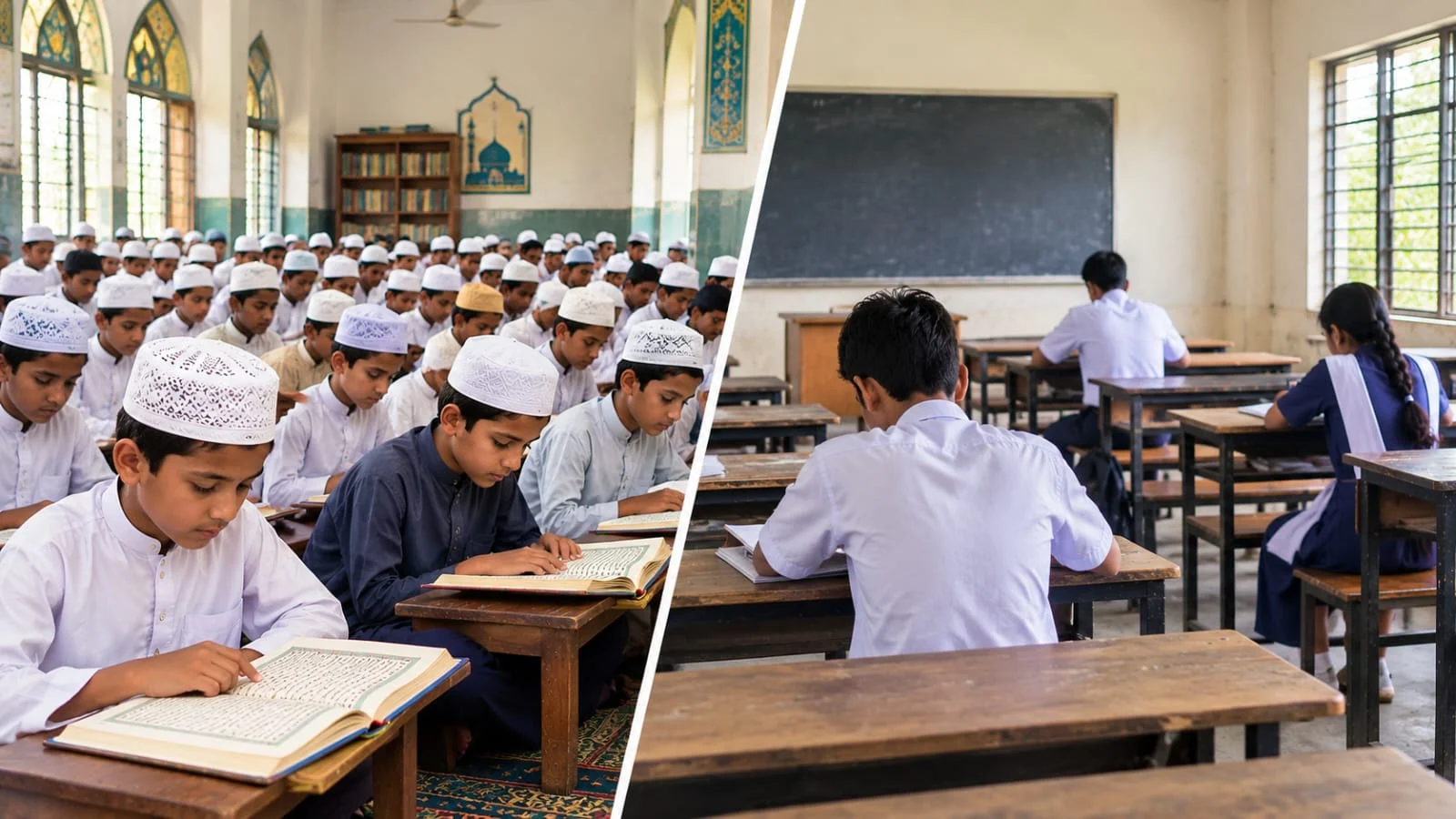
Enrolment is falling in Bangladesh’s general secondary schools but rising in madrasas. In one year, madrasas teaching from Dakhil to Kamil level gained more than 43,000 students. The number of madrasas also rose over the same period, and so did enrolment in English-medium schools. But general secondary schools and stand-alone technical and vocational institutions lost students.
These opposite trends in enrolment across the streams of education have reopened debate on education planning, students’ choices and the quality of institutions. The picture emerged in the Bangladesh Bureau of Educational Information and Statistics (BANBEIS) report, Bangladesh Education Statistics 2025, published recently.
According to the report, there were 9,269 madrasas teaching at Dakhil, Alim, Fazil (pass and honours) and Kamil levels in 2024. The number rose to 9,296 in 2025. These institutions had a little over 2,796,000 students, which rose to more than 2,840,000. That means 27 more institutions and more than 43,000 more students in one year. The figures do not include stand-alone Ebtedayee and Qawmi madrasas, so the total number of students in all types of madrasa in the country is thought to be many times higher.
According to BANBEIS, enrolment in religious education has risen nearly one and a half times in the past three years. Madrasa teachers say they used to go from house to house looking for students, but now many students come to madrasas on their own.
Analysts say facilities at madrasas, including free board and lodging, have increased, and many are drawn to madrasa education for religious reasons. Some educationists see a link between rising interest in madrasa education and the country’s prolonged economic hardship since the Covid pandemic.
Among the levels of madrasa education, Dakhil is equivalent to secondary level and Alim to higher secondary. Fazil and Kamil are the higher education levels. The Bangladesh Madrasah Education Board runs the curriculum and exams at Dakhil and Alim levels, while Fazil and Kamil higher education comes under the Islamic Arabic University.
Secondary schools lost more than 400,000 students
According to BANBEIS statistics, there were 19,117 government and private secondary schools, including junior schools, in 2024. In 2025 the number rose to 19,211. Although the number of institutions grew, enrolment fell by more than 408,000. These schools had 7,847,546 students in 2024, which fell to a little over 7,439,000 in 2025. In one year, 94 schools were added while enrolment dropped significantly.
Stand-alone technical and vocational institutions also lost students over the year. In contrast, English-medium schools gained 595 students. There are 143 such schools in the country. They had 29,077 students in 2024, which rose to 29,672 in 2025.
Calls for research into the causes
The BANBEIS report does not analyse why enrolment fell in secondary schools while it rose in madrasas. It cannot be said for certain how much students’ changing preferences, parents’ decisions, the availability of institutions or the cost of education contribute to the trend. Nor is it clear whether students are moving from secondary schools to madrasas.
Professor Moninur Rashid of the Institute of Education and Research at Dhaka University said the fall in secondary enrolment could reflect learning losses after Covid, students falling behind in their studies, various recent circumstances, children going into work and the effect of the curriculum. But research is needed to establish the likely causes and the real picture.
He said intensive research was needed to understand why so many students had left secondary education, as well as the trends in the report’s other statistics. Action based on the research findings is urgent, he said.
People in the education sector say figures on rising or falling enrolment alone are not enough to judge the progress of the education system. Dropout rates, the quality of education, the number and qualifications of teachers, access to science and ICT education, and students’ progress into higher education and jobs also need to be assessed. Analysing this data to determine real needs in each stream of education and to make effective plans is essential, they say.
বাংলায় মূল প্রতিবেদন পড়ুন · Read the original Bengali report