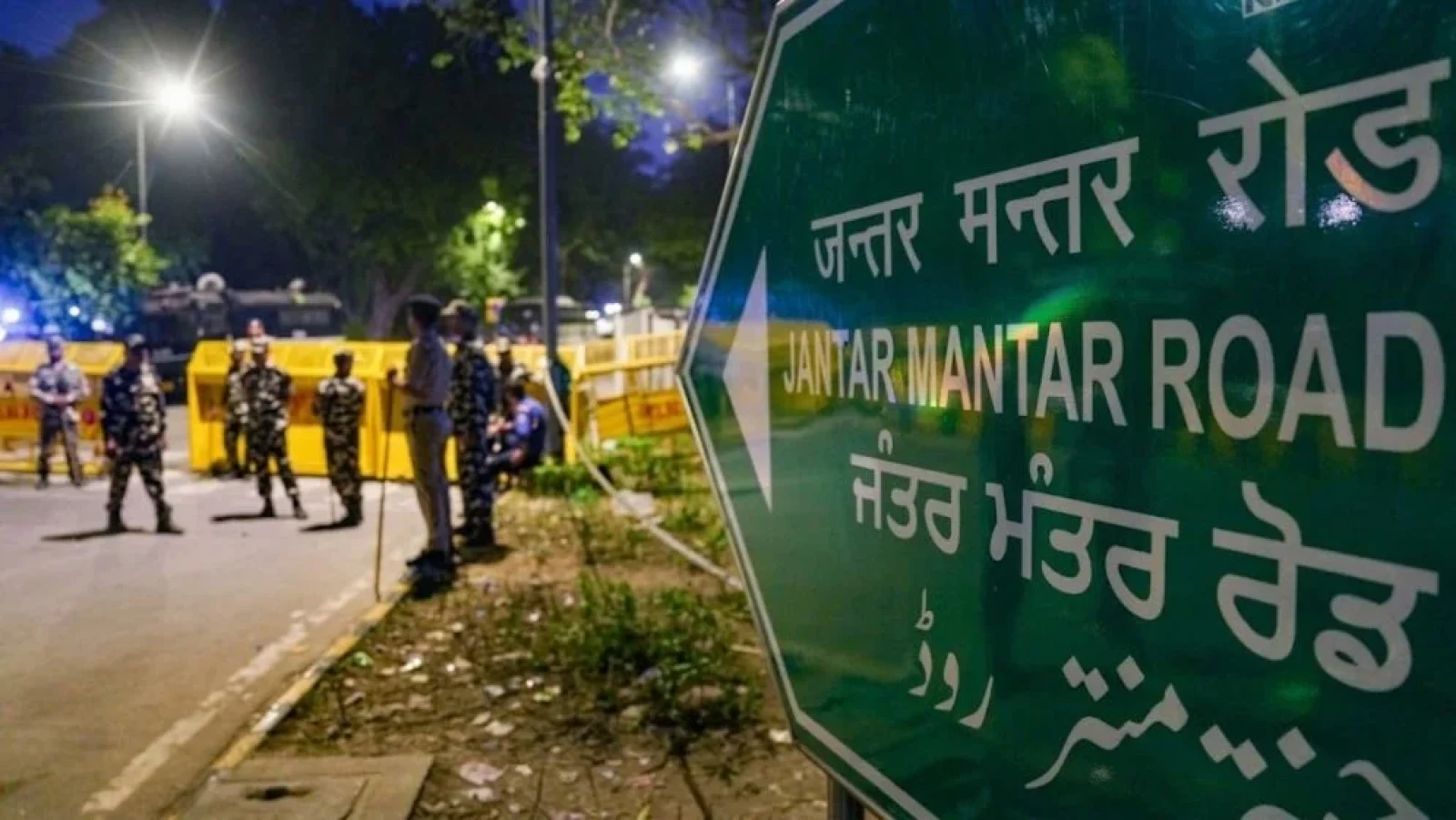
Jantar Mantar, one of the historic landmarks of India’s capital, New Delhi, and a symbol of street protest, can no longer be used as a protest site. Acting on the recommendation of a committee formed by the country’s home ministry, Delhi Police have formally confirmed the decision to withdraw its status as a protest venue. From now on, Ramlila Maidan, Burari Ground and the CBD Ground in east Delhi have been set as alternative venues for large gatherings and demonstrations.
The observatory was built around 1724 by Maharaja Sawai Jai Singh II of Jaipur, on the orders of the Mughal emperor Muhammad Shah. It was made to observe the movement of stars and planets with the naked eye. The brick and lime compound held important structures such as the Samrat Yantra, Ram Yantra, Jai Prakash Yantra and Misra Yantra, used mainly to tell the time and fix the positions of the planets.
Later, Jantar Mantar took a unique place on India’s political map. Large political rallies used to be held at the Boat Club near India Gate or at Ramlila Maidan. But because it lies less than 3 kilometres from the parliament building, it gradually became one of the main stages where citizens and organisations pressed their demands. With tight security making a march on parliament impossible, Jantar Mantar became the symbolic route instead, and while parliament was sitting, members could come and speak to the protesters there.
The site has been a silent witness to many of the biggest social and political movements in India’s modern history. In 2011 the anti-corruption campaigner Anna Hazare began his historic hunger strike at Jantar Mantar, which had a deep effect on the government of the day and on the passing of an anti-corruption law. After the 2012 ‘Nirbhaya’ case, thousands of angry people gathered here to demand tougher laws. During the protests against the new citizenship law (CAA) and the NRC in December 2019, many people gathered in the same compound.
Its influence lasted into recent years. In January and April 2023 the internationally known wrestlers Vinesh Phogat, Sakshi Malik and Bajrang Punia held a long sit-in here against sexual harassment within the wrestling federation. In the middle of 2026, the Cockroach Janata Party’s protest against the leak of NEET exam questions, and later the hunger strike by the environmental activist Sonam Wangchuk, were also held at Jantar Mantar and built wide public support. The historic site, where the sound of democratic protest echoed for so long, will from now on be known again only for its old architecture and archaeological heritage.
বাংলায় মূল প্রতিবেদন পড়ুন · Read the original Bengali report