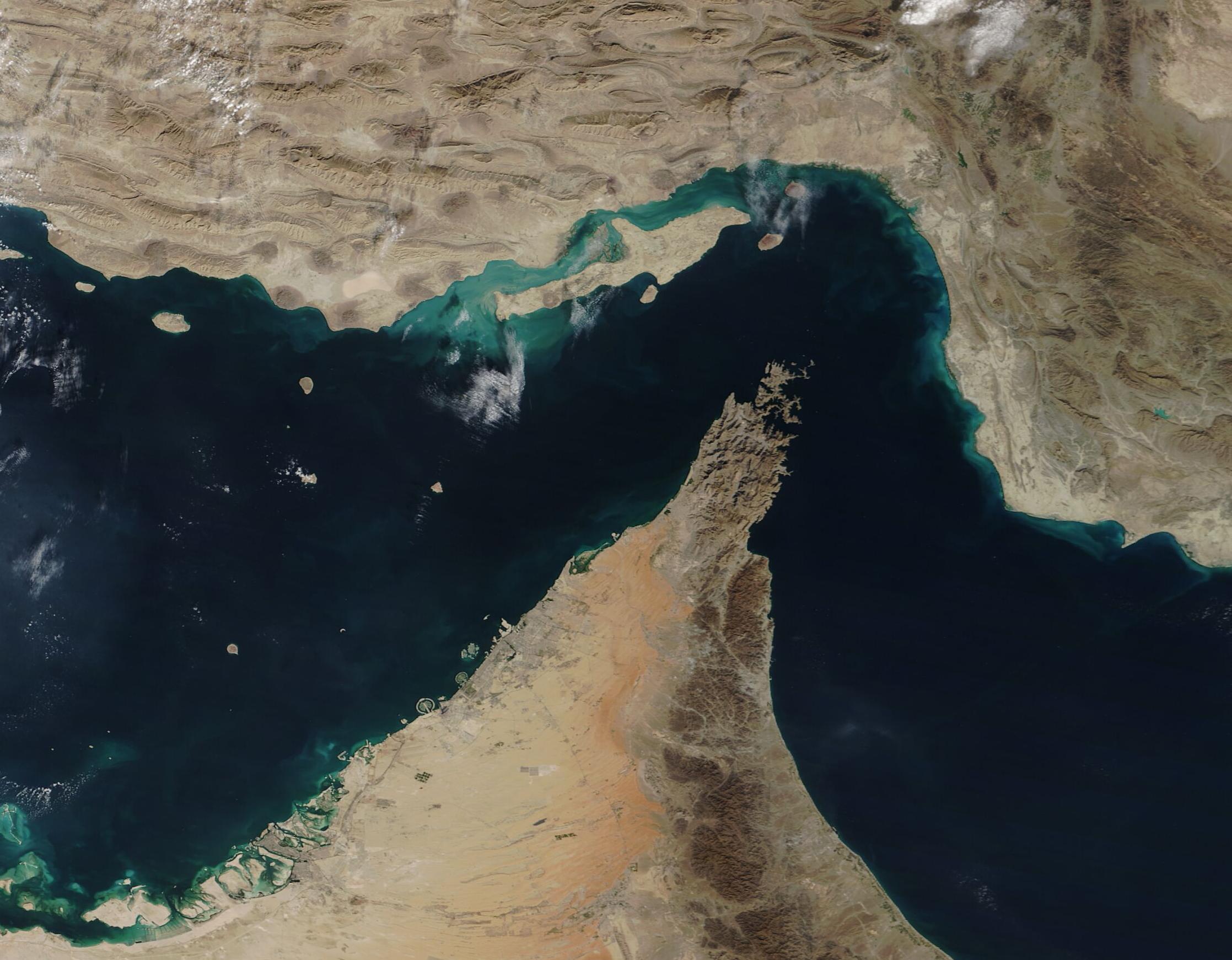
The defence and security chiefs of Saudi Arabia, Pakistan and Turkey have met Iran’s leaders in Tehran on Monday, the first four-way meeting between Iran and the three members of the Makkah defence pact, and agreed to keep talking. No settlement was announced, and the bargain that could reopen the Strait of Hormuz belongs to Washington, which was not in the room.
Story in brief
- Saudi Arabia’s defence minister, Pakistan’s army chief and Turkey’s intelligence chief have met Iran’s security leadership in Tehran on Monday, hosted by Mohsen Rezaei, secretary of Iran’s Supreme National Security Council.
- The four countries’ joint statement, carried by Iranian state media, records agreement to continue the dialogue for peace and security. It sets no date, no mechanism and no settlement. A Pakistani official said a proposal was presented at the meeting itself, with Washington’s go-ahead, and that the pact states and Qatar could guarantee it if accepted.
- The three visitors represent the states of the Makkah Joint Defence Agreement, signed in August, under which an armed attack on one member is treated as an attack on all three.
- The Strait of Hormuz stays closed. The June memorandum that was to reopen it unravelled within weeks, and its terms are now the argument: Iran reopens the strait when the United States lifts its naval blockade. Washington has not accepted those terms, and Iran on Saturday denied making any new offer of its own.
- Oil eased on Monday after a sharp weekly rise. The strait saw eight transits in 24 hours, against a daily average of nearly sixty.
Meeting in Tehran
The meeting was proposed by Pakistan and held with Iran’s support, according to Iranian state media,. Pakistan’s army chief, Field Marshal Asim Munir, had announced the plan during his own visit to Tehran last week. Saudi Arabia sent its defence minister, Prince Khalid bin Salman, the crown prince’s younger brother. Turkey sent the head of its National Intelligence Organisation, İbrahim Kalın. Iran’s foreign minister, Abbas Araghchi, sat in, and the three visitors met President Masoud Pezeshkian before the talks.
The agenda, as Iran’s side stated it, covered regional security, the consequences of the year’s US and Israeli strikes on Iran, and Palestine and Lebanon. A senior Pakistani security official told Reuters the meeting’s focus was building a regional non-aggression network, with the agenda running to US-Iran talks, the Houthi attacks, the strait and the blockade. The Saudi foreign ministry’s stated purpose was narrower: to open channels that prevent the return of military escalation. Qatari mediators had been in Tehran on Sunday, working the same file in co-ordination with the United States, a regional official said.
Pezeshkian told the visitors that Iran was ready to deepen regional cooperation and to settle differences among the region’s own states, and he repeated that Iran is not seeking a nuclear weapon. Iran’s foreign ministry spokesman called the meeting a practical step toward a security framework built by the countries of the region themselves. Turkey’s president, Recep Tayyip Erdoğan, warned in a televised address the same day that renewed attacks on Iran would drag the region toward a new spiral of violence.
Defence pact at the table
The three visiting states signed the Makkah Joint Defence Agreement in Mecca on August 7, by Turkey’s president, Saudi Arabia’s crown prince and Pakistan’s prime minister. Its core clause is collective: an armed attack on one member is an attack on all. Pakistan ratified the pact last week. Turkey’s parliament began ratification last week; the process is still under way.
Since the signing, the war has reached the pact’s own members. Saudi Arabia has intensified its strikes on the Houthis since they captured areas of Yemen’s Red Sea coast last month, and Houthi forces in Yemen, aligned with Iran, have struck Saudi oil installations repeatedly, and on Monday the Houthis said they had attacked Saudi pumping stations and Riyadh’s airport again; Saudi Arabia had not confirmed the claim by Monday evening. On October 5, the three states’ defence and foreign ministers met in emergency session in Riyadh and agreed to activate collective deterrence measures, including rapid deployment of forces to Saudi Arabia.
In an Al Jazeera interview, Iran’s president called the alliance a positive step toward the unity of Muslims, and Iran’s ambassador in Islamabad said on Saturday that Tehran would study the agreement and support it if it is good. Egypt’s parliament voted on Monday to authorise President Abdel Fattah el-Sisi to provide military support to Saudi Arabia’s defence if Riyadh asks, and Cairo has said it is considering joining the pact.
Bargain beyond the room
The concrete file underneath the diplomacy is the Strait of Hormuz, closed to normal traffic under a US naval blockade of Iranian ports and Iran’s own closure, eight months into the conflict. The terms on paper are the June Islamabad memorandum, brokered by Pakistan and Qatar: shipping resumes, the blockade ends, and talks on Iran’s nuclear programme follow. The agreement unravelled within weeks as both sides renewed attacks, and what survives of it is the argument over its terms. Iran had set one boundary before Monday’s meeting: a senior Iranian official told Reuters there would be no nuclear discussions with the three visitors until the United States meets Tehran’s conditions for a permanent end to the war, including lifting the blockade and easing oil sanctions.
Iran’s parliament speaker, Mohammad Bagher Ghalibaf, said on October 4 that the strait stays closed until the memorandum’s seven conditions are met. At an OIC meeting in Baghdad on October 17, Araghchi said Iran’s offer to reopen the strait within seven days (Iranian state media) remains on the table once the necessary conditions are met: the blockade, oil sanctions and an end to hostilities.
What has been offered, and when, is disputed. A Pakistani official told Reuters that Munir, with a go-ahead from Trump to try diplomacy, had presented Iran at Monday’s meeting with a proposal offering something to both the United States and Iran, and that the pact states and Qatar could act as guarantors if it was accepted. Before the meeting, Al Arabiya had reported that Tehran had sent Washington a fresh offer through Pakistan. On Saturday, Iran’s Tasnim agency called that report a fabrication and said no new proposal had gone to the mediators, adding that Iran rejects a “strait for blockade” equation. Tehran’s ambassador in Islamabad gave a different account of the same channel: Iran had conveyed its readiness to reopen the strait if the blockade ends, and President Donald Trump had declined it.
Trump has held both doors open. His vice president, JD Vance, said in an October 6 interview that Iran must make a meaningful reduction in its nuclear enrichment to end the war. At a rally in Fort Myers, Florida, on October 23, Trump said the United States may carry out another military operation, “another little Epic Fury”, his name for the year’s strike operation against Iran, if Tehran does not agree. Iranian security officials told Reuters Tehran has drawn up detailed plans to attack Gulf undersea cables if the United States and Israel attack again. On Sunday he was still describing himself as undecided between a deal and further action. The mediators’ calendar runs against two electoral clocks: Israel votes on Tuesday, October 27, and the US midterm elections fall on November 3.
Eight ships a day through the strait
Oil markets heard the diplomacy and discounted it lightly. Brent crude closed at 115.81 dollars a barrel on Monday, down 91 cents from Friday’s settle of 116.72 dollars, after a sharp rise last week. Washington says the strait is working: the US military’s Central Command says it has helped move 1.5 billion barrels of oil out of Hormuz since the summer. Eight vessels transited the strait in 24 hours by DTN’s vessel-tracking count, against a daily average of nearly sixty.
What happens next
- The four countries have agreed to continue the dialogue. No date for a second meeting has been announced.
- Israel votes on Tuesday, October 27. Prime Minister Benjamin Netanyahu has warned that Iran or its allies could try to disrupt the election, and its military says it is ready to strike.
- The United States holds the two decisions the Tehran table cannot take: whether the naval blockade lifts, and whether the June memorandum’s terms are accepted. The mediators are working to the November 3 midterm elections.
- An Iranian or American response to the four-way meeting is the next development to watch. None had been issued by Monday evening.
বাংলায় মূল প্রতিবেদন পড়ুন · Read the original Bengali report