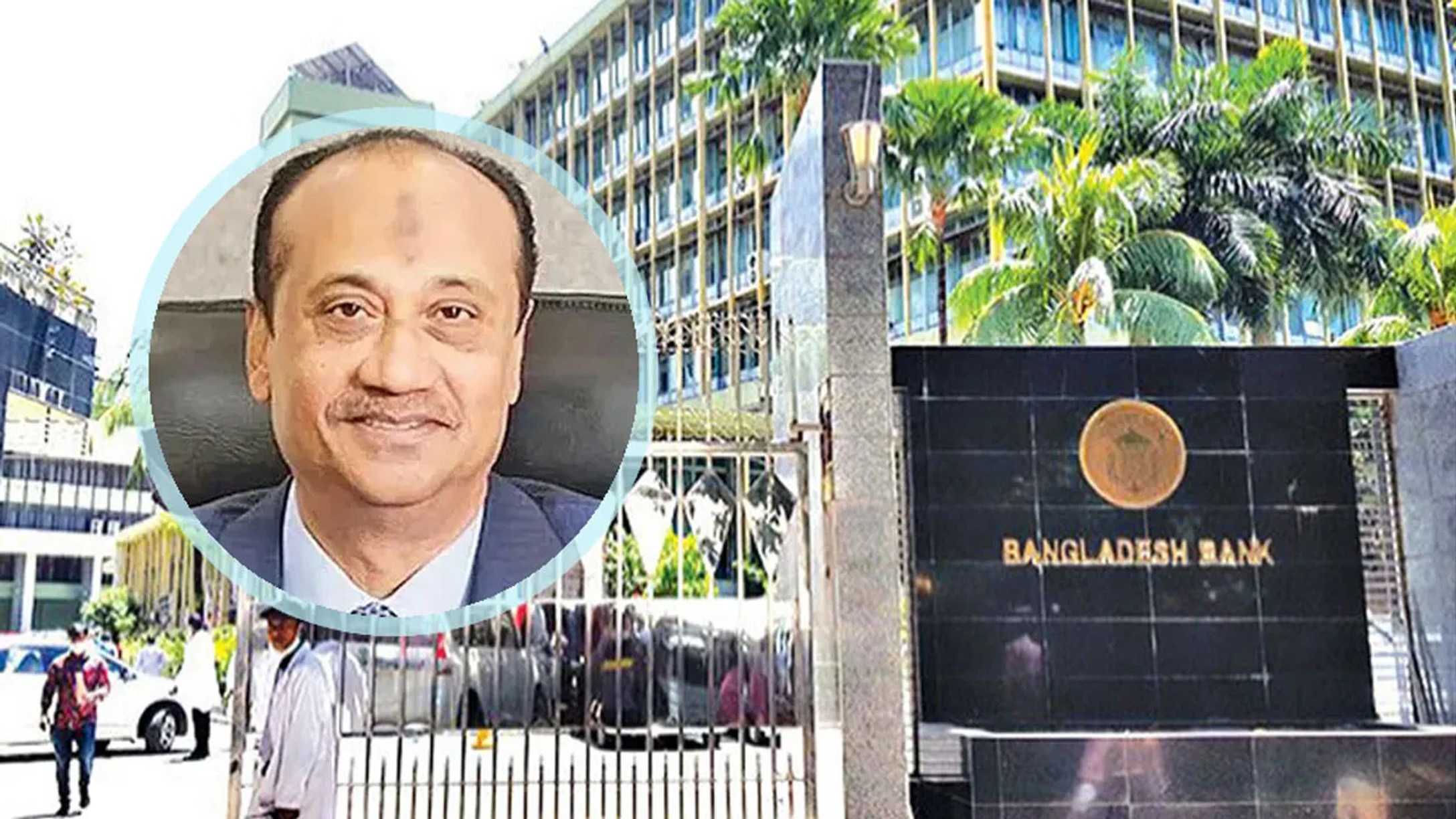
DHAKA — News that the Chattogram-based S. Alam Group could regain ownership of Bangladeshi banks under a new resolution ordinance has alarmed depositors, many of whom are pulling out savings from affected banks burdened by record non-performing loans.
The collapse of the Awami League government on Aug. 5, 2024, in a student-led mass uprising exposed deep wounds in Bangladesh’s banking sector. The true financial state of banks and other institutions began to surface.
S. Alam, a Chattogram-based business group, and a number of individuals and business groups favored by former Prime Minister Sheikh Hasina took lakhs of crores of taka from banks under the guise of loans through improper means. More than a dozen banks were left financially crippled. Limitless non-performing loans and capital shortfalls plunged them into a severe liquidity crisis.
Some steps by the interim government that took over after Hasina’s departure had restored a measure of public confidence in the banking sector. But that confidence has been shaken again since the passage of the Bank Resolution Ordinance 2026, which under certain conditions could allow controversial business groups including S. Alam to reclaim ownership of banks. Customers of the affected banks have begun pulling out deposits.
If S. Alam returns, depositors fear the banking sector will revert to its earlier state and they may not get their money back, they said, which is why they are withdrawing it now.
Munira Shahrin, a customer, said: “I hear a new banking law has been passed. S. Alam will reportedly come back into bank ownership, so I’m thinking of withdrawing my money. We’ve already suffered a lot.”
Banking experts said the Bank Resolution Ordinance 2025 was the boldest step the interim government took to revive the ailing sector. Its purpose was to restructure banks gutted by looting and mismanagement and permanently remove from ownership those responsible for the destruction. But under the newly amended Bank Resolution Ordinance 2026, shareholders who were on a bank’s list before it entered resolution or merger can apply to Bangladesh Bank to take back the bank’s shares, assets and liabilities.
Current state of S. Alam-controlled banks
The financial condition of S. Alam-controlled banks is extremely fragile. Their non-performing loans have ballooned. S. Alam and associates siphoned lakhs of crores of taka from these banks through fraud, using benami accounts. Most of the stolen money has been moved overseas.
According to Bangladesh Bank data, non-performing loans at First Security Islami Bank stand at about 96.20 percent, Social Islami Bank at 70.17 percent, Union Bank at 96.64 percent, Global Islami Bank at 95.70 percent, Bangladesh Commerce Bank at 51.65 percent and National Bank at more than 52 percent. All were controlled by the Chattogram-based S. Alam Group.
Islami Bank PLC, one of the country’s largest Shariah-based banks, was also under the group’s control. According to Bangladesh Bank, the bank’s total loans were Tk 1.82 lakh crore (about $14.9 billion), of which Tk 1.06 lakh crore (about $8.7 billion) have turned into bad debt — more than half the bank’s total lending.
Most of the siphoned money sent overseas
Bangladesh Bank’s investigation has so far uncovered Tk 2.25 lakh crore (about $18.4 billion) in loan fraud in the banking sector tied to S. Alam Group. Of this, Tk 1.25 lakh crore (about $10.2 billion) has been moved overseas. The group’s main channel for capital flight was fake letters of credit, with funds transferred to its overseas bank accounts through the misuse of information technology.
Under offshore-banking facilities, the group took loans for imports and opened letters of credit at Islami Bank. Goods were never brought into the country, but the equivalent of about Tk 18,000 crore in foreign currency was moved abroad by the group’s chairman, S. Alam Masud. Islami Bank later created forced loans in the customer’s name — S. Alam Group — to settle obligations to overseas negotiating banks. Because the borrowers never repaid, the entire Tk 18,000 crore is now in default. Additional funds were laundered abroad through offshore banking, the investigation found.
From Islami Bank, First Security Islami Bank, Union Bank, Social Islami Bank and Global Islami Bank — all under S. Alam’s control — more than a lakh crore taka was moved out without board approval. The funds were transferred to bank accounts overseas tied to the group’s interests. From a single branch of Islami Bank, Tk 7,000 crore was lent to S. Alam Refined Sugar Industries; a large share of that money was laundered abroad under the cover of raw-material import letters of credit.
বাংলায় মূল প্রতিবেদন পড়ুন · Read the original Bengali report