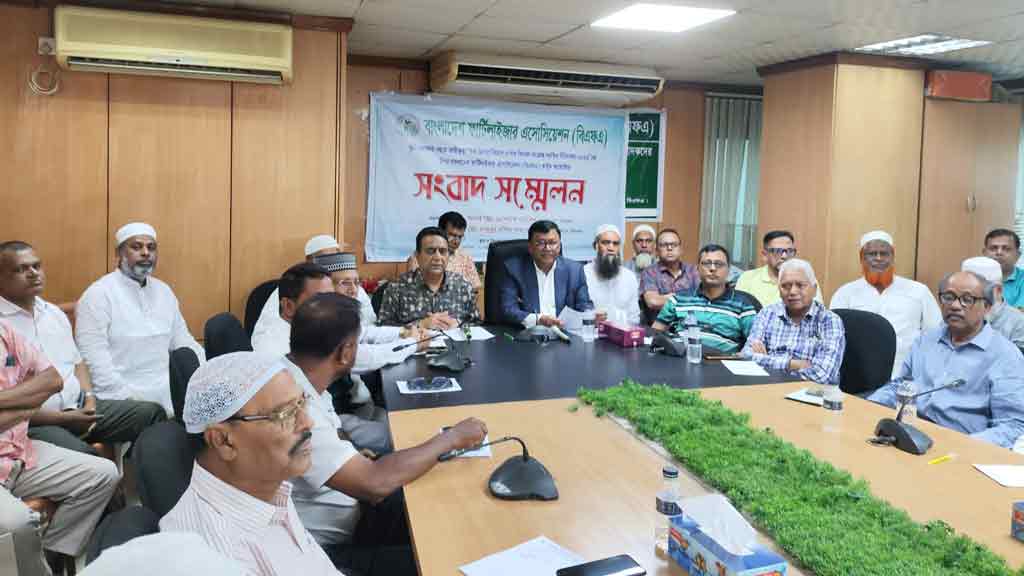
The Bangladesh Fertiliser Association (BFA) has demanded that the sales commission on fertiliser be raised from 100 taka to 200 taka a sack, and that the process of appointing new fertiliser dealers be suspended.
The organisation’s chairman Md Mosharraf Hossain made the demand at a press conference at Purana Paltan in the capital on Monday.
The press conference heard that although an increase in the sales commission per sack of fertiliser has been demanded for 18 years, it has not been implemented. Over that period fuel oil prices, transport costs and commodity prices have risen several times, so that dealers’ business costs have also increased considerably.
BFA chairman Mosharraf Hossain said that in 2008, with transport costs and sales commission together amounting to 100 taka a sack, dealers received about 25 to 30 taka a sack in commission after deducting transport and other costs. Under the same arrangement today, he claimed, they are making a loss of about 50 to 55 taka a sack.
He said the government has raised the commission by 50 taka a sack. That decision is due to take effect from July 1, 2027, however, and will bring dealers’ commission to a level of neither profit nor loss. For the survival of dealers, therefore, the demand is for the commission to be raised by a further 100 taka to 200 taka a sack.
Mosharraf Hossain said that if the commission is not raised, dealers may gradually lose interest in the business. There is a risk that the supply of fertiliser to farmers would be disrupted as a result. He called on the government to give long-standing dealers the opportunity to survive in business.
Objections were also raised at the press conference to the fertiliser dealer appointment policy 2026. The BFA said various clauses of the policy contain inconsistency, unconstitutionality and self-contradiction. The organisation filed a writ petition on these matters on September 2.
The BFA says the High Court issued a 60-day rule in response to that writ, for the legal settlement of the matters concerned. Even after the court’s rule, however, district fertiliser and seed monitoring committees in various districts of the country have continued with the process.