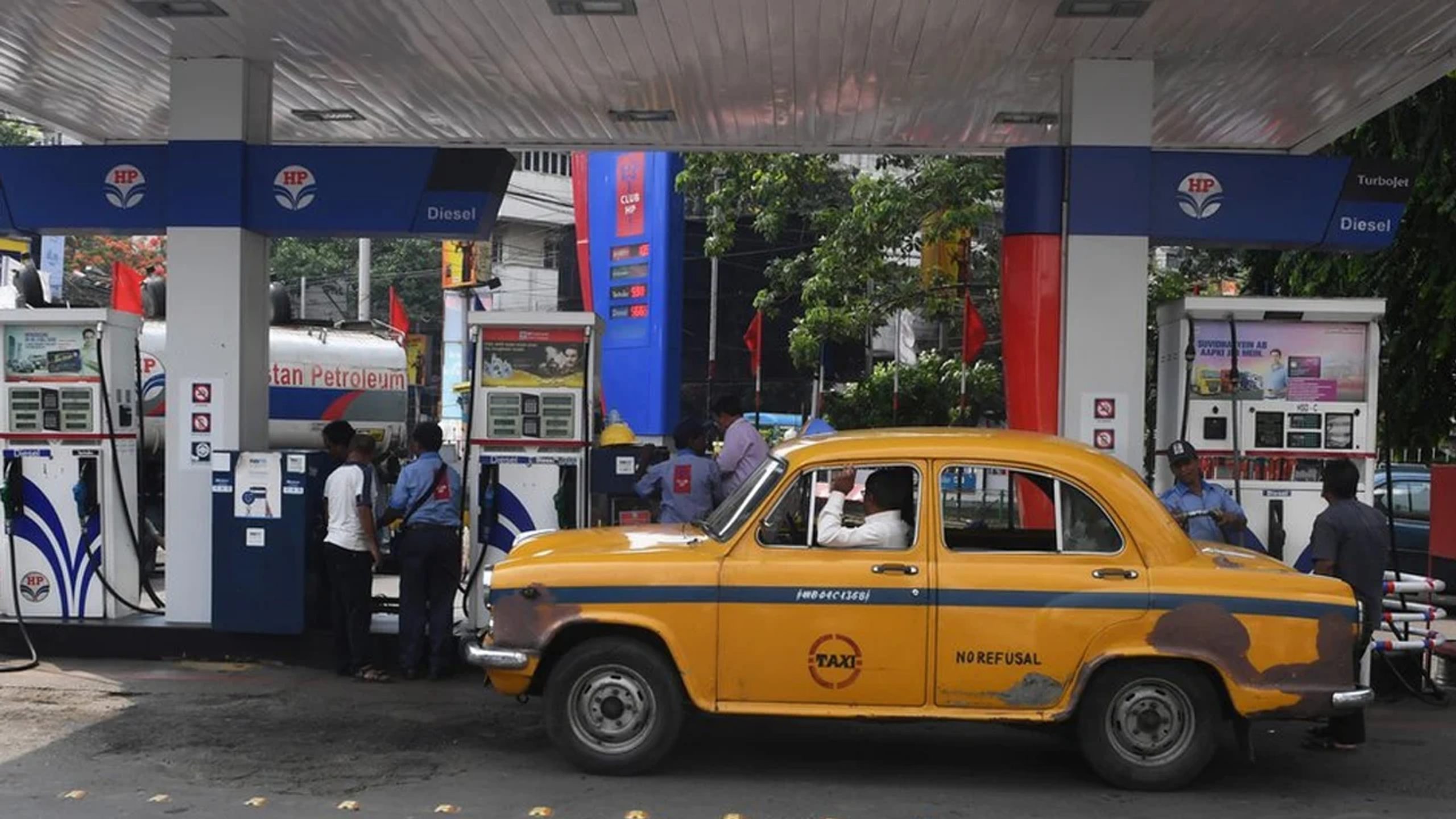
NEW DELHI — India raised fuel prices on Friday for the first time in years, with the government adding 3 rupees per liter to petrol and diesel and 2 rupees per kg to compressed natural gas. Analysts said the decision came against the backdrop of mounting pressure on foreign exchange reserves, rising global crude prices and a depreciating rupee.
Under the new prices, petrol in the capital, Delhi, rose to 97.77 rupees per liter from 94.77 rupees, while diesel went from 87.67 rupees to 90.67 rupees per liter, industry sources said. In Mumbai, petrol now sells for 106.68 rupees per liter and in Chennai for 103.67 rupees. Diesel reached 93.14 rupees per liter in Mumbai, 95.13 rupees in Kolkata and 95.25 rupees in Chennai.
The Indian government had avoided raising fuel prices since April 2022. Ahead of the Lok Sabha elections in March 2024, petrol and diesel were even cut by 2 rupees per liter. But recent international conditions have made that stability difficult to maintain.
Through February of this year, India had been importing crude oil at an average of about $69 per barrel. In subsequent months that price climbed to between $113 and $114 per barrel. As the world’s third-largest oil importer, the country has come under significant pressure from the increase.
Government figures show India spent about $174 billion on crude oil imports in the 2025-26 fiscal year. Electronics ranked next on the import bill at $116 billion, followed by gold at $72 billion.
India’s foreign exchange reserves currently stand at about $690 billion. Economists say that is not enough to meet growing global uncertainty. Michael Debabrata Patra, a former deputy governor of the Reserve Bank of India, wrote in a recent essay that India needs to build its reserves to at least $1 trillion to secure a strong economic position.
Patra said about $350 billion would be needed within a year to service foreign debt repayments. An additional $600 billion to $650 billion in reserves could be needed to absorb a potential pullout by foreign portfolio investors, he said.
Analysts said the war in the Gulf region and turmoil in international markets have turned the Indian rupee into one of the weakest currencies in Asia. When the conflict began, a dollar cost about 91 rupees; it now costs about 95 rupees, further inflating import costs.
বাংলায় মূল প্রতিবেদন পড়ুন · Read the original Bengali report