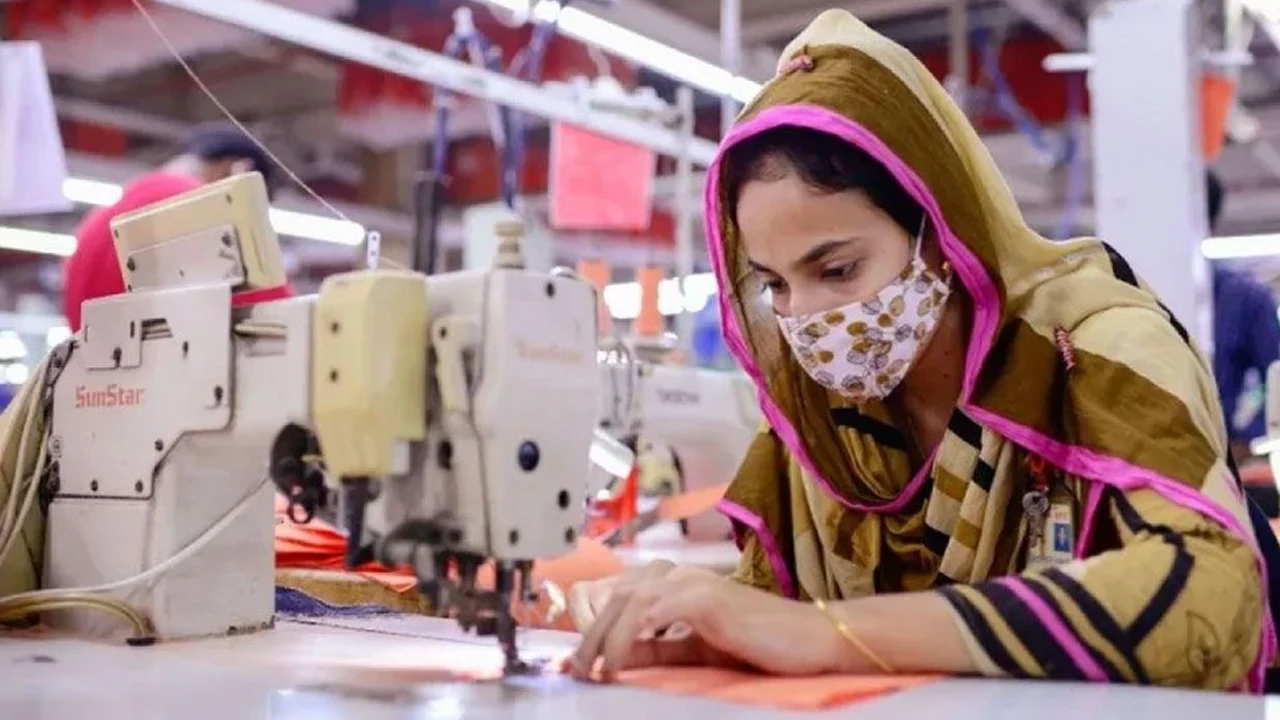
Bangladesh could capture 12 percent of the US$375 billion global man-made fibre (MMF) apparel market by 2030 if it ensures policy reform, higher domestic and foreign investment, and stronger industrial capacity, according to a research report by the Bangladesh Foreign Trade Institute (BFTI). That would reduce the garment sector’s reliance on cotton, diversify exports and strengthen Bangladesh’s position in the global apparel market, the report said.
According to the report, the world’s garment industry is shifting rapidly from cotton-based products toward clothing made from man-made fibres. That change has created a major opportunity for Bangladesh to diversify its exports and strengthen its competitiveness in international markets.
The report said the global MMF apparel market could reach about US$375 billion by 2030, so setting a target of a significant share in that market should be part of a long-term export strategy.
BFTI chief executive Dr Saif Uddin Ahmed, citing the report, said Bangladesh could not afford to miss the opportunity presented by this shift. Securing a significant share of the global MMF market would help sustain export growth, raise competitiveness and further strengthen the long-term foundation of the country’s garment industry, he said.
The study also laid out a roadmap to turn Bangladesh into a regional hub for MMF apparel production, emphasizing phased policy reform, attracting domestic and foreign investment, developing backward-linkage industries and building technological capacity.
To accelerate growth in the sector, the report said priority should go to rationalizing the tariff structure on MMF raw materials, speeding up approval of foreign direct investment (FDI), expanding domestic production of polyester staple fibre and synthetic yarn, creating access to easy-term financing and building a skilled workforce.
Although Bangladesh is the world’s second-largest garment exporter, its exports still depend mainly on cotton-based products, even as global demand shifts toward synthetic and blended-fibre clothing, the report noted. Expanding the MMF sector has therefore become an economic necessity to stay competitive in the post-LDC trade environment.
Dr Saif Uddin Ahmed said that with strong policy support and coordinated implementation, Bangladesh could compete more effectively with the leading MMF-producing countries. The report recommended expanding bonded-warehouse facilities for MMF producers, launching specialized credit programs, encouraging technology transfer and increasing production of high-value products such as activewear, sportswear and technical textiles. It expressed hope that, with timely implementation of the government’s roadmap and close public-private cooperation, Bangladesh could establish itself over the next decade as one of the world’s leading suppliers of man-made fibre apparel.
বাংলায় মূল প্রতিবেদন পড়ুন · Read the original Bengali report