Analysis
Democracy may be an ancient idea, but parliamentary democracy is a comparatively young, refined system. The word “democracy,” born in the Greek city-states, literally means rule by the people. Abraham Lincoln defined it in his immortal words: government of the people, by the people, for the people. The institution human civilization built to give this abstract idea concrete form is called parliament. Political scientist Walter Bagehot, in his celebrated work “The English Constitution,” called parliament the bridge between the state’s “dignified” and “efficient” parts. Parliament is the stage where the people’s representatives determine the nation’s fate through argument and counter-argument. The word “parliament” comes from the French “parler,” meaning to speak. In other words, parliament is fundamentally a place for speaking — but speech grounded in reason, debate and tolerance, not quarrel and uproar.
Two major models of parliamentary democracy are celebrated worldwide: the British Westminster system and the American presidential system. Britain is the birthplace of parliamentary democracy. It never drafted a written constitution; instead, it granted constitutional status to hundreds of years of convention, custom and precedent. There, the monarch reigns but does not rule. Real power belongs to the prime minister, who is accountable to parliament. The brightest ornament of the British parliament is its opposition. They call the opposition “His Majesty’s Loyal Opposition.” The phrase is significant: opposition does not mean betrayal of the state, but constructive criticism of government policy while remaining loyal to the state. There exists a “shadow cabinet,” in which every member of the opposition serves as the counterpart to a government minister and keeps alternative policy drafts ready. Each week, the prime minister must face the opposition’s sharp questions at Prime Minister’s Questions. This accountability is the lifeblood of British democracy.
The founders of the United States, on the other hand, learned from the experience of British monarchy and chose a different path. They made Montesquieu’s theory of the “separation of powers” the backbone of their constitution. Keeping the legislature, the executive and the judiciary separate, they built a novel system of mutual checks and balances. Congress’s two chambers — the Senate and the House of Representatives — restrain the president’s power. However powerful the president may be, from passing a budget to declaring war, they must secure Congress’s consent. The beauty of American democracy is that the president’s own party sometimes opposes their policies; conscience and constituency interests take precedence there over party loyalty. The underlying lesson of these two systems is one and the same: where power is absolute, tyranny becomes inevitable. Lord Acton’s immortal words are worth remembering: power tends to corrupt, and absolute power corrupts absolutely.
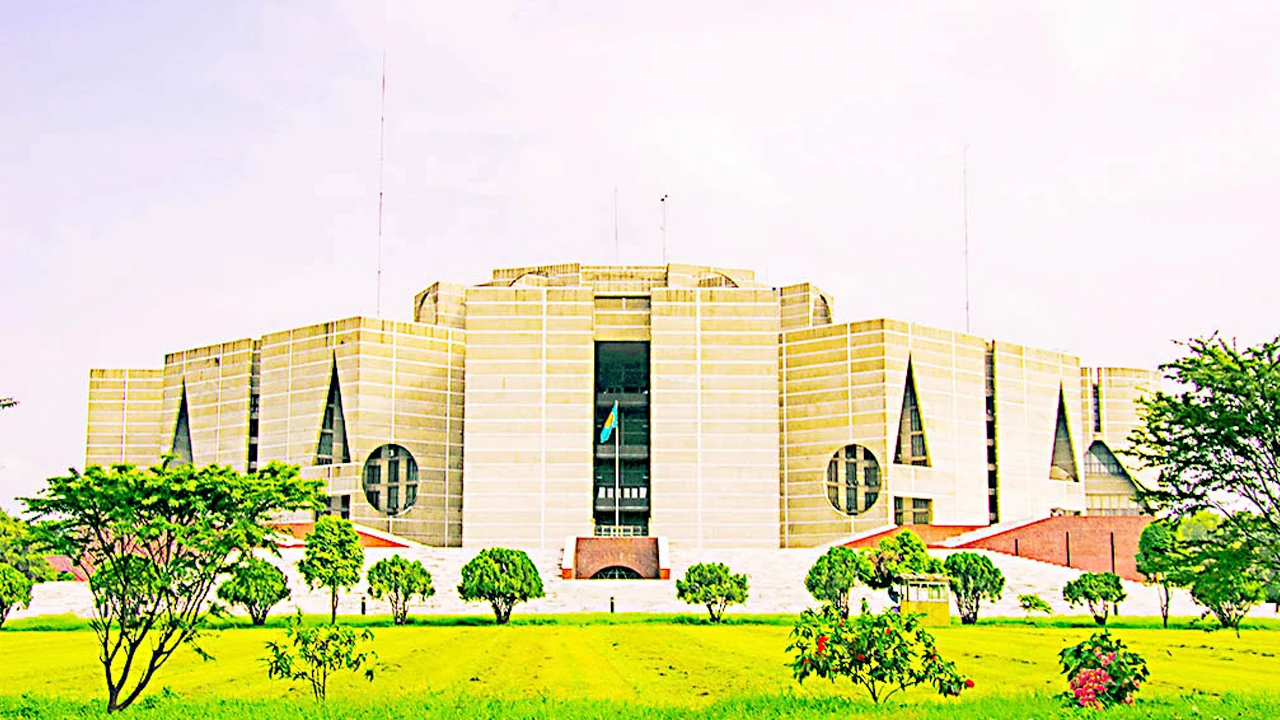
Since we were a British colony for 200 years, we inherited parliamentary governance as the natural system. Bangladesh adopted parliamentary democracy in the Westminster mold in its 1972 constitution. But the misfortune is that while we imported the institution, we never absorbed its soul. We had the shell of parliamentary democracy, but its marrow was absent. Particularly during the past decade and a half of Awami League rule, the national parliament was reduced to a lifeless, meaningless stage for display. The constitution’s opening line declared that “the people are the owners of all power,” yet in reality, power itself became the source of all politics. The parliament that Bagehot called the “efficient” part of government was turned into mere ornamental display.
The parliamentary history of the Awami era is, in truth, a history of democracy in name only. In the parliaments formed through the farcical elections of 2014, 2018 and 2024, there was no real opposition to speak of. In 2014, more than 150 seats saw no contest at all; the outcome was decided before a single vote was cast. Placing the Jatiya Party simultaneously in government and in opposition seats created an unprecedented farce. The people rightly named it the “pet opposition.” An opposition that survives on the government’s mercy, whose opposition is controlled at the government’s cue, is not opposition — it is a charade. That parliament became a stage for the eulogy of a single individual, a rehearsal ground for “yes, sir” and choreographed applause. Political scientists call it a “rubber-stamp parliament,” whose sole function is to stamp executive decisions without question. When the legislature, the executive and the judiciary all surrender to a single authority, what results is autocracy — and that is exactly what was established under the guise of “democracy.” It was structural deception: a legal and illegal one-party state dressed in the wrapping of parliamentary democracy. The people lost every ounce of interest in that parliament, because why would the public trust an institution that does not carry the public’s voice?
After this long darkness, the July uprising of the twenty-four brought the nation a new dawn. Following the fall of fascism, the thirteenth national parliament that has now been formed genuinely has an active, vocal opposition. What we are witnessing in recent parliamentary sessions — tension over the home minister’s remarks, uproar from the opposition, walkouts, the speaker’s concern — however unpleasant it may seem, conceals a deeply positive signal within it. Wherever there is question, protest and opposition, there beats the pulse of democracy. In a parliament where, for the past decade and a half, no one dared utter a word, young members are today raising questions on law and order with statistics in hand, cornering the government over the energy crisis. This is what a normal democracy looks like. Even Britain’s House of Commons sees fierce exchanges, table-thumping, and cries of “Order! Order!” as the speaker restores discipline. Debate is not democracy’s weakness — it is its strength.
Still, there is a subtle but important distinction between debate and disorder. When reason gives way to raised voices, when the tendency to deny others the chance to speak grows strong, parliament ceases to be lively and instead becomes dysfunctional. This is precisely where restraint is desired from both the ruling party and the opposition. The home minister is a seasoned and shrewd parliamentarian; what is expected of him toward younger members is fatherly tolerance rather than condescension. That he withdrew his remarks itself proves his wisdom. The opposition, for its part, must also remember that while walkouts and protest are legitimate democratic tools, using them with restraint is what marks political maturity. The speaker handled the situation skillfully.
The country is now passing through a critical period. Amid a fragile economy, the gas and power crisis, and law-and-order instability, the people are patiently awaiting democratic reconstruction. The opportunity that now stands before the nation is historic. Bangladesh has not tasted genuine parliamentary democracy in the past half-century; today marks a rare juncture for establishing it. If we squander this opportunity through quarrel and intolerance, history will not forgive us. Parliamentary democracy is not the achievement of a single day; what Britain built over seven hundred years is the fruit of patience, tolerance and respect for institutions. Let our parliament be a vibrant center of reasoned debate, a fearless stage for questions and accountability, a symbol of the people’s hopes and aspirations — let this be our pledge. If the ruling party and the opposition see each other not as enemies but as fellow travelers on the same democratic journey, only then will this parliament truly become the people’s parliament. That alone would be a fitting tribute to the blood of the July martyrs.