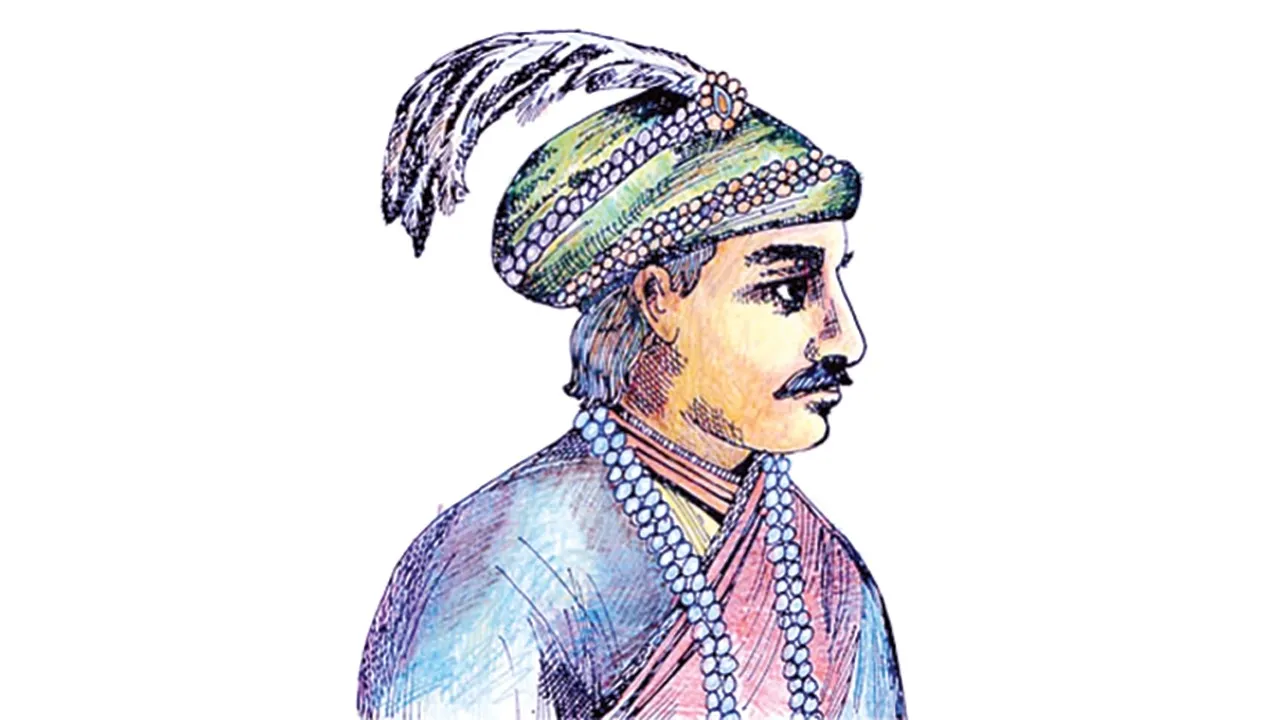
There are names in the history of Bengal that are not erased by the passing of time. Nawab Siraj-ud-Daulah is one such name. The life of this ruler, known as the last independent nawab of Bengal, was a dramatic chapter of power, conspiracy, war and tragic end. Siraj-ud-Daulah’s birth is given as September 19, 1727.
He was the grandson of Nawab Alivardi Khan. He grew up from childhood in his grandfather’s affection, and became familiar with the royal court and the machinery of rule at an early age. After Alivardi Khan’s death in 1756, Siraj-ud-Daulah took the throne of Bengal at the age of only 23. Bengal was then an economically prosperous region.
Alongside European merchants, the English East India Company was increasing its commercial influence in Bengal. As nawab, Siraj opposed the company’s growing military strength and its building of fortifications. The conflict between the nawab and the English grew sharper as a result.
In 1756, Siraj-ud-Daulah captured Calcutta.
The English later mounted a counter-expedition under Robert Clive and retook Calcutta. The situation then moved steadily towards a larger conflict. The historic Battle of Palashi was fought on June 23, 1757. Although the nawab’s forces were larger in number, the course of the battle changed because of the betrayal of his commander Mir Jafar and several other influential figures. Siraj-ud-Daulah was defeated in the end.
After the Battle of Palashi he tried to flee. But he was caught, and on July 2, 1757 he was killed on the orders of Miran, the son of Mir Jafar. The end of Siraj-ud-Daulah, who had held the office of nawab for little more than a year, was a deeply sorrowful one. The Battle of Palashi was not merely the fall of a nawab: through it the balance of political power in Bengal changed as well, and the way was widened for the British East India Company to extend its influence over Bengal.
In history, therefore, Siraj-ud-Daulah is not merely a defeated ruler. He is one of the most important historical figures of the end of Bengal’s independence and the opening phase of colonial rule.