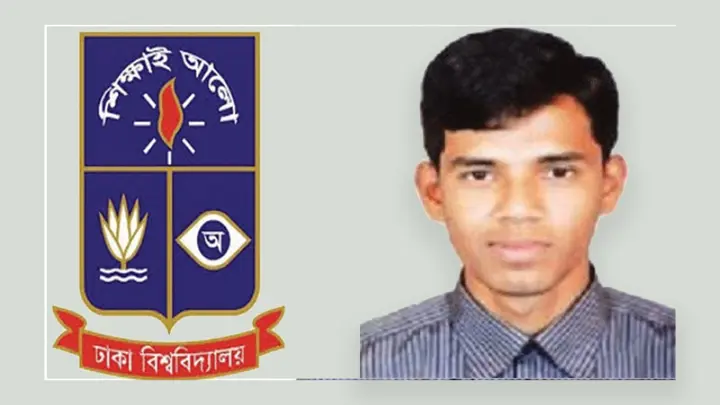
Dhaka University’s century-old walls have witnessed a great deal. This is a university that has, on one hand, led just movements and liberation struggles, while on the other, carrying a dark history of impunity for killings that have taken place within its own grounds. In that grim reality, the families and classmates of many brilliant students lost forever from Dhaka University are still waiting for justice today.
In February 2010, Abu Bakr Siddique, a student of the Department of Islamic History and Culture, was killed in a clash between two factions of the then-active Chhatra League at Sir A F Rahman Hall. After a long judicial process, all ten accused in the case were acquitted. Media reports at the time even noted that the state did not appeal the acquittal in the higher courts. A talented Dhaka University student was killed on campus, a case was filed, a trial took place — but in the end, who the killer was could never be proven.
Similarly, on the night of May 13, 2025, Shahriar Alam Sammo, a student of Dhaka University’s Institute of Education and Research, was stabbed to death near Suhrawardy Udyan, close to TSC. His family and classmates have still not received proper justice.
What lies behind this culture of impunity? Failing to secure justice for one killing makes the path to another killing easier for those responsible. Abu Bakr and Sammo are not the only victims of such killings — many others have suffered the same fate at different times, and in many of those cases too, there was no trial and no punishment for those responsible. The misuse of power politics on campus has repeatedly influenced the course of justice. What greater shame can there be than a university that teaches moral values and integrity, yet cannot secure justice for the killing of its own students?
This culture of impunity surrounding every unresolved killing at Dhaka University, from Abu Bakr to Sammo, is not some inevitable reality. It has been created through the university administration’s long-standing institutional weaknesses, the abuse of political power, prolonged investigations, a lack of accountability, and, above all, through these incidents fading from the memory of justice-seeking students over time. The remedy, therefore, must also come through institutional, sustained and visible means.
First, a complete record needs to be compiled of every killing of a Dhaka University student. The university could create an “archive” containing complete data on students killed on campus. This would hold not just photographs or reminiscences of the deceased students, but clear, complete information on each case number, the status of the investigation, the charge sheet, judicial progress, the current status of the accused, and exactly where the case currently stands.
Second, justice should not be left solely to victims’ families. The university administration should take responsibility for regularly monitoring the progress of every pending case. An independent cell could be formed, made up of the university administration, DUCSU, student representatives and, where necessary, lawyers. This cell would not interfere in any judicial decision, but would instead monitor the progress of the relevant cases and present it to students and the wider university at regular intervals.
Third, there must be a determined effort to ensure justice for crimes at any cost, rising above political identity. Whether a perpetrator belongs to a particular party, organisation or is close to some influential figure should never be allowed to determine the direction of an investigation. If any political identity places a perpetrator beyond the reach of the law, that ceases to be politics — it becomes a tool of exploitation.
Fourth, the continuity of demands for justice must be maintained among aware, justice-seeking students. Our writing, conversations, meetings, seminars and study circles must keep the demand for justice for the victims alive. This is likely our biggest weakness. After a killing, we speak out, we march, we protest. But a few months or years later, when a new incident emerges, the old case fades from our discussion. Meanwhile, the students who were on campus at the time eventually finish their studies and leave, and new students arrive who may not even know about the incident. This is how impunity becomes prolonged. Ensuring justice for the deceased is the responsibility of every student, administrator and everyone connected with the university.
Alongside this, to prevent any repetition of such killings, campus security and CCTV monitoring need to be strengthened. Areas near campus such as TSC, Curzon Hall and Suhrawardy Udyan need round-the-clock security patrols and modern CCTV cameras, so that no perpetrator gets the chance to commit a crime and slip away.