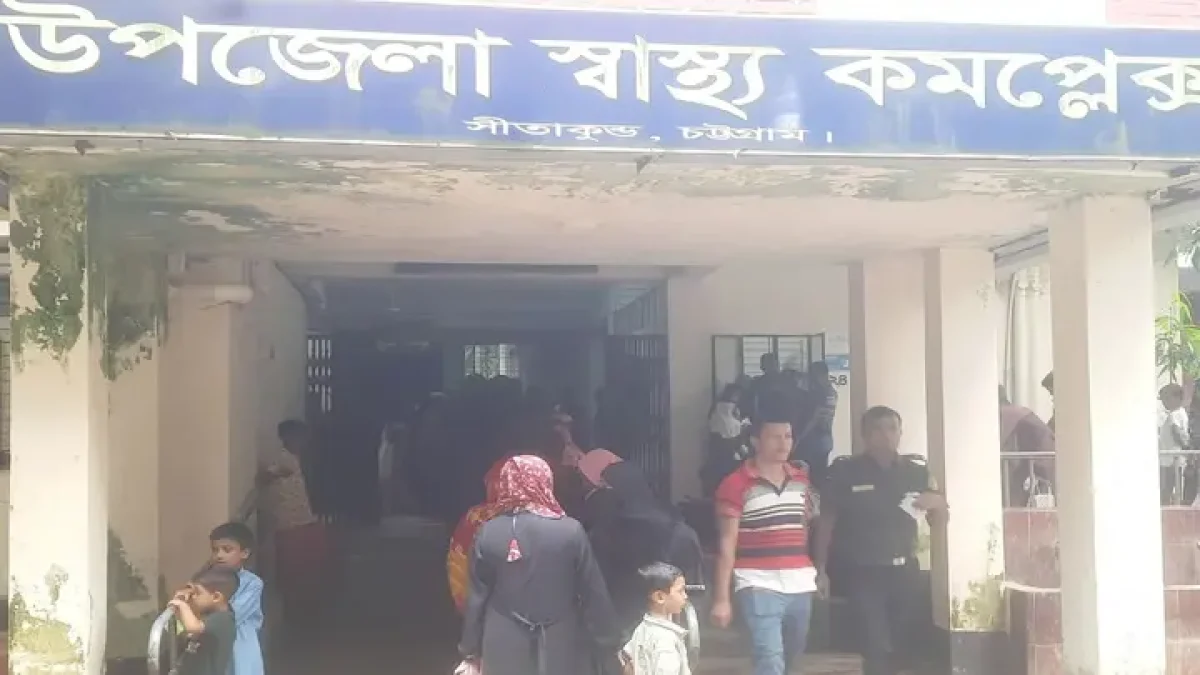
Dengue infections are rising in Sitakunda, Chattogram. Five people, including two children, have died of dengue in the upazila in the past 16 days, and 508 people have been infected so far. The latest to die was four-year-old Lamia Akter, on Thursday. To bring the situation under control, it has been decided to treat Sitakunda as a dengue hotspot and run coordinated field drives to identify and destroy Aedes breeding sites.
Lamia lived at Bhuiyan Bari in the Boro Aulia area of Ward 4, Sonaichhari union. Her father, Imam Hossain, is dead. Family members said that after four days of fever she was tested at a local diagnostic centre and found to have dengue. She was admitted to the chest diseases hospital at Fouzdarhat, and when her condition worsened, the family was advised to take her to Chattogram Medical College Hospital (CMCH). The family instead admitted her to a private hospital in the city, where she died while being treated on Thursday.
Sitakunda upazila health and family planning officer Dr Shibbir Ahmed Prince said Lamia was admitted to hospital after four days of fever. She was referred to CMCH, but her family took her to a private hospital in the city, where she died, he said.
“Sitakunda has now become a dengue hotspot,” Dr Shibbir Ahmed Prince said. “So far 508 people have been infected with dengue in the upazila. Five people, including two children, have died.” He urged people not to dismiss fever as an ordinary illness but to get tested quickly and see a doctor.
A total of 10 beds have been set aside for dengue patients in the men’s, women’s and children’s wards of the upazila health complex. The health department says there is no shortage of dengue test kits or saline, and complicated cases are being referred to higher-level facilities in Chattogram city as needed.
Health officials say that alongside treating patients, destroying Aedes breeding sites is essential to control the source of infection. Standing water in Sitakunda’s industrial areas, ship-breaking yards, inland container depots and elsewhere could be breeding grounds, as could water collected in abandoned machinery, old tyres, cans, drums and other containers.
Without regular cleaning and monitoring of these places, the spread of Aedes mosquitoes and the risk of dengue will remain, those involved say.
It has been decided to run field drives in coordination with the district administration, the municipality and the health department. The upazila health officer said the Chattogram deputy commissioner will meet those involved at the Sitakunda municipal office on Saturday (September 26), after which drives are planned to identify possible breeding sites and destroy larvae with trained staff and the necessary equipment.
Health officials say that besides one-off drives, regular monitoring of high-risk sites, removal of standing water and destruction of breeding sites must continue. After five deaths, how effectively these measures are carried out in Sitakunda is now the key question.
বাংলায় মূল প্রতিবেদন পড়ুন · Read the original Bengali report