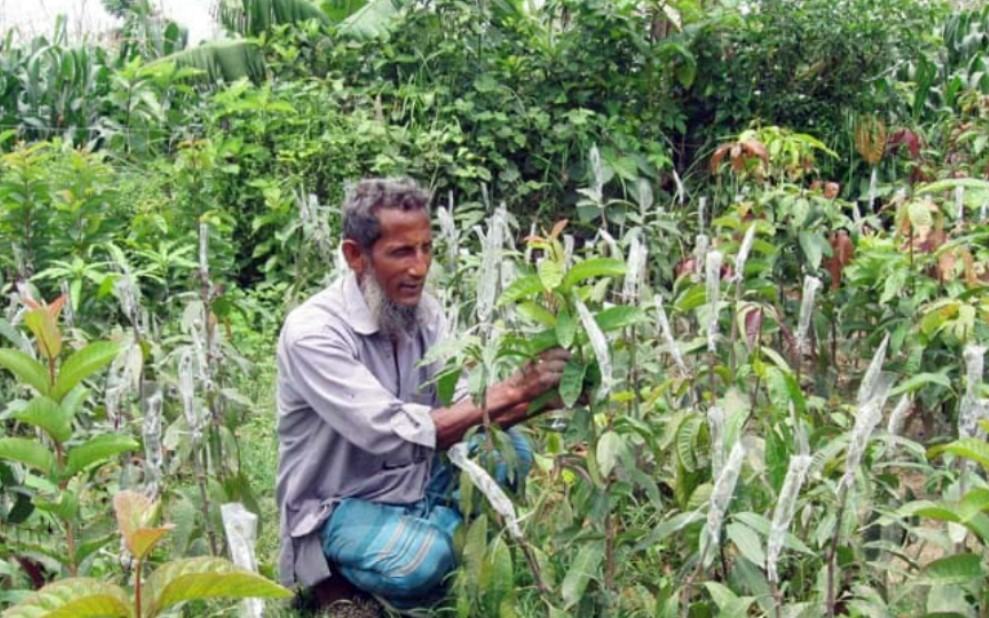
There is no substitute for trees when it comes to survival, and their importance in protecting the environment cannot be overstated. Because of this importance and demand, more than 300 government and private nurseries have sprung up across greater Kushtia. The nursery business in greater Kushtia has found real success. With the tree-planting season approaching, nursery owners across the district have become active, and the nursery business has grown increasingly popular. Alongside government nurseries, unemployed young people have also established themselves by running nurseries, turning tree planting into something of a social movement. Kushtia’s nurseries are now brimming with flowering, fruit-bearing and many other varieties of trees and plants — a sight that refreshes the spirit.
Around a hundred government and private nurseries have sprung up in various locations across Kushtia’s outskirts and its six upazilas. According to the divisional forest office, more than 300 nurseries have been established across 13 upazilas in Chuadanga, Meherpur and Kushtia. These nurseries produce saplings of fruit, flower and medicinal trees, as well as saplings of trees that help maintain ecological balance. The district’s nurseries have found success in this business, and the trade has become increasingly popular. Recognising the financial value of trees, the tendency to plant trees has grown in rural areas.
With the planting season approaching, nurseries are working actively toward sapling-production targets. Nursery workers are busy tending saplings and bringing them to market, while owners are working to build their nurseries’ reputations by stocking a wide variety of species, aiming to turn their operations into profitable enterprises. This season, various types of fruit, timber and medicinal saplings are also being sold at markets and haats across the district. The nurseries that have grown up in the district are playing a major role in boosting tree-planting efforts, and with demand for saplings high this season, the nursery business continues to expand by the day.
Many in the district have established themselves through nurseries, and many unemployed young people have become self-reliant this way. However, nursery owners say that because of rising fertiliser and pesticide prices, the business is no longer as profitable as before. Nursery owners also complain that the government does not purchase saplings from them, and that government officials do not encourage people to buy saplings from nursery owners — something they say would benefit them further if it happened.
Meanwhile, although the greater Kushtia forest department runs programmes aimed at green afforestation, it has had little such activity this year. Free sapling distribution to schools and colleges in the district, carried out every year, has reportedly been suspended this year owing to a lack of allocation.
The nursery business has expanded significantly across greater Kushtia, including the district’s 66 unions, and the tree-planting movement has found a strong response among the public. Nursery owners say the business could grow further with support from the forest department, and that saplings produced in greater Kushtia could meet local demand and also be sent elsewhere. They say nurseries can play a significant role in green afforestation while also creating employment for the district’s unemployed youth.