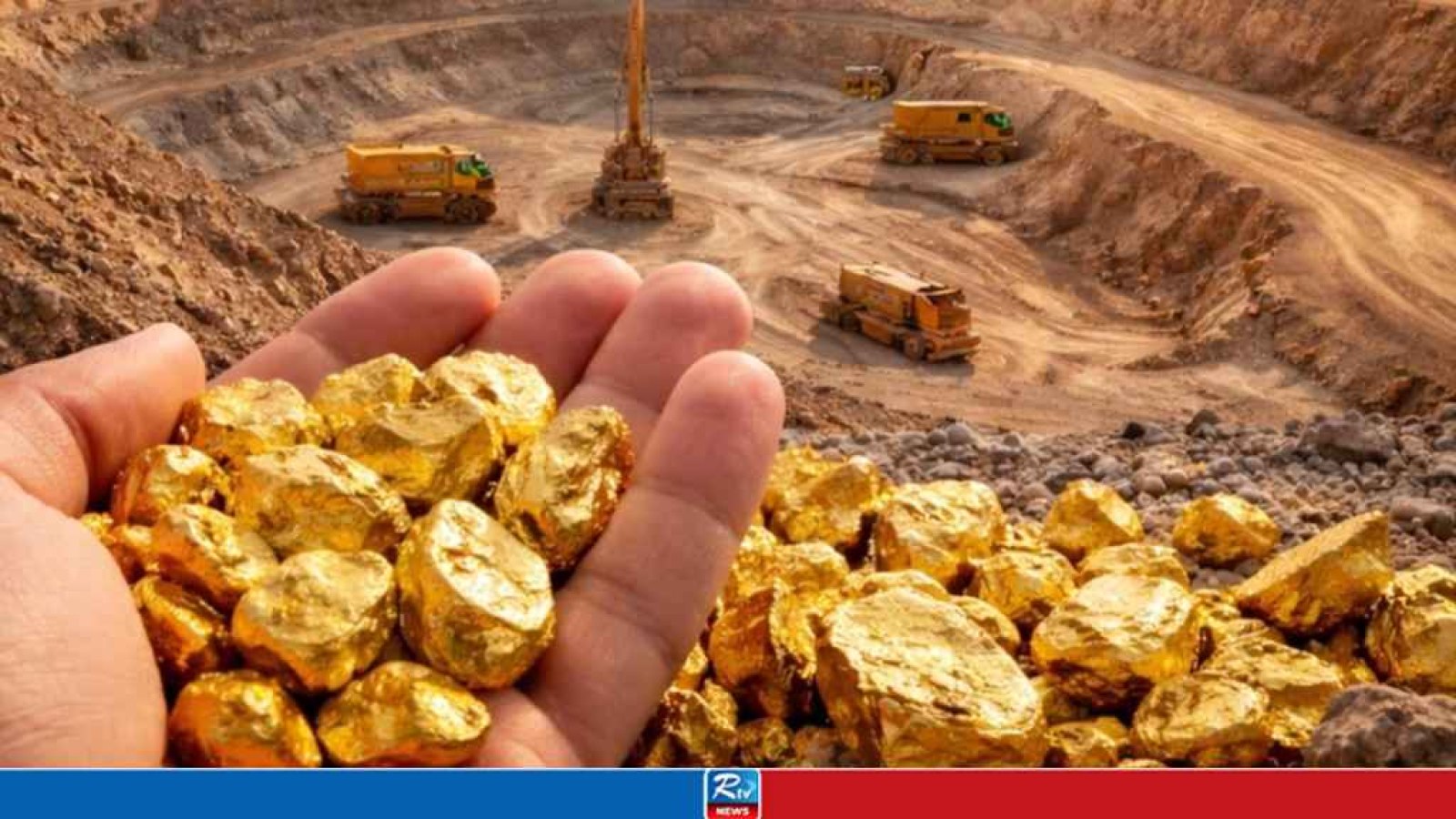
In the north-eastern Afghan province of Badakhshan, villagers and their livestock once roamed freely. Now dozens of excavators work those hills day and night to dig out gold, AFP reports.
Several thousand miners work in the Shiwa area, about 50 kilometres north-east of the provincial capital Faizabad, extracting gold for various investors across the country.
Some local residents profited from the gold rush but later came to regret it. One is a farmer, Mohammad Amin. A 74-year-old resident of the Pul-i-Ziri Ban valley, he told AFP: “The river used to be deep and its water clear. Since the digging began, the river water is no longer fit to drink — you cannot even bathe or wash your hands and feet with it.” Eyes welling with tears, he added: “All the grass on the riverbank has vanished. Because of the dust and wind, farming is no longer possible.” Where he could once keep up to 40 goats, he now struggles to keep even 15.
Mohammad Amin leased his land to a mining company, which promised him 20,000 dollars; so far he has received only half. The company has not kept its promise to restore his land to its former state once the digging ends.
Since returning to power five years ago, the Taliban authorities have greatly expanded the mining sector, seeking to exploit Afghanistan’s vast underground mineral wealth to raise state revenue. Abdul Matin Rahimzai, head of Badakhshan’s mining department, said 650 to 700 companies had registered, with several thousand people doing manual digging and gold extraction. The World Bank, in a May report, said hundreds of mining contracts had been signed since 2021 and that real growth in the sector had averaged 25 to 30 percent a year.
Digging is halted for now in Mohammad Amin’s village, but a little away, in the Gulak-Dara valley, dozens of excavators are cutting into the hills. With job opportunities limited in Afghanistan, workers come from across the country. Mohammad Agha Khaja Khail, from Kabul, has worked in the mines for five years, loading trucks for about 10,000 afghanis (roughly 150 dollars) a month. Working amid the roar of the excavators, the 21-year-old said: “This is better than any other work. There aren’t many jobs in Kabul.”
Shafiullah Ehsas, 32, a father of five, brought his excavator from Jalalabad, hundreds of kilometres away, about three months ago and earns 25,000 afghanis a month here. “Gold extraction hasn’t started in Jalalabad yet, but it was going on in Badakhshan, so we had no choice but to bring our equipment here,” he said.
The Afghan ministry of mines and petroleum is trying to bring the sector under regulation. Its spokesman, Humayun Afghan, said minerals had been extracted irregularly and without proper supervision under the previous government. He said gold extraction had grown fast in the north, including in neighbouring Takhar province, where an Afghan company is operating jointly with Chinese partners.
Fabrizio Foschini, a researcher at the Afghanistan Analysts Network, said that for decades before the war the mining sector had mainly benefited local strongmen linked to insurgent groups, including the Taliban, and corrupt officials. Companies are now taxed 20 grams of gold, or its cash equivalent, per hectare per month, whether or not they make a profit.
Mohammadullah Mobariz, manager of a mine running about 100 workers and 20 excavators, said his team could extract “200 to 300 grams of gold” a week, but that the company was still making a loss since starting in April because of initial investment and other costs. Rahimzai said the government collected 112 kilograms (247 pounds) of gold from Badakhshan last year; miners who spoke to AFP said gold sold for about 118 dollars a gram. Most mines were unregistered last year with no effective way to collect fees or revenue, he said, adding that about 225 mines had been ordered shut for harming the environment and infrastructure, including some in the Shiwa area.
“There was a bridge there, shops and a school. All of them are buried under floodwater, mud and debris. The whole area has been turned completely to rubble,” Rahimzai told AFP. He pledged to act against any corruption and to ensure Badakhshan’s minerals are used properly and for the public good.
In some parts of Badakhshan digging has not yet begun, including an area a few kilometres from Shiwa. A herder there, Fazil, does not want miners to come. Citing security fears, he declined to give his full name. “This is a place for people, for travel and picnics, and for grazing livestock,” the 45-year-old told AFP, adding that he has come to these hills with his herds every summer since childhood. “The gold industry does no good for the local community here. Only the powerful benefit from it.”
বাংলায় মূল প্রতিবেদন পড়ুন · Read the original Bengali report