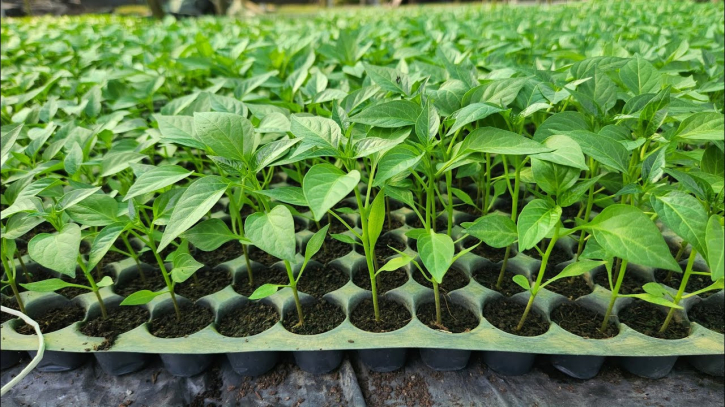
Chili is one of Bangladesh’s most important spice crops. Since demand for it remains steady year-round, farmers consider chili a profitable crop. But to get the desired yield, raising good seedlings from the start is essential. Preparations for seedbeds for the coming Rabi-season chili crop should begin now. Careful attention to quality seed, proper seedbeds, adequate irrigation and disease and pest management can produce healthy, strong seedlings. Rafiqul Islam, upazila sub-assistant agriculture officer of Jashore Sadar, offered this advice as part of Runner Agro’s regular program.
Choose quality seed
The first step in raising seedlings is selecting quality seed. Farmers should collect pure, mature, disease-free seed of a good variety, ideally from an approved institution or a trusted seed dealer. Old, damp or discolored seed should not be used.
Farmers using their own seed should collect ripe chilies from healthy, vigorous plants from the previous season to produce seed, and should also check the germination rate.
Treat the seed
Treating seed before sowing is necessary to reduce the risk of seed-borne disease. An approved fungicide, as recommended by the agriculture department, should be used to treat chili seed. Before using any product, check the crop, disease and dosage information on the label.
Pesticide dosage should never be increased on one’s own; consult the local agriculture officer if needed. After treatment, dry the seed for the recommended time before sowing it in the seedbed.
A raised, well-drained seedbed
Choose a site for raising chili seedlings where water does not collect. If rainwater or irrigation water pools, young seedlings risk being ruined. It is therefore best to prepare the seedbed in a raised, well-drained location.
Loosen the seedbed soil thoroughly. Well-rotted organic manure or compost can be mixed into the soil. Diseased plant parts or weeds from a previous crop should not be left in the seedbed.
Seeds should not be sown too densely. Sowing in rows with modest spacing makes seedling care easier and allows good airflow and light.
Caution with irrigation
The soil needs adequate moisture while the seed is germinating, but excess water should not be applied. Waterlogging in the seedbed can rot the seed and cause damping-off in seedlings.
Irrigate lightly rather than heavily. Check regularly during rain to see if water is pooling in the seedbed, and arrange quick drainage if it is.
If needed, a temporary cover can be used to protect the seedbed from heavy rain, but once seedlings emerge, ensure adequate light and airflow.
Damping-off and wilt
Young chili seedlings can develop damping-off and wilt disease. Affected seedlings first weaken, then rot near the base and wilt, and may die.
Excess moisture, waterlogging, dense sowing and an unclean seedbed all raise the risk of this disease. Affected seedlings should be removed quickly, and drainage should be kept in order.
If symptoms appear, rather than applying fungicide on one’s own, contact the upazila agriculture office to identify the disease. Once identified, use an approved fungicide as advised by the agriculture officer.
Pest attacks on seedlings
Young chili seedlings can be attacked by aphids, thrips and other harmful pests, which weaken seedlings by feeding on young leaves and sap. Affected leaves may curl or become deformed.
Monitor the seedbed daily. Separate and destroy affected leaves or seedlings. Do not apply pesticide as soon as pests are spotted — first determine the type of pest and the extent of the infestation.
If infestation is severe, use an approved pesticide for the specific pest at the recommended dose, on the advice of the local agriculture officer. Rather than using the same pesticide repeatedly, take the necessary steps as advised by the agriculture officer.
Caring for seedlings
Once seedlings emerge, monitor the seedbed regularly. Thin out overly dense seedlings as needed so each one gets enough light, air, water and nutrients.
Clear weeds regularly, as they compete with seedlings for water and nutrients and can also harbor harmful pests.
Do not over-fertilize. Apply fertilizer as needed; excess nitrogen or urea in particular can make seedlings soft and weak, raising the risk of disease and pest attack.
Transplanting to the main field
Once seedlings are strong enough, prepare to transplant them to the main field. Light irrigation before uprooting softens the soil and reduces root damage. Discard diseased, weak or overly small seedlings.
The main field must be well-drained. Waterlogging can damage chili roots. Prepare the field well and mix in the necessary organic and other fertilizers.
Maintain the appropriate spacing for the variety when transplanting. Do not plant seedlings too deep. Apply light irrigation as needed after transplanting.
Advice for farmers
Preparations for a good chili yield begin at the seedling stage. Prioritize quality seed selection, seed treatment, a raised and well-drained seedbed, adequate irrigation, and regular monitoring for disease and pests.
If disease or pests appear, identify the problem first rather than applying medication out of ignorance, since the same symptoms can result from different diseases or pests. Using the wrong pesticide raises costs and can harm the crop, soil and environment.
Healthy seedlings are the first step to a good harvest. Give regular care from the very start of seedling production. If you have trouble identifying a disease or pest, take a sample of the affected plant or leaf to the upazila agriculture office. Following the agriculture officer’s advice will make the path to safe, quality and profitable chili production easier.