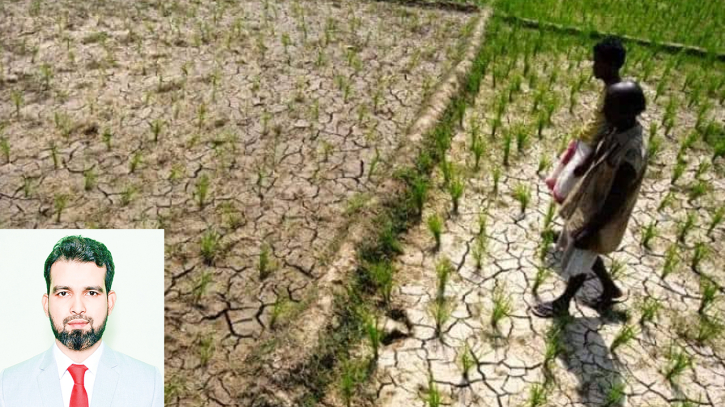
Because of changing weather patterns, farmers growing Aman rice are now facing alternating bouts of drought and excessive rainfall. Alongside irregular rainfall, pest and disease attacks are also increasing. As a result, preparing land and seed alone is no longer enough for a good yield; farmers also need to select suitable varieties, apply balanced fertilizer, manage water properly, and monitor their fields regularly. Jashore Sadar upazila agriculture officer Mushabbir Hossain offers advice, in Runner Agro’s regular farming segment, on what farmers should do to secure a good Aman yield despite adversities like drought and excess rain.
Jashore is one of the major granaries of the southwestern region, with transplanted Aman rice at the heart of the area’s agricultural economy. But in recent years, irregular rainfall, sudden drought, excessive rain, pest attacks and a lack of balanced fertilizer have kept many farmers from achieving the yields they hope for. Keeping climate change in mind, following certain strategies this season can help farmers cope with both drought and excess rain and still achieve a good yield.
Dry spells and supplementary irrigation
Two periods are especially critical in the Aman rice life cycle: the time when seedling roots establish themselves after transplanting, and the panicle initiation stage. If there isn’t enough rain during these two periods, the field can dry out and yields can fall.
During this time, the field should never be allowed to dry out to the point of cracking. If it doesn’t rain, light supplementary irrigation should be given quickly. As needed, 2-3 inches of water can be retained. Frequent irrigation with small amounts of water also reduces water waste.
Stem borer and leaf folder attacks
Applying too much urea fertilizer makes rice plants overly green and tender, which can increase attacks by stem borers and leaf folders.
In such cases, an eco-friendly method called “perching” should be tried first. Four to five tall bamboo poles or tree branches should be planted per bigha of land. Birds will perch on these poles and get the chance to eat harmful pests in the field.
If pest attacks are severe, an approved pesticide should be used on the advice of the agriculture officer. When using pesticides, it’s important to follow the correct dosage and timing. Pesticides should not be used unnecessarily.
Sheath rot and leaf blight
High humidity and unplanned urea application can lead to various diseases in rice. Balanced fertilizer management is also important in preventing sheath rot and leaf blight.
Rather than relying solely on urea, potash, zinc and other nutrients should be applied as needed. If symptoms of disease appear, the disease should be identified and an approved fungicide used on the advice of the agriculture officer.
Choosing the right variety for higher yield
Times have changed, so variety selection needs to change too. Varieties should be chosen based on land type, water management, local weather, and harvest timing.
Among high-yielding varieties, BRRI dhan71, BRRI dhan75 and BRRI dhan90 are notable. Drought- and adversity-tolerant varieties include BRRI dhan51, BRRI dhan52, BRRI dhan56, BRRI dhan103, BINA dhan-17, BINA dhan-20, BINA dhan-22 and BINA dhan-23.
A major advantage of many of these varieties is that they mature relatively quickly. This allows farmers to quickly plant mustard, vegetables and other rabi-season crops after harvesting Aman. Growing multiple crops on the same land in a year can also increase farmers’ income.
Balanced fertilizer and soil health
Relying solely on chemical fertilizer cannot sustain good yields in the long run. Maintaining soil health is equally important.
Cow dung or other organic fertilizer can be used while preparing the land. After harvesting Boro rice, dhaincha can be sown in the field and mixed into the soil after 45-50 days. This acts as green manure, helping increase the soil’s organic matter and fertility, which can also reduce the need for chemical fertilizer.
During the final tillage, soil testing should be done and TSP, MOP, gypsum and zinc sulfate applied according to the crop’s needs.
Urea fertilizer should not be applied all at once. It should be applied in installments. Generally: the first installment 10-15 days after transplanting; the second, 15-20 days before panicle initiation; and the third, at the time the panicle emerges. However, fertilizer dosage should be determined according to soil fertility, rice variety and local agricultural recommendations.
Scientific water management
Rice plants need more water from the panicle-initiation stage until the grain reaches the milk stage. Adequate water should be ensured in the field as needed during this period.
However, it is not advisable to keep excess water standing in the field at all times. During heavy rain, arrangements should be made for quick drainage. If water accumulates in the field, rice roots can be damaged and disease can increase.
It’s best to drain water from the field 10-12 days before harvesting. This allows the field to dry out somewhat, making harvesting easier and reducing the time needed for the harvest.
Regular field monitoring
One of the keys to successful Aman cultivation is regular field monitoring. Identifying weeds, pest and disease attacks early can often allow them to be controlled at lower cost.
Farmers should therefore inspect their fields regularly. If pests appear, farmers should first identify the type of pest and the severity of the attack, rather than using pesticides unnecessarily. If needed, they should consult a sub-assistant agriculture officer.
Ensuring timely weed control, proper fertilizer management, perching, irrigation as needed, quick drainage of excess water, and regular field monitoring can together help secure a good Aman yield even amid adverse weather.
Farmers, if any problem arises in your Aman rice field, quickly contact your area’s sub-assistant agriculture officer. Report the problem and get the advice you need.