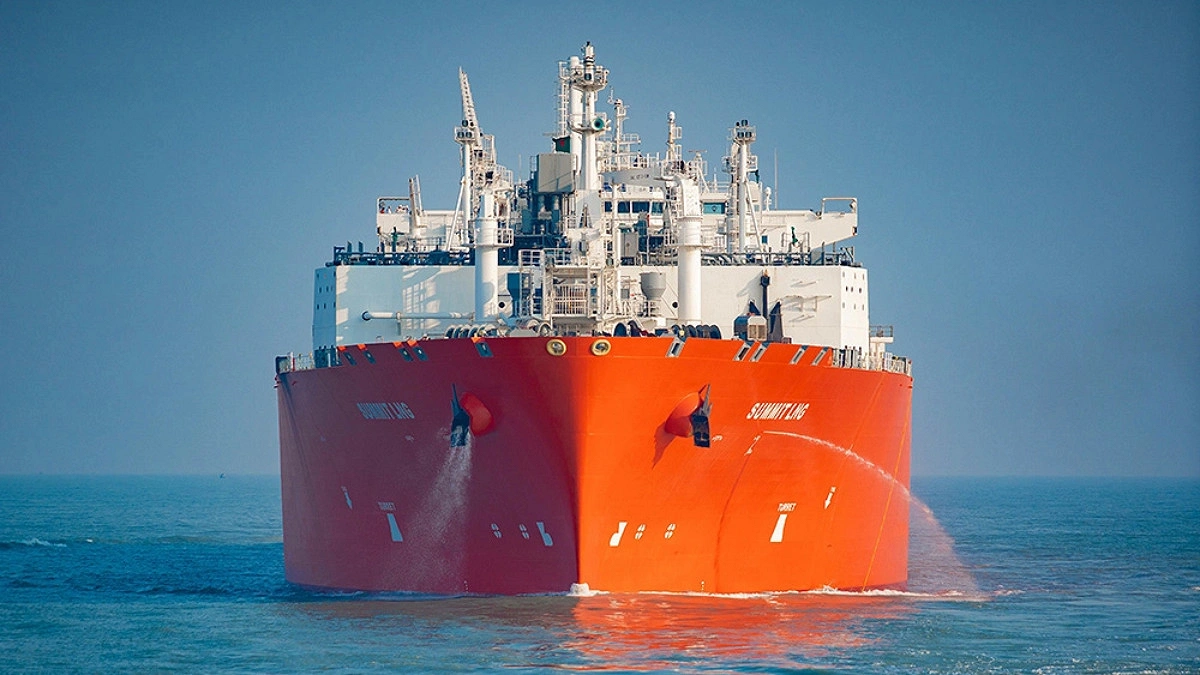
Bangladesh’s imported liquefied natural gas (LNG) supply crisis shows no sign of easing. American company Excelerate Energy’s floating terminal came back online Saturday after a new cargo ship arrived, but supply from the domestic Summit Group’s floating terminal has simultaneously been cut in half. As a result, the two terminals combined were supplying a total of 740 million cubic feet of LNG as of Sunday morning, against their combined capacity of 1,100 million cubic feet.
Industries, residential consumers and the transport sector had expected supply to rise once the Excelerate terminal came back online. But even with both terminals operating, the increase in supply has been marginal, falling short of expectations.
An official in Petrobangla’s procurement department said that supplying LNG at full capacity requires 11 cargo ships a month, but only five are currently arriving. “Supply has dropped by half. Everything is in disarray. It’s difficult to say when full LNG supply will resume,” the official said.
The government buys LNG on the international market and delivers it to two floating terminals moored offshore at Moheshkhali in Cox’s Bazar; the terminals themselves cannot purchase LNG directly. Their main function is to convert the imported LNG into gas and feed it into the national grid through pipelines. The Excelerate terminal had previously suffered technical faults that were later fixed, but supply has now run into trouble again for lack of adequate cargo.
While the Excelerate terminal was out due to the LNG shortage, the Summit terminal had been supplying above its own capacity, as much as 570 million cubic feet, to compensate. Now the Summit terminal itself faces a cargo shortage, and supply from it has been reduced on government instructions.
An official at Converted Natural Gas Company Limited said that as of 10 a.m. Sunday, the Excelerate Energy floating terminal was supplying 500 million cubic feet of gas, against a capacity of 600 million cubic feet, while the Summit terminal’s supply had been cut in half to 240 million cubic feet. The Summit terminal itself is operational, the official said, but there are no LNG-carrying ships in the waters to feed it, forcing the reduction in supply. The situation will continue until new cargo vessels arrive, the official said.
There are allegations that the disruption stems from the government’s decision to buy LNG through direct procurement (DPM) rather than through open tenders or listed suppliers. No LNG-carrying vessel approved under the DPM process has yet reached the country. The government is now looking to buy on the spot market at higher prices, but has so far found no takers. How the government manages the supply amid this crisis remains to be seen.
বাংলায় মূল প্রতিবেদন পড়ুন · Read the original Bengali report