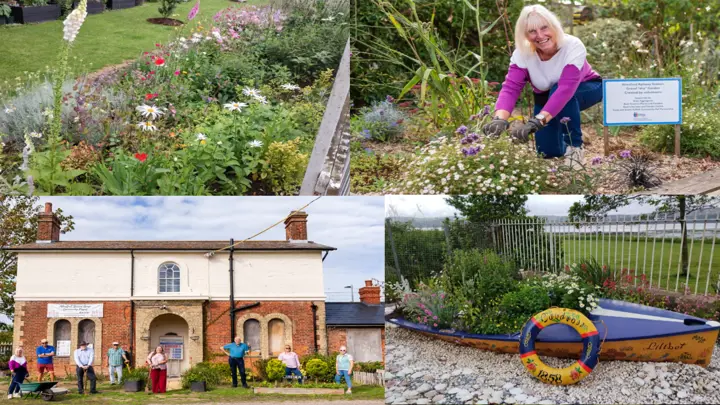
Railway stations across Britain have taken on a new look through the efforts of volunteers, with flowers, plants and green gardens. Turning abandoned and neglected spaces into gardens has not only made the stations more attractive but has also created a new environment for wildlife. To recognise the effort, the Royal Horticultural Society (RHS) has launched a Railway Stations in Bloom award for the first time.
Since 1964, residents in towns and areas across Britain have been creating hanging baskets and flower gardens of many colours. About 1,600 communities take part in the RHS’s Britain in Bloom competition each year. This time a separate award has been introduced to honour the volunteers who look after station gardens.
Five station gardens made the shortlist. Alongside beauty, weight was also given to creating an environment suited to wildlife and to the ability to adapt to a changing climate. The award was won by the Cardross Community Organic Garden in Scotland. The judges particularly praised the group for involving people of different ages and backgrounds in the station’s activities. Schoolchildren, Brownies, various volunteers and members of the gardening team are all involved there.
Alresford station in Essex is also on the list. A “dry garden” has been created there with severe heat and dry summers in mind. To make the garden, volunteers cut through asphalt to create flower beds and planted drought-tolerant plants. The volunteer who leads the garden, Frank Belgrave, said the effort had completely changed the centre of the village. The station was once described as neglected in the local newspaper, he said, but the garden there can now compete with gardens at the Chelsea Flower Show.
Belgrave said volunteers used to spend a great deal of time watering the plants. They later took expert advice and built the garden with drought-tolerant plants. Local residents are helping too. Some bring plants and compost and leave them for the garden.
Cardross station on the west coast of Scotland has also been transformed through the volunteers’ efforts. Since March 2022 plants have been put in almost every space at the station that could be changed. Because of the hard winters, tough shrubs have been chosen there instead of seasonal flowers. The volunteers have also brought plants from their own home gardens and planted them at the station.
Among the other stations on the shortlist, the window boxes of the ticket office at Maghull station in Merseyside have been filled with flowers, and volunteers have also created a small wood. At Wylde Green station in Birmingham, overgrown vegetation has been cleared and pollinator-friendly plants put in, creating a “bee corridor”. The volunteers also count butterflies every year, and by their reckoning the numbers have risen.
At Keynsham station in Somerset, various kinds of succulent that can tolerate heat have been planted. The volunteers said looking after the garden had also increased social contact among them. Many have made new friends through the work. Passengers come to look at the garden and talk to the volunteers.
Belgrave, at Alresford, said the station garden had increased the presence of bees, butterflies, hedgehogs, slow-worms and other creatures. In his view many stations are still outside the effort. If more people come forward, those stations too could become green and attractive.